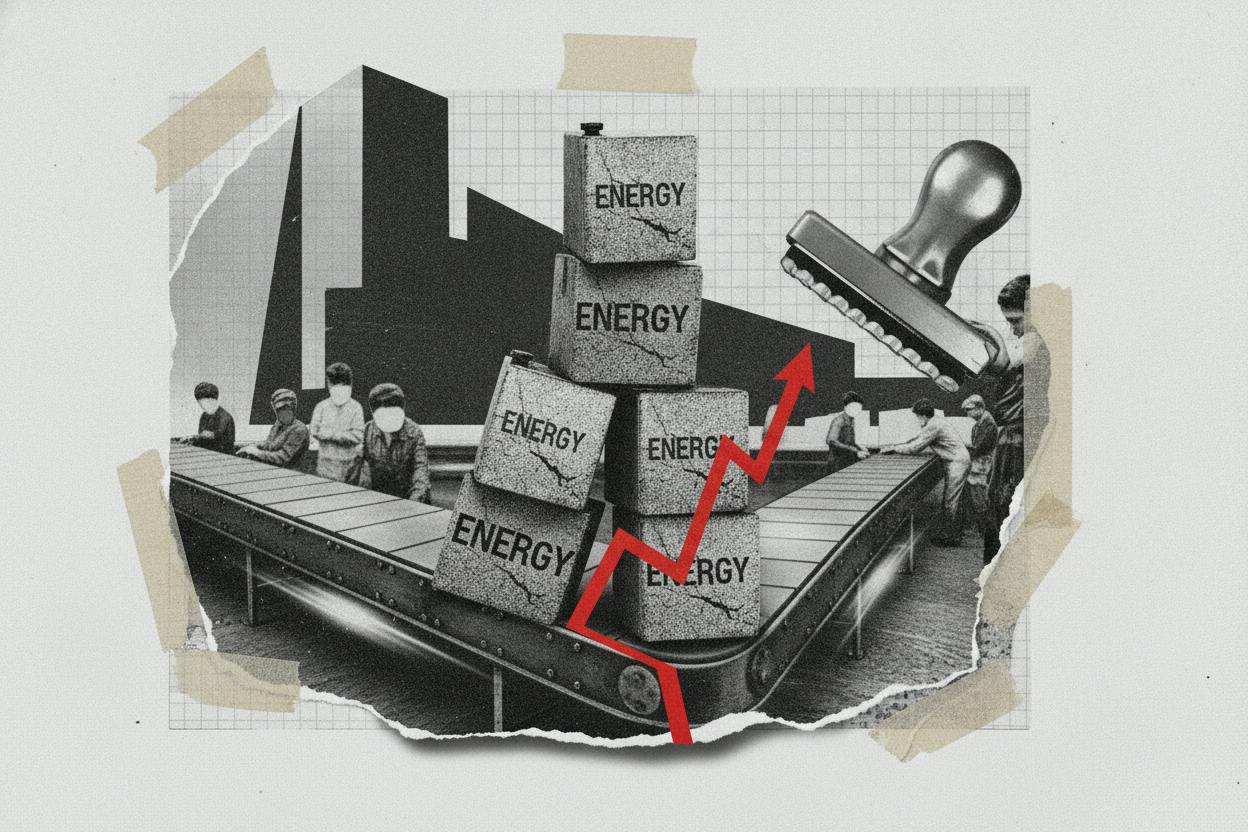
The eurozone's manufacturing sector continued to expand in October, but the latest survey data shows that rising energy costs and supply chain bottlenecks are starting to bite. The S&P Global Eurozone Manufacturing PMI came in at 52.7, a two-month low but still above the 50 mark that separates growth from contraction.
While the headline number suggests the region's factories are still humming, the details reveal a more mixed picture. Output and new orders grew at a slower pace, and business confidence for the next 12 months slipped below its long-run average. The one bright spot was exports, which posted their strongest increase in more than four-and-a-half years.
Cost pressures are back
The bigger concern for investors is the inflation pressure building inside the survey. Chris Williamson at S&P Global Market Intelligence noted that input cost inflation jumped to one of the highest rates of the past four years, driven by higher energy prices and supply constraints.
That combination can squeeze profit margins if companies are unable to pass on higher costs to customers. It also matters for the European Central Bank (ECB), which has been trying to bring inflation back to its 2% target. Sticky cost growth can keep officials leaning toward more rate hikes, or at least delay any eventual cuts.
The cost pressures are not uniform across the region. Central Europe's factory recovery is uneven as energy costs bite, while Greece's factory growth slows in October as costs climb. In contrast, Spain's factory activity accelerates in October as new orders return, and France's factory activity slips back into contraction.
What it means for investors
A PMI above 50 is good news for companies tied to the current manufacturing upswing. But the cost spike is what tends to shift rate expectations. When traders see hotter price signals in business surveys, they often price a "higher-for-longer" policy path, meaning the ECB may keep rates high for longer than previously expected.
That repricing usually hits short-dated euro rates first, because they're most directly linked to where markets think the ECB's policy rate is headed. In practice, that can mean bigger moves in instruments like Euribor futures and 2-year German Bund yields than in broad eurozone equities, which can still benefit from ongoing growth even as financing costs stay elevated.
For everyday investors, the key takeaway is that the eurozone economy is still growing, but the cost environment is becoming more challenging. If you hold European stocks or funds, the growth is supportive, but keep an eye on inflation data and ECB signals. If the ECB is forced to hike again, it could weigh on rate-sensitive sectors like real estate and utilities, while banks might benefit from wider margins.
The coming months will be crucial. If energy prices stay high and supply chains remain strained, the cost pressures could persist, keeping the ECB in a hawkish mood. On the other hand, if growth slows further, the ECB might find it harder to justify more hikes. Either way, the data is a reminder that the fight against inflation is not over.