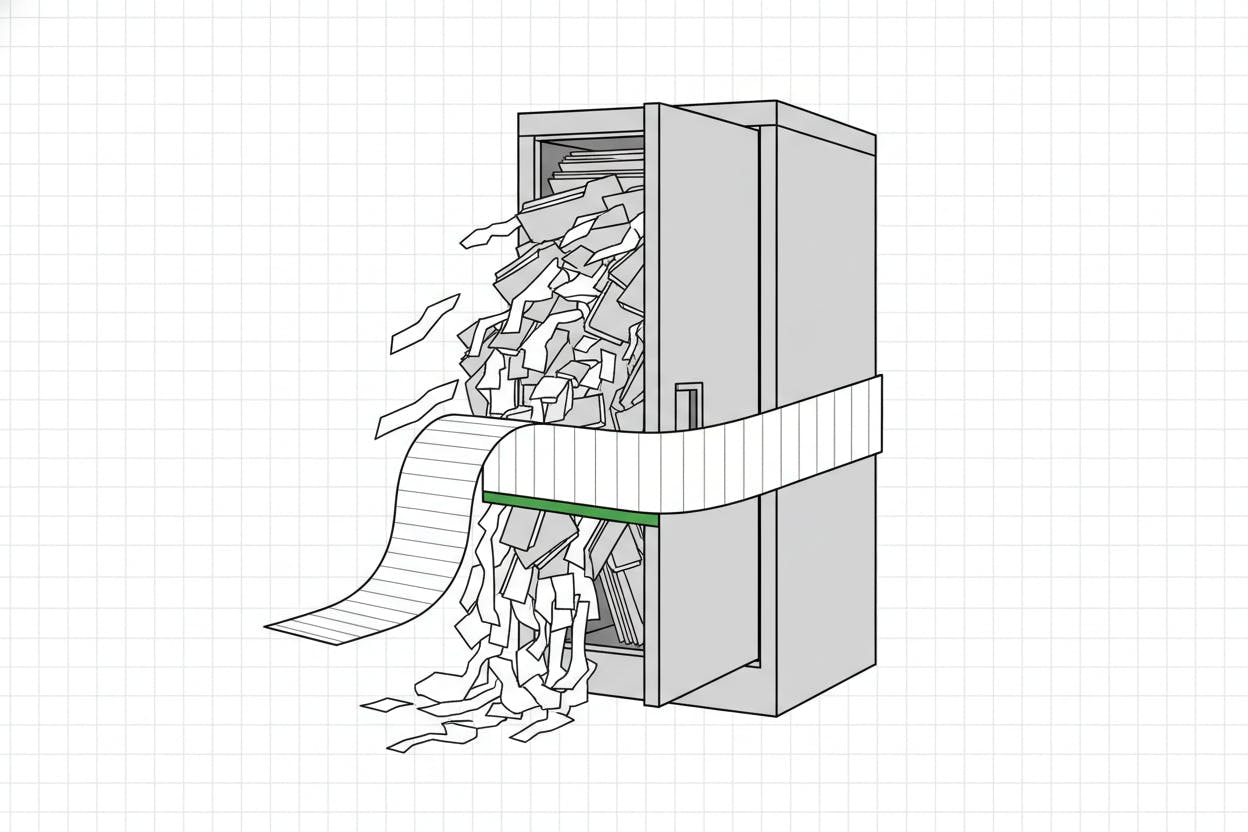
Fastly, the company best known for speeding up websites, is trying to convince Wall Street it has evolved into something bigger: an "edge platform" that can handle the computing demands of the AI era. But according to Bank of America Securities, the story is only half told. The bank came away from Fastly's investor day on Tuesday impressed by the platform's growing adoption, yet it still wants clearer evidence that AI traffic will actually translate into revenue.
What's going on here?
Fastly's traditional business is content delivery — the behind-the-scenes plumbing that makes websites and apps load quickly by caching data on servers close to users. That's a competitive, low-margin business. The company's pitch now is that it can do much more: run code, process data, and support AI applications at the "edge," meaning closer to where the data is generated and consumed, rather than in distant cloud data centers.
Bank of America Securities, a major Wall Street bank, acknowledged that this platform story is gaining traction. Management pointed to three straight quarters of revenue growth above 20%, and a net retention rate of 117% over the past 12 months. That retention figure is a key metric for subscription businesses: it means existing customers, in aggregate, spent 17% more than they did a year ago, which suggests they're expanding their usage rather than cutting back.
The bank also noted that customers are adopting more of Fastly's product stack, with 72% of large customers using multiple products. That's a sign that the platform approach is resonating, not just the old CDN service.
But the AI math is still fuzzy
Despite the positive signals, BofA said Fastly still needs to provide clearer proof that "agentic AI" traffic — the kind generated by AI agents that act autonomously, like chatbots or automated assistants — will actually show up on its network and, more importantly, generate meaningful revenue. The concern is that while AI is a hot topic, it's not yet clear how much of that traffic will flow through Fastly's edge platform, or how much Fastly will be able to charge for it.
Adding to the uncertainty, Fastly's management plans to stop reporting segment results at the end of fiscal year 2026. That means investors will have less visibility into how different parts of the business are performing. For a company that's trying to convince the market it's transitioning from a low-margin CDN to a higher-value platform, removing that transparency could make it harder to track progress.
This is a common tension in tech: companies want to tell a growth story, but they also want to avoid the scrutiny that comes with detailed breakdowns. For investors, the lack of segment data could make it harder to value the company, especially if the AI narrative doesn't translate into hard numbers.
What it means for investors
For everyday investors, the key takeaway is that Fastly's story is improving, but the market is waiting for proof. The company is not alone in trying to attach itself to the AI boom — many tech firms are repositioning their products as AI-ready. But as we've seen with other companies, hype only goes so far. Investors want to see actual revenue from AI-related services, not just promises.
Fastly's situation also highlights a broader theme: the infrastructure that powers the internet is being reshaped by AI. Companies like Nvidia are building new chips, and analysts see big pricing power for its next platform. Meanwhile, other firms are trying to find cheaper ways to run AI workloads, as Apple's recent pitch for its Mac mini and Mac Studio suggests. The edge computing space is part of this larger shift, but it's still early days.
For Fastly specifically, the next few quarters will be crucial. Investors will be watching to see if the company can back up its platform pitch with numbers — and whether the decision to end segment reporting is a sign of confidence or a way to hide weakness. As always, it's wise to do your own research and consider how a stock fits into your overall portfolio, rather than acting on a single analyst note.
In the meantime, the market will keep asking the same question BofA is asking: where's the AI revenue?