Cleveland Federal Reserve President Beth Hammack said the central bank should move more quickly to a “restrictive” policy stance, but do so with smaller interest-rate cuts, arguing that inflation is no longer just an energy story. In prepared remarks for a National Association for Business Economics conference, Hammack said price pressures are broadening across the economy, even as energy costs have dominated headlines.
Inflation is broadening
Hammack noted that businesses in her district are planning to raise prices faster than their own costs are rising—a sign that inflation could become embedded in how companies think about pricing. Her staff’s research puts underlying inflation in the mid-to-high range, suggesting that the recent cooling in headline numbers may be masking persistent pressures beneath the surface.
She also pointed to artificial intelligence as a new factor. AI-driven demand is pushing up costs for key components, adding to the list of items where prices are climbing. That’s a shift from earlier in the cycle, when a few categories like used cars or housing were the main culprits.
What does “restrictive” mean?
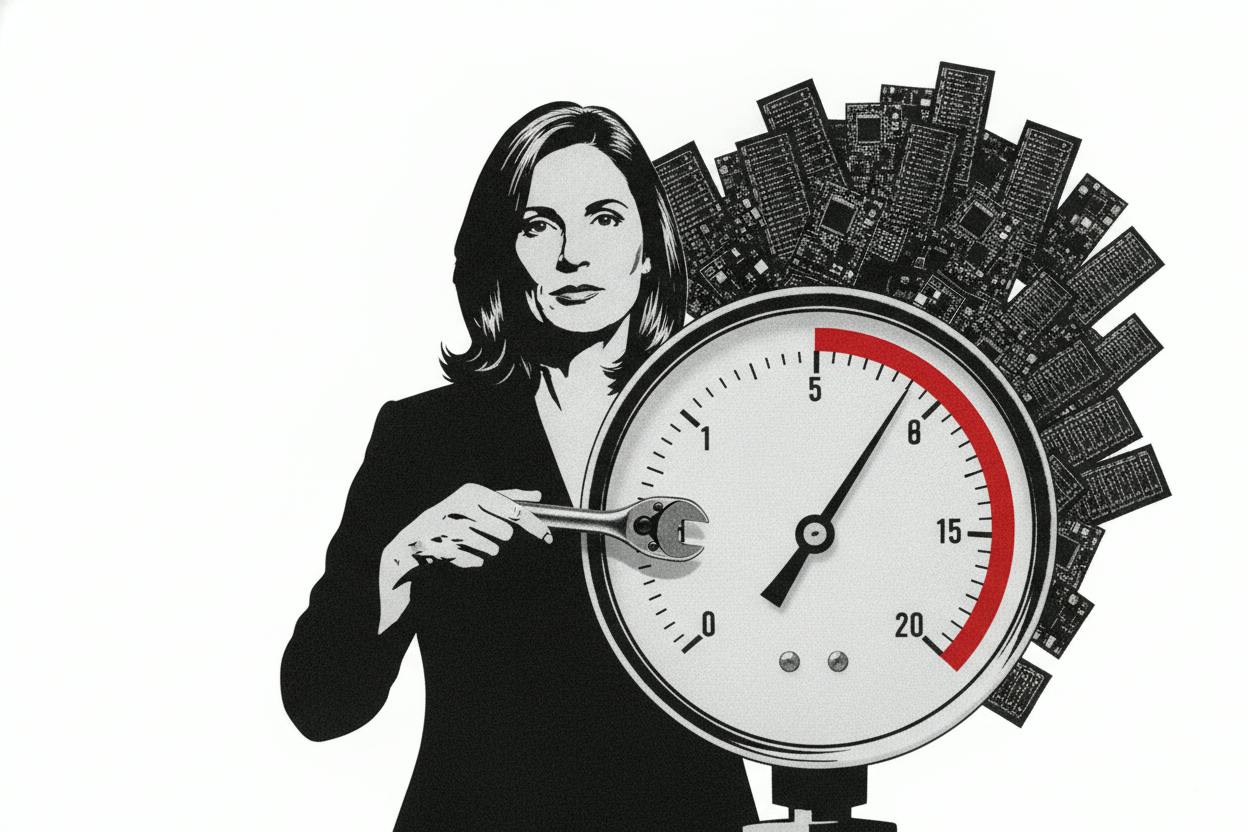
For everyday investors, the term “restrictive” is central to understanding the Fed’s next moves. When the Fed sets interest rates at a restrictive level, it means borrowing costs are high enough to slow economic activity and cool inflation. Think of it as the Fed tapping the brakes on the economy. If rates are too low, the economy can overheat and inflation accelerates; if they’re too high, growth can stall.
Hammack’s preference for smaller, faster moves suggests she wants the Fed to reach that braking point sooner rather than later, but without the whiplash of a big, sudden hike. That approach could give the Fed more flexibility to adjust if the data changes.
What it means for investors
For investors, the path of interest rates is a big deal. Higher-for-longer rates tend to pressure stocks, especially growth and tech names, because future earnings are worth less when discount rates are high. On the other hand, a restrictive stance can be good for bond yields, making fixed-income investments more attractive.
Hammack’s comments come at a time when markets are trying to guess the Fed’s next move. The recent slowdown in consumer spending and mixed economic data have left investors uncertain. If the Fed moves faster to a restrictive stance, it could mean fewer rate cuts than some hope for, which would likely weigh on stock prices.
But the AI angle adds a twist. If AI-driven demand is pushing up costs for components, that could be a tailwind for companies in the semiconductor and tech supply chain, even as the broader economy slows. That’s a nuance investors might want to watch.
What to watch next
Investors will be listening for more Fed speakers in the coming weeks, as well as the next inflation report. The key question is whether the broadening price pressures Hammack describes show up in official data. If they do, the Fed may indeed need to act faster, and markets will have to adjust.
Hammack’s remarks also highlight a growing debate inside the Fed: how much weight to give to energy prices versus underlying trends. While energy costs have been volatile, her focus on business pricing behavior suggests the Fed is worried about a psychological shift—where companies start raising prices just because they expect inflation to continue.
For now, the takeaway for everyday investors is that the Fed is not done fighting inflation. Even if headline numbers cool, the central bank is watching for signs that price increases are becoming entrenched. That means interest rates could stay higher for longer, which has implications for everything from mortgage rates to stock valuations.
As always, it’s wise to keep a diversified portfolio and not make sudden moves based on one official’s comments. But Hammack’s remarks are a reminder that the inflation battle is far from over.