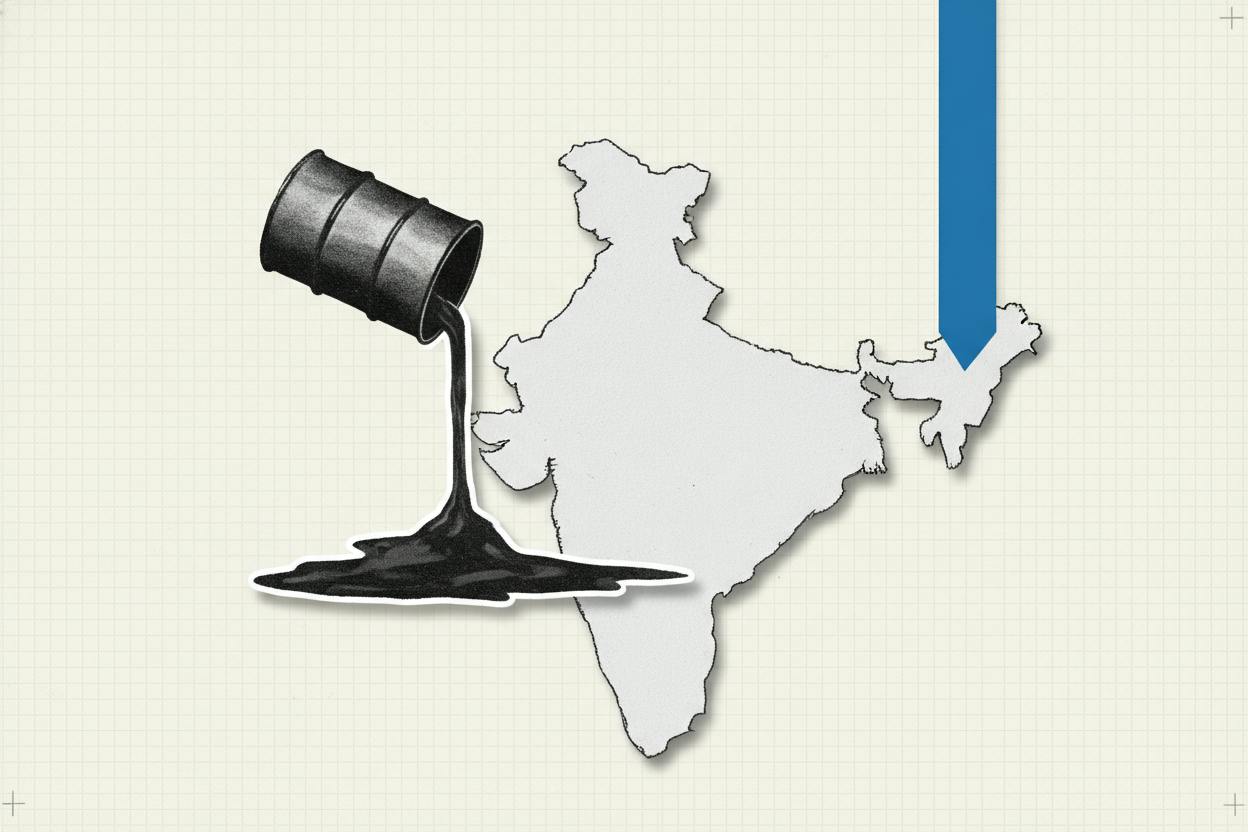
Indian stocks held their ground on Wednesday, with the Nifty 50 and Sensex both edging up 0.1% as foreign investors continued to pour money into the market and oil prices eased. The modest gains came even as broader Asian markets looked shaky, underscoring the resilience of India's equity benchmarks near their record highs.
According to Reuters, Brent crude slipped 0.6% to $103 a barrel, while foreign investors logged net buying of $821 million in Indian shares so far in November. That buying has helped trim this year's net outflows to $30.59 billion, a sign that global funds are warming to Indian assets again.
Why oil and foreign money matter
For everyday investors, the two forces behind Wednesday's small moves—overseas money and energy costs—are often the deciding factors in whether a stock market rally lasts. Foreign institutional investors are known for being quick to add exposure when they like a country's economic backdrop, and just as quick to pull back when conditions worsen. Their buying can provide a powerful tailwind for local stocks, but it can also reverse suddenly.
Oil is a particularly important variable for India, which imports the vast majority of its crude. When oil prices climb, India's import bill swells, which can feed into broader inflation. Higher inflation typically keeps interest rates elevated, and that can make investors demand a bigger "risk premium"—the extra return they require to hold stocks instead of safer assets. That's why Indian brokerage Arihant Capital Markets noted that the market's staying power will depend heavily on where crude goes from here.
At $103 a barrel, Brent is still elevated by historical standards, but it's off the peaks seen earlier this year. If crude stays contained, investors can focus more on company earnings and the idea that India could look relatively attractive if the global AI trade cools. If oil climbs again, the same foreign buyers may reassess quickly, because the inflation and rate outlook would get tougher, raising the return they demand to stick around.
What it means for investors
For those with money in Indian stocks, the key takeaway is that the market's resilience is not a one-way bet. The $821 million of net foreign buying in November can support benchmarks like the Nifty 50 and Sensex near their highs, but it's a fragile support. A sustained rise in oil prices could quickly change the calculus for overseas investors, who are sensitive to any signs of accelerating inflation or tighter monetary policy.
On the other hand, if oil remains range-bound, India's relatively strong growth outlook and corporate earnings could continue to attract foreign capital. The recent inflows are a reversal from earlier in the year, when global funds were pulling money out of Indian equities. That shift suggests some investors see value in Indian stocks again, especially if global tech and AI-related shares lose momentum.
Investors should also keep an eye on the rupee, which has been supported by foreign inflows. A steadier currency can help reduce imported inflation and make Indian assets more attractive to overseas buyers. The recent rupee steadiness is a sign that foreign money is having a stabilizing effect.
Beyond India, the broader Asian market picture remains mixed. While Indian stocks held up, other regional markets have been more volatile, partly due to concerns about US politics and their impact on tech spending. For instance, Asian tech stocks have slid on worries that US midterm results could lead to tighter regulation or reduced AI investment. That backdrop makes India's relative stability stand out, but it also means global sentiment can shift quickly.
Looking ahead
In the coming weeks, investors will be watching oil prices closely, as well as any fresh data on foreign flows. The monthly net buying figure is a useful gauge, but daily flows can be volatile. A sustained trend of foreign buying would be a stronger signal that the rally has legs.
For now, the Indian market is holding its gains, but the path forward depends on a delicate balance. If crude stays below $100 and foreign investors keep buying, the Nifty 50 and Sensex could push to new highs. If oil spikes again, the same forces that are supporting the market today could quickly turn against it.
As always, it's important for investors to focus on their own time horizon and risk tolerance, rather than reacting to daily market moves. The fundamentals of Indian companies and the broader economy remain the ultimate drivers of long-term returns.