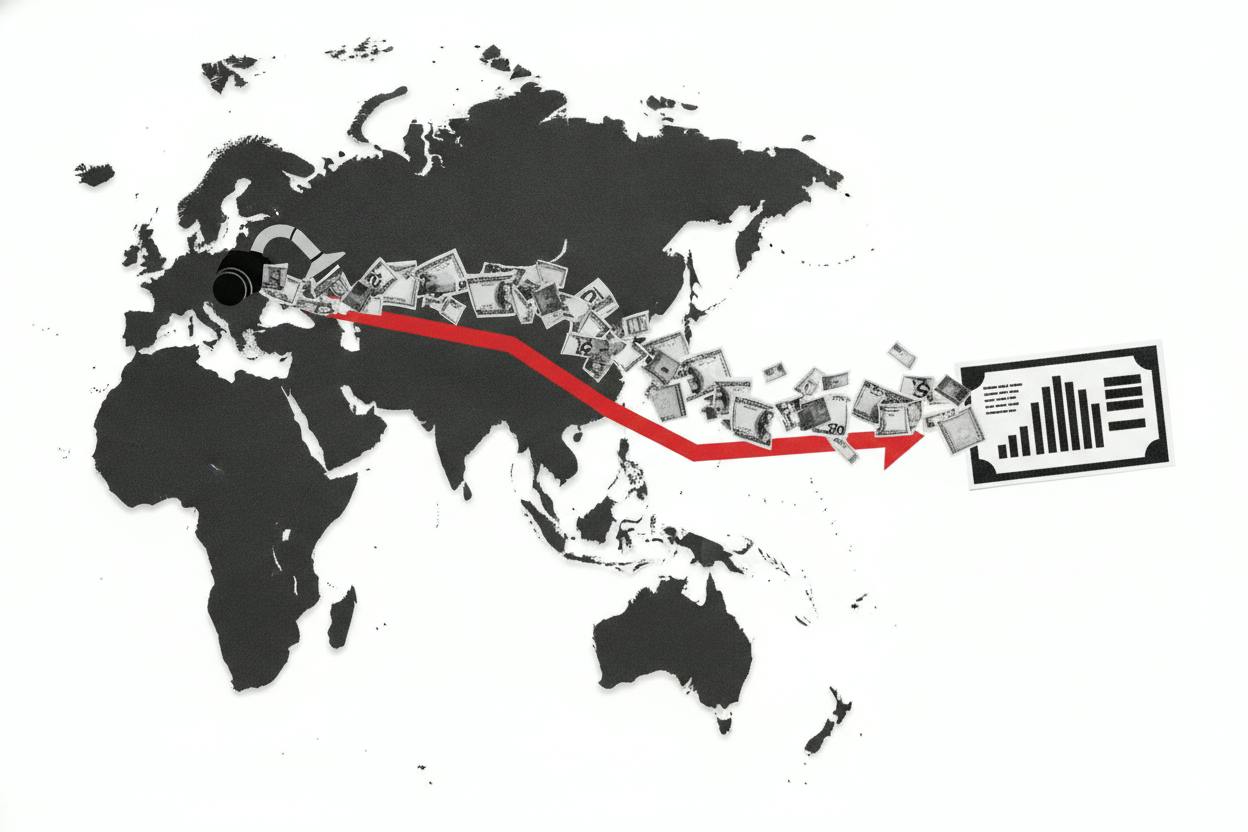
Foreign investors withdrew a net $23.49 billion from major Asian stock markets in September, according to data from the London Stock Exchange Group (LSEG). The selling was widespread, hitting markets from South Korea to the Philippines, and marked a sharp reversal from the net inflows seen in August.
What drove the selloff?
The main culprit was the global bond market. US Treasury yields climbed during the month, meaning investors could earn more from relatively safe US government bonds without taking on the extra risk of emerging-market equities. At the same time, the dollar strengthened, which made those Treasury returns even more attractive once converted back into local currencies.
For an everyday investor, the logic is straightforward: when you can get a decent yield from a low-risk asset like a US Treasury, the appeal of riskier stocks—especially in markets with currency volatility—diminishes. A stronger dollar also eats into returns for foreign investors who have to convert their profits back into dollars.
LSEG's data showed net selling across South Korea, Taiwan, India, Indonesia, Thailand, Vietnam, and the Philippines. South Korea led the outflows, a market that has been particularly sensitive to global interest rate expectations due to its heavy reliance on tech and manufacturing exports.
What it means for investors
For those with exposure to Asian equities, this is a reminder that global interest rates and currency moves often matter more than local fundamentals. When US yields rise, money tends to flow out of emerging markets, and September was a textbook example.
The shift also highlights the interconnectedness of global markets. A move in US bond yields can ripple through stock markets thousands of miles away, affecting everything from Korean chipmakers to Indian IT firms. Investors who focus only on a company's earnings or local economy may miss the bigger picture.
That said, outflows are not always a signal to panic. They often reflect a temporary rebalancing of portfolios rather than a fundamental deterioration in Asian economies. In fact, some investors may see the selloff as a buying opportunity, especially if they believe US yields have peaked.
Related reading: Singapore bank stocks steady after $27B selloff shows how even well-capitalized banks can feel the pinch from bond yield movements.
Regional differences
Not all Asian markets were affected equally. South Korea and Taiwan, with their heavy tech exposure, tend to be more sensitive to global growth and interest rate expectations. India, meanwhile, has been a favored destination for foreign investors in recent years, but even it saw net selling in September.
Indonesia, Thailand, Vietnam, and the Philippines also saw outflows, though their smaller markets mean the dollar amounts were less dramatic. These countries often attract foreign money seeking higher yields, but when US yields rise, that advantage narrows.
For a broader view of how Asian markets are reacting, see ASX 200 rises as oil cools, which shows that not all regional markets are moving in the same direction.
Looking ahead
Investors will be watching US Treasury yields and the dollar closely in the coming weeks. If yields continue to climb, more outflows from Asian stocks are possible. Conversely, if yields stabilize or fall, foreign money could return just as quickly as it left.
For those with a long-term horizon, the key takeaway is that market timing based on short-term flows is difficult. Instead, focus on the fundamentals of the companies you own and their ability to generate cash flow over time. As AI's funding bill comes due illustrates, investors are increasingly rewarding businesses that can show real profits, not just growth stories.
In the meantime, the September outflow is a reminder that global capital is fickle. When the risk-reward balance shifts, money moves fast—and Asian stocks are often the first to feel it.