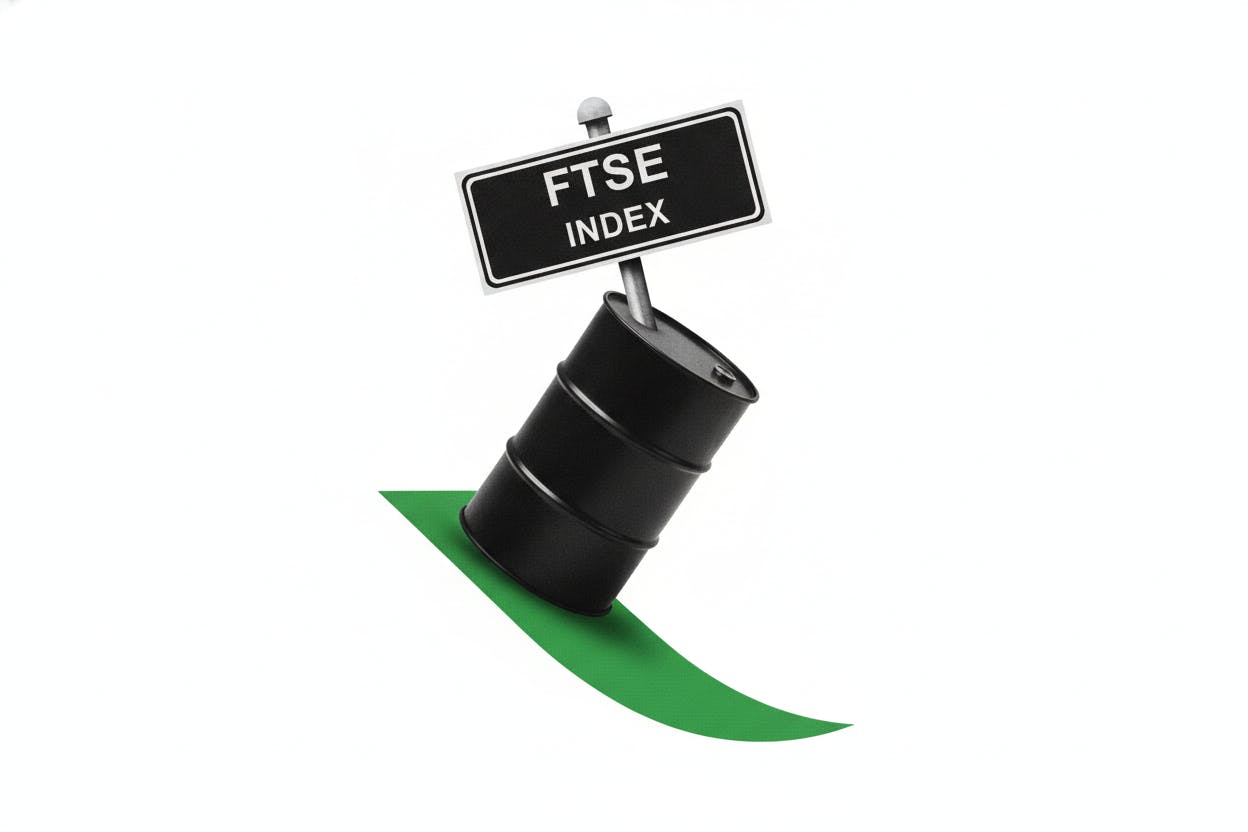
London's FTSE 100 index climbed on Thursday, buoyed by a sharp drop in oil prices that eased fears about persistent inflation. Brent crude, the global benchmark, fell to $72.49 a barrel, roughly where it stood before the late-February strikes on Iran disrupted supply routes. The move helped calm nerves that had been rattling markets for weeks.
Oil Slide Calms Stagflation Fears
Strategists at Deutsche Bank Research noted that markets perked up as crude shipments through the Strait of Hormuz resumed more normally, reducing worries that disrupted supply would keep energy prices elevated. With Brent back near $72.49, investors dialed down so-called stagflation fears — the nasty combination of weak economic growth and stubborn inflation that can push central banks toward faster interest rate hikes.
Oil is a behind-the-scenes cost for everything from filling up the car to moving goods around the country. When Brent falls back to around $72.49 a barrel, it can take some pressure off wholesale fuel and shipping costs, which often cools headline inflation over the following weeks. And inflation is what interest rates tend to chase. If energy stops adding to price rises, policymakers have less reason to keep rates higher for longer, and that can feed into the rates lenders use to price new fixed-rate mortgages, car loans, and other borrowing — even before any central bank actually moves.
This dynamic has been a key focus for markets recently, as Treasury yields edged lower after May's PCE inflation data came in slightly cool, reinforcing the view that inflation may be easing.
Mixed UK Economic Picture
Despite the oil-driven optimism, the UK economic backdrop remained messy. The Confederation of British Industry (CBI), a business group, reported weaker retail sales in June, pointing to cautious consumers and rising costs. That suggests the recovery in consumer spending is still fragile, even as inflation moderates.
On a brighter note, Britain's auto industry group said vehicle production rose in May, its first year-on-year increase this year, though commercial vehicles lagged. The data offered a glimmer of hope for the manufacturing sector, which has been under pressure from supply chain disruptions and weak demand.
Elsewhere, the UK's inflation picture has been closely watched. US consumer spending and income rose 0.7% in May as PCE inflation held firm at 0.4%, a reminder that inflation pressures remain sticky globally.
Company Moves: easyJet and Moonpig
On the corporate front, easyJet shares jumped after the budget airline confirmed it had rejected a takeover approach from asset manager Castlelake. The move signals that easyJet's board believes the company is worth more than what Castlelake was offering, and investors cheered the news. The airline has been benefiting from a strong summer travel season, with demand for flights remaining robust despite cost-of-living pressures.
Meanwhile, Moonpig, the online card and gift retailer, rose after swinging back to profit. The company had been hit by a post-pandemic slowdown in demand, but its return to profitability suggests it is managing costs effectively and finding ways to grow in a tougher environment.
What It Means for Investors
For everyday investors, the FTSE 100's rally and the drop in oil prices are a reminder of how interconnected global markets are. A fall in Brent crude to $72.49 can show up in lower gas prices and borrowing costs over time, as energy costs feed into inflation and interest rate decisions.
However, the mixed UK data — weaker retail sales but stronger auto production — highlights that the economic recovery is uneven. Investors should keep an eye on consumer spending and business investment, as these will determine whether the Bank of England feels confident enough to start cutting rates later this year.
In the energy sector, the normalization of shipping through the Strait of Hormuz is a positive sign, but geopolitical risks remain. Brent crude dropped to $72.66 as Strait of Hormuz shipping normalized, but any new disruption could quickly reverse the recent decline.
Overall, the FTSE 100's gain on Thursday reflects a market that is cautiously optimistic that inflation pressures are easing, but still wary of the headwinds facing the UK economy. For now, lower oil prices are providing a welcome tailwind, but the path ahead remains uncertain.