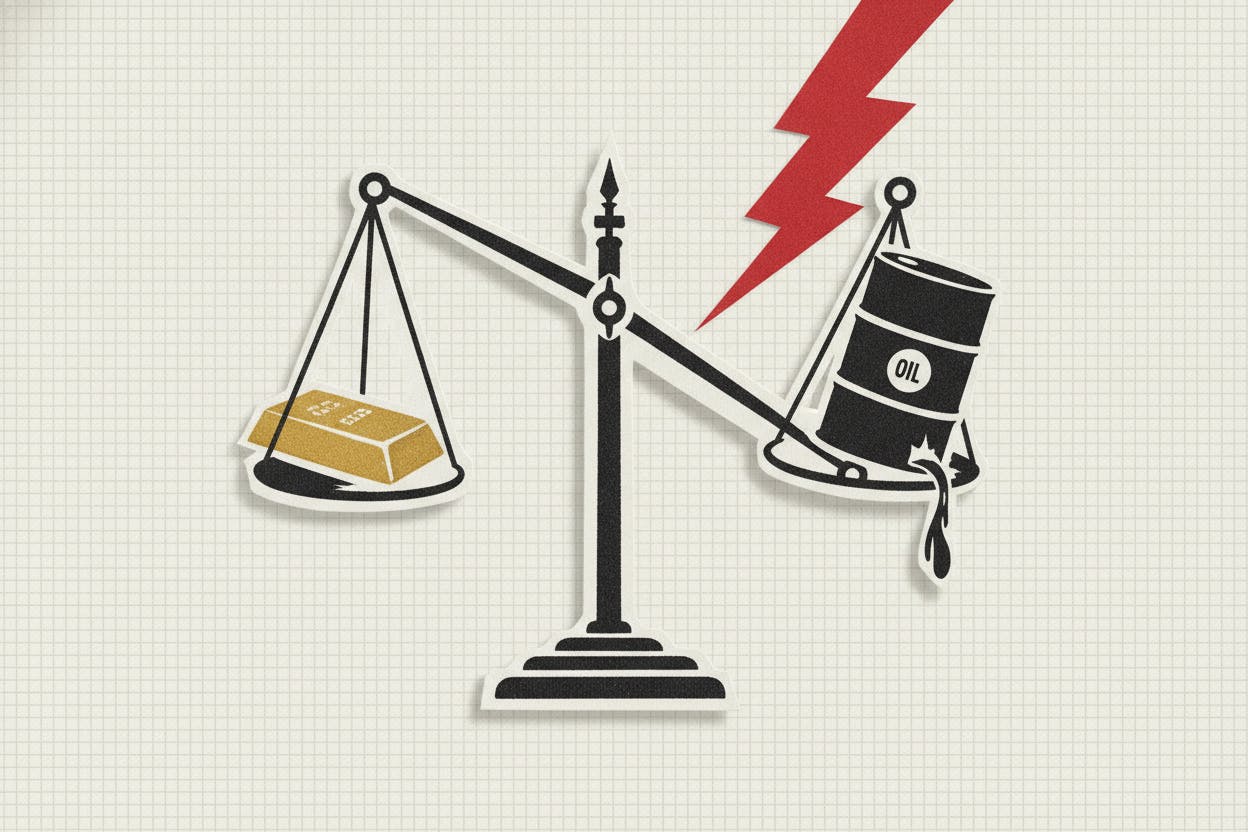
UK stocks are poised for a cautious start on Tuesday, with the FTSE 100 expected to open nearly flat as investors weigh a mix of geopolitical risks and corporate news. Oil prices slipped even as fresh US-Iran strike threats hit headlines, while gold rose more than 1% as Treasury yields and the dollar eased ahead of the next US jobs report.
This is a classic “risk-off, but not panicked” setup. Equities are not falling sharply, but investors are clearly not rushing to buy either. The moves in commodities and bonds suggest a market that is nervous but not convinced that the situation will escalate into a full-blown supply crisis.
Why oil slipped despite strike risks
Oil often jumps when traders fear supply disruptions, especially in the Middle East. But this time, crude edged lower even as tensions flared. That may reflect uncertainty about whether the strikes will actually disrupt production or shipping routes. The market seems to be taking a “wait and see” approach rather than pricing in a worst-case scenario.
Gold, meanwhile, moved in the opposite direction. The precious metal rose more than 1% as Treasury yields and the dollar eased. Lower yields make gold more attractive because it pays no interest, and a weaker dollar makes it cheaper for overseas buyers. Investors often turn to gold as a safe haven during geopolitical uncertainty.
The moves come ahead of the next US jobs report, which could shift expectations for where the Federal Reserve takes interest rates. A strong report might keep the Fed on a hawkish path, while a weak one could fuel hopes for rate cuts. That dynamic is adding to the cautious mood in markets.
Real estate fund liquidity concerns
Another factor weighing on sentiment is tighter liquidity in real estate funds. Some UK property funds have faced redemption pressures in recent years, and any sign of renewed stress can spook investors. When a fund restricts withdrawals, it can trap investors who want to sell, and it can also signal broader weakness in the commercial property market.
For everyday investors, this is a reminder that not all assets are easy to sell in a hurry. Property funds, in particular, can take time to liquidate holdings, and some have gates or suspension mechanisms that limit withdrawals during periods of stress.
Shell-BP Gulf of Mexico deal
In corporate news, a fresh deal between Shell and BP in the Gulf of Mexico is drawing attention. The two energy giants are reportedly working on a transaction that could reshape their positions in the region. While details are scarce, such deals are common in the oil industry as companies look to focus on their most profitable assets or share the costs of expensive offshore projects.
For investors, this type of deal can signal confidence in the long-term outlook for oil and gas, even as the energy transition accelerates. It can also lead to cash inflows for the seller or cost savings for the buyer, which may eventually show up in earnings.
What it means for investors
For the average investor, the key takeaway is that markets are in a holding pattern. The FTSE 100’s flat open suggests that neither bulls nor bears are in control. Oil’s slip despite geopolitical risk is a sign that traders are not pricing in a major supply shock, while gold’s rise indicates some demand for safety.
The upcoming US jobs report is the next big catalyst. If it comes in strong, it could push yields higher and put pressure on gold and stocks. If it disappoints, it could revive hopes for rate cuts and boost risk assets. Either way, volatility may pick up after the report.
Investors should also keep an eye on the real estate fund situation and the Shell-BP deal. Both could have implications for specific sectors and for the broader market. As always, it’s important to stay diversified and not make hasty decisions based on short-term moves.
For more on how geopolitical tensions are affecting markets, see our coverage of oil jumping to $90 on US-Iran strikes and the FTSE slipping as oil hit one-month highs. Also, check out China stocks rebounding on a property rally and oil topping $95 on Strait of Hormuz fears for broader context.



