Oil prices extended their sharp climb in early trading after the United States and Iran exchanged overnight strikes, intensifying fears that Middle East supply routes—especially the strategic Strait of Hormuz—could be disrupted. Brent crude, the international benchmark, rose 0.8% to $95.40 a barrel, while US benchmark West Texas Intermediate (WTI) gained 0.5% to $90.66, according to Reuters. The move builds on Tuesday's already steep jump.
The immediate driver is not just how much oil the region produces, but whether it can actually be shipped. Reuters reported that Iran has effectively closed the Strait of Hormuz to commercial shipping, and Iran's Revolutionary Guard warned that US attacks could further restrict traffic through the passage that previously carried about one-fifth of global oil supplies.
Why the Strait of Hormuz matters
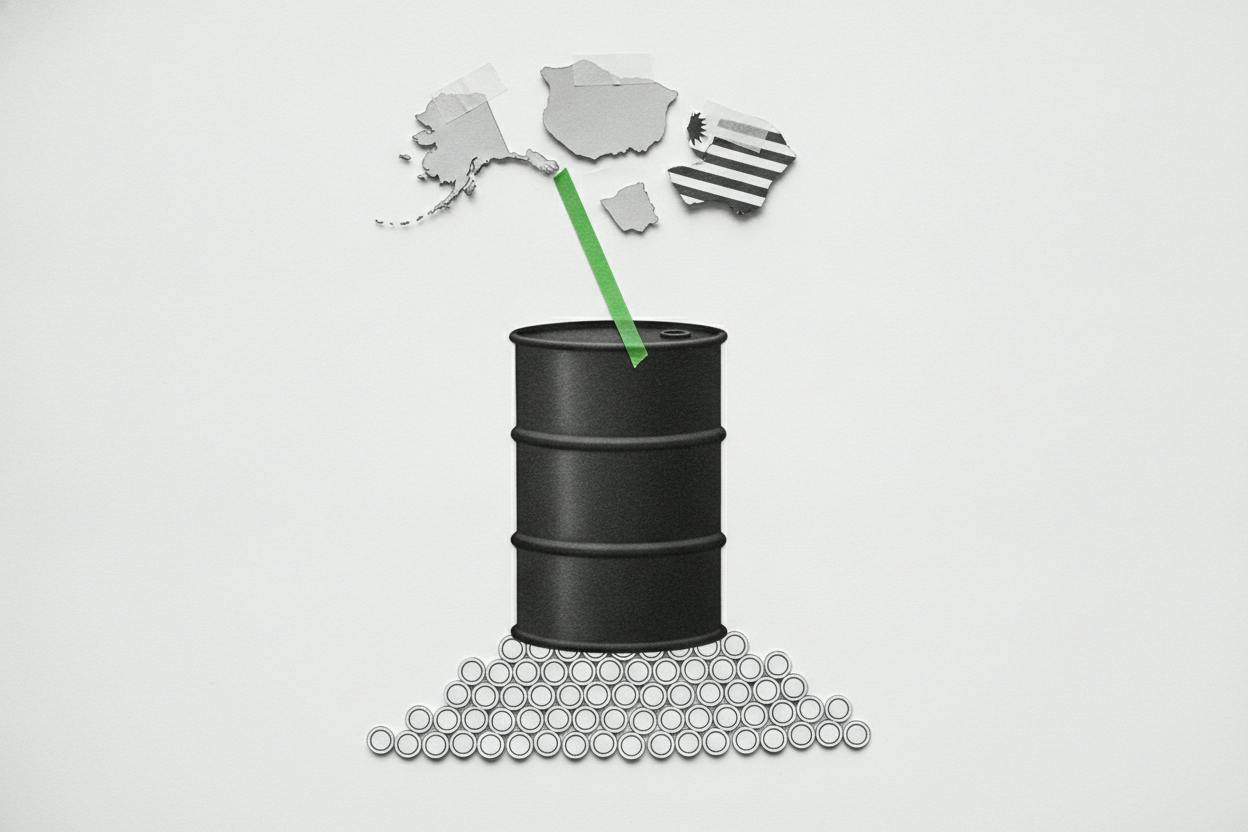
The Strait of Hormuz is a narrow waterway between Iran and Oman that connects the Persian Gulf to the Gulf of Oman and the open ocean. Roughly 20% of the world's oil—and a significant share of liquefied natural gas—moves through it daily. For context, that's more than the combined flows through the Suez Canal and the Trans-Alaska pipeline.
When the strait is threatened, the entire global oil market feels it. Even the possibility of disruption can send prices higher because traders price in the risk of supply shortages, not just actual outages. That's why the market reacted so strongly to the news of strikes and the Revolutionary Guard's warning.
It's worth noting that a full closure of the strait would be a dramatic escalation. Historically, Iran has threatened to close it during past crises, but it has never fully done so. Still, the current situation is being taken seriously by markets, as reflected in the price moves.
What this means for investors
For everyday investors, higher oil prices ripple through the economy in several ways. First, they raise costs for airlines, shipping companies, and any business that relies heavily on fuel. These higher input costs can squeeze profit margins and potentially lead to higher prices for consumers.
Second, oil is a major input for many goods, from plastics to fertilizers. When oil prices rise, the cost of producing and transporting those goods often follows, which can feed into broader inflation. That's a key reason why central banks watch oil prices closely—sustained increases can complicate their efforts to control inflation.
Third, energy stocks and funds that track them tend to benefit from higher oil prices, at least in the short term. But investors should be cautious: energy prices are notoriously volatile, and geopolitical events can reverse quickly.
The broader market reaction has been telling. In Asia, stocks slid as oil jumped, with South Korea's KOSPI dropping 3.13% as Treasury yields and oil climbed on the US-Iran strikes. Asian markets felt the pressure as investors weighed the risk of higher energy costs and potential supply disruptions. Similarly, stocks across the region fell as oil approached $95 a barrel.
On Wall Street, stocks slipped as Treasury yields and oil prices climbed, a combination that often signals investor anxiety about inflation and slower growth. The move reflected those concerns, with investors rotating away from riskier assets.
In Canada, the TSX slid 1.2% even as oil surged past $90, showing that energy gains don't always lift the whole market. That divergence is a reminder that higher oil can be a headwind for other sectors, such as manufacturing and consumer goods.
What to watch next
Investors will be watching several things in the coming days. First, any further military escalation or diplomatic efforts to de-escalate. Second, actual shipping data through the Strait of Hormuz—if tankers are rerouting or halting, that would be a clear sign of real disruption. Third, how central banks respond to rising oil prices; if inflation expectations rise, they may need to keep interest rates higher for longer.
For most investors, the key takeaway is that geopolitical events like this create uncertainty, and markets often overreact in the short term. It's rarely wise to make drastic portfolio changes based on a single day's headlines. Instead, focus on your long-term plan and consider whether your portfolio is diversified enough to weather volatility.
As always, this is not financial advice. But understanding the forces that move markets—like the Strait of Hormuz—can help you make more informed decisions about your own investments.