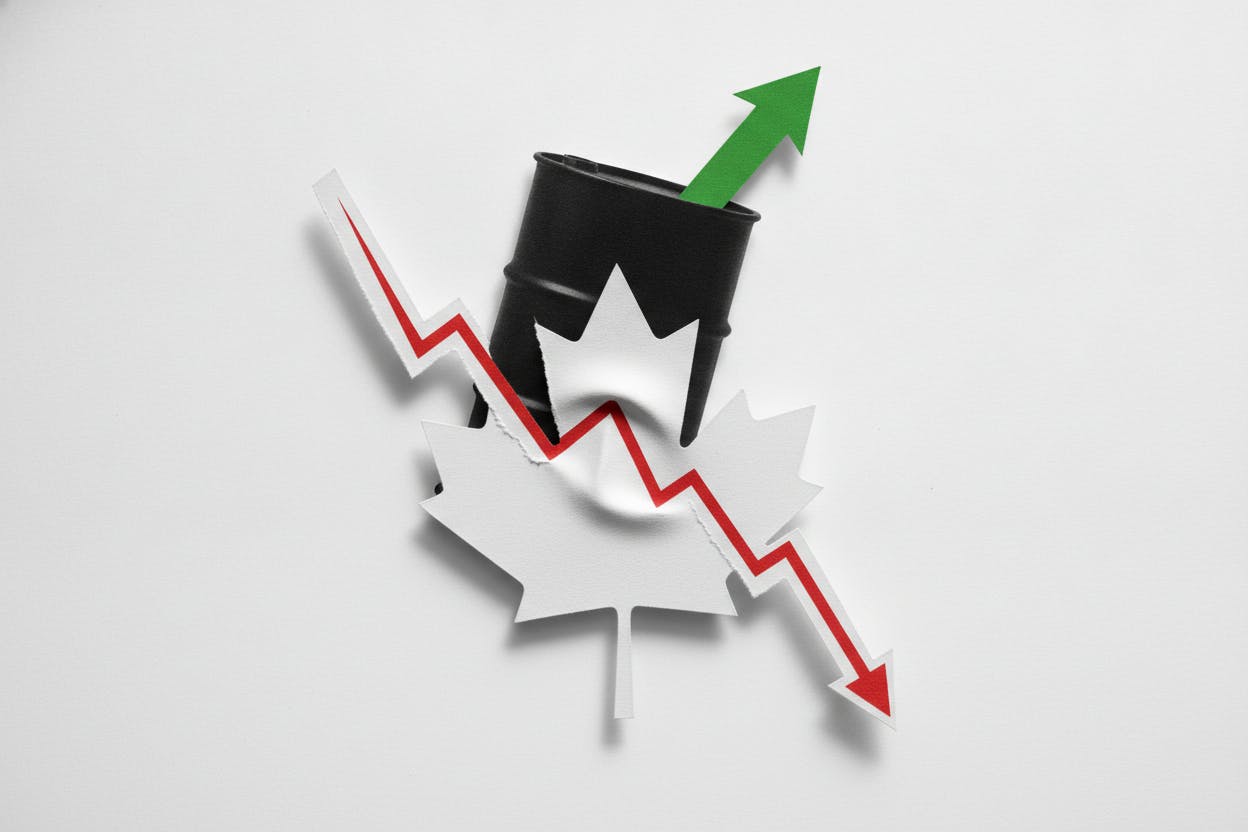
Canadian stocks took a hit on Tuesday, with the S&P/TSX composite index falling 1.2% even as oil prices jumped more than 5%. The divergence highlights how geopolitical tensions can move different parts of the market in opposite directions.
The index dropped 444.75 points to close at 35,825.73, led lower by information technology, base metals, and industrials. Meanwhile, the energy sector rose 3.1% as crude prices climbed on renewed US-Iran tensions.
Oil's big jump
October West Texas Intermediate (WTI) crude settled up 5.2% at $90.22 a barrel, while Brent crude gained about 5%. The spike came after fresh US strikes on Iranian targets and Tehran's threats to restrict Gulf exports, reviving fears about shipments through the Strait of Hormuz—a critical chokepoint for global oil supplies.
The Strait of Hormuz is a narrow waterway between the Persian Gulf and the Gulf of Oman, through which roughly a fifth of the world's oil passes. Any disruption there can quickly push prices higher, as traders price in the risk of supply shortages.
For energy investors, higher oil prices typically mean fatter profits for producers. But for the broader economy, they can be a double-edged sword: more expensive fuel raises costs for businesses and consumers, which can weigh on growth and corporate earnings.
Why the TSX fell
While energy stocks benefited, the rest of the market struggled. Technology shares, base metals, and industrials led the decline. This pattern is common when geopolitical risk spikes: investors often rotate out of growth-oriented sectors and into defensive or commodity-linked ones.
Base metals, in particular, are sensitive to global growth expectations. If oil prices stay high, they can stoke inflation and prompt central banks to keep interest rates higher for longer, which tends to hurt industrial demand. That's a key reason metals and industrials fell even as energy soared.
Tech stocks, meanwhile, are more sensitive to interest rates because their valuations rely heavily on future earnings. Higher rates make those future earnings less valuable today, so tech often underperforms when rate expectations rise. This dynamic has been a recurring theme in markets recently, as seen in rate-hike bets sending financial stocks lower.
What it means for investors
For everyday investors, Tuesday's action is a reminder that markets don't move in one direction. Even when a major commodity like oil surges, the broader index can fall if other sectors are hit hard.
If you hold a diversified portfolio, you may see some parts rise while others fall. That's normal. But it's worth paying attention to how geopolitical events can ripple through different asset classes.
Energy stocks may continue to benefit if tensions in the Middle East persist. But higher oil prices can also feed into inflation, which could influence central bank policy. As European stocks slid as oil and gas prices pushed bond yields higher, similar pressures could affect Canadian markets.
Investors should also watch the TSX futures, which slipped as yields climbed and metals fell, suggesting the selloff might not be over. And with zinc hitting a four-year high as LME stocks shrank, metals remain volatile.
Ultimately, the key takeaway is that geopolitical risk can create winners and losers within the same market. For long-term investors, staying diversified and avoiding knee-jerk reactions is often the best strategy.



