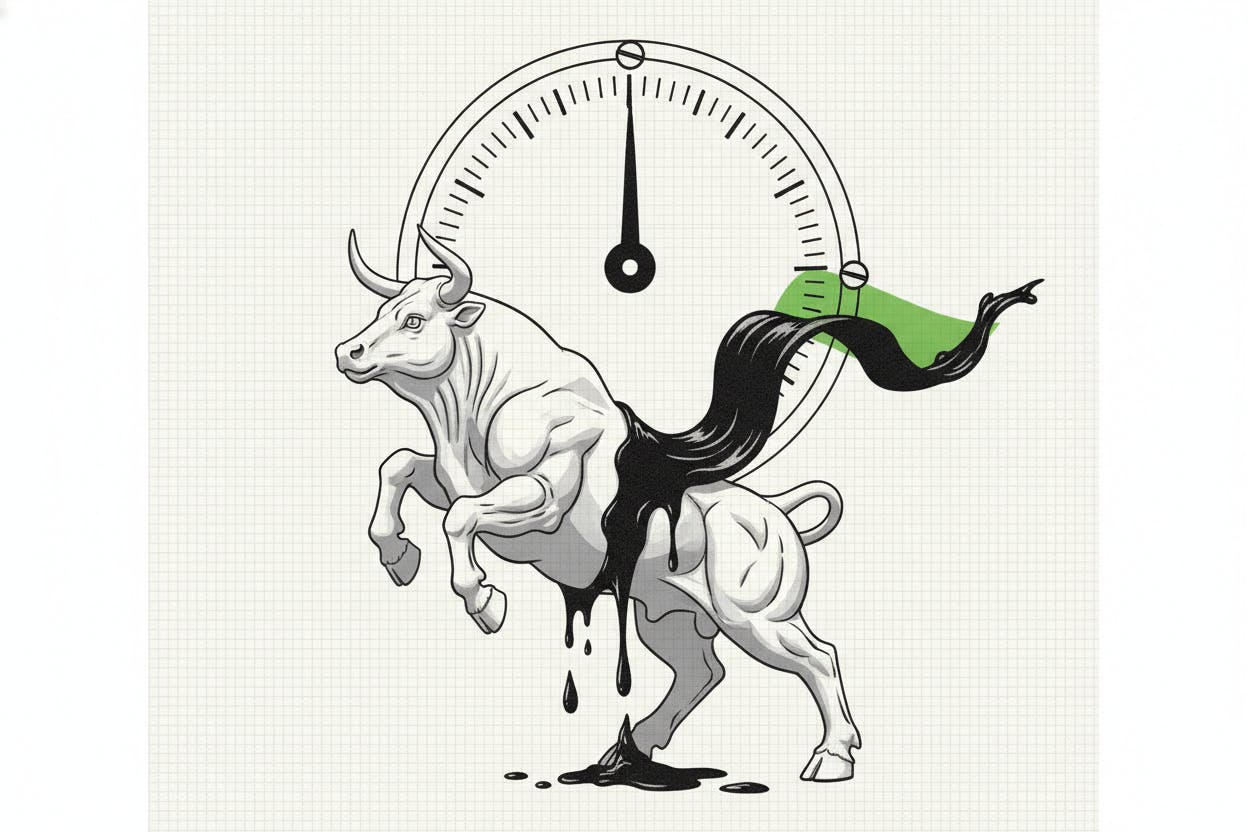
London's FTSE 100 index is expected to open modestly higher on Tuesday, buoyed by a continued decline in oil prices. The move comes as investors digest cautious comments from Bank of England Governor Andrew Bailey, who pushed back against expectations for imminent interest rate cuts.
Oil Slips on Geopolitical Hopes
Brent crude, the international benchmark, fell again after reports of progress in indirect talks between the United States and Iran regarding security in the Strait of Hormuz. That narrow waterway is a critical chokepoint for global oil shipments, and any disruption there can send prices sharply higher. The prospect of easing tensions in the region has helped take some of the heat out of the energy market.
Lower oil prices are generally a positive for the UK economy and for companies listed on the FTSE 100. Many of the index's members are large consumers of energy, from airlines to logistics firms, and cheaper fuel can boost their profit margins. For everyday investors, falling oil can also mean lower costs at the petrol pump and reduced pressure on household budgets.
This dynamic is not unique to the UK. As we've seen in other markets, such as Indian stocks poised for a higher open as Brent crude dips below $71 on US-Iran talks, falling energy prices can lift sentiment across global equities.
Bailey Pours Cold Water on Rate Cut Talk
While cheaper oil helps ease one source of inflationary pressure, Bank of England Governor Andrew Bailey made clear that the central bank is not yet ready to shift its stance on interest rates. Speaking at a recent event, Bailey said the Bank is not in a position to discuss cutting rates, pushing back against market speculation that a pivot could come soon.
The Bank of England has held its key interest rate at 5.25% since August 2023, after a long campaign of hikes to combat inflation. Although inflation has fallen from its peak of over 11% to around 3.4%, it remains above the Bank's 2% target. Bailey's comments suggest that policymakers want to see more evidence that price pressures are sustainably under control before loosening policy.
For investors, this means borrowing costs are likely to stay higher for longer. That has implications for everything from mortgage rates to corporate borrowing costs. It also affects the valuation of stocks: higher interest rates make future earnings less valuable in today's money, which can weigh on share prices, particularly for growth-oriented companies.
The contrast with other central banks is worth noting. For instance, the RBI Governor Malhotra says 4% inflation target likely to stay, could even fall, highlighting different inflation dynamics in emerging markets.
What It Means for Investors
The combination of falling oil and cautious central bank rhetoric creates a mixed picture for UK investors. On one hand, cheaper energy can support corporate profits and consumer spending. On the other, the prospect of sustained high interest rates means the cost of capital remains elevated, and the economic recovery may be slower than hoped.
Investors should watch for further clues from the Bank of England in the coming weeks. Key data points include the next inflation reading and the monthly GDP figures. If inflation continues to fall, the case for rate cuts will strengthen, but Bailey's comments suggest that is not yet on the horizon.
In the broader market, the FTSE 100's composition—heavy on energy, mining, and financial stocks—means it can be sensitive to both commodity prices and interest rate expectations. A sustained drop in oil could weigh on energy giants like BP and Shell, but benefit other sectors. Meanwhile, banks might see their net interest margins squeezed if rate cuts eventually come, but for now, higher rates support their lending profitability.
For those looking at global trends, the Japan's Nikkei falls as AI chip stocks slide, but broader market rotates into banks and trading houses shows how different markets are reacting to similar macro forces.
Ultimately, the message from the Bank of England is clear: patience is required. While oil's retreat is a welcome development, it is not enough on its own to prompt a change in monetary policy. Investors should brace for a period of higher rates, even as some costs ease.