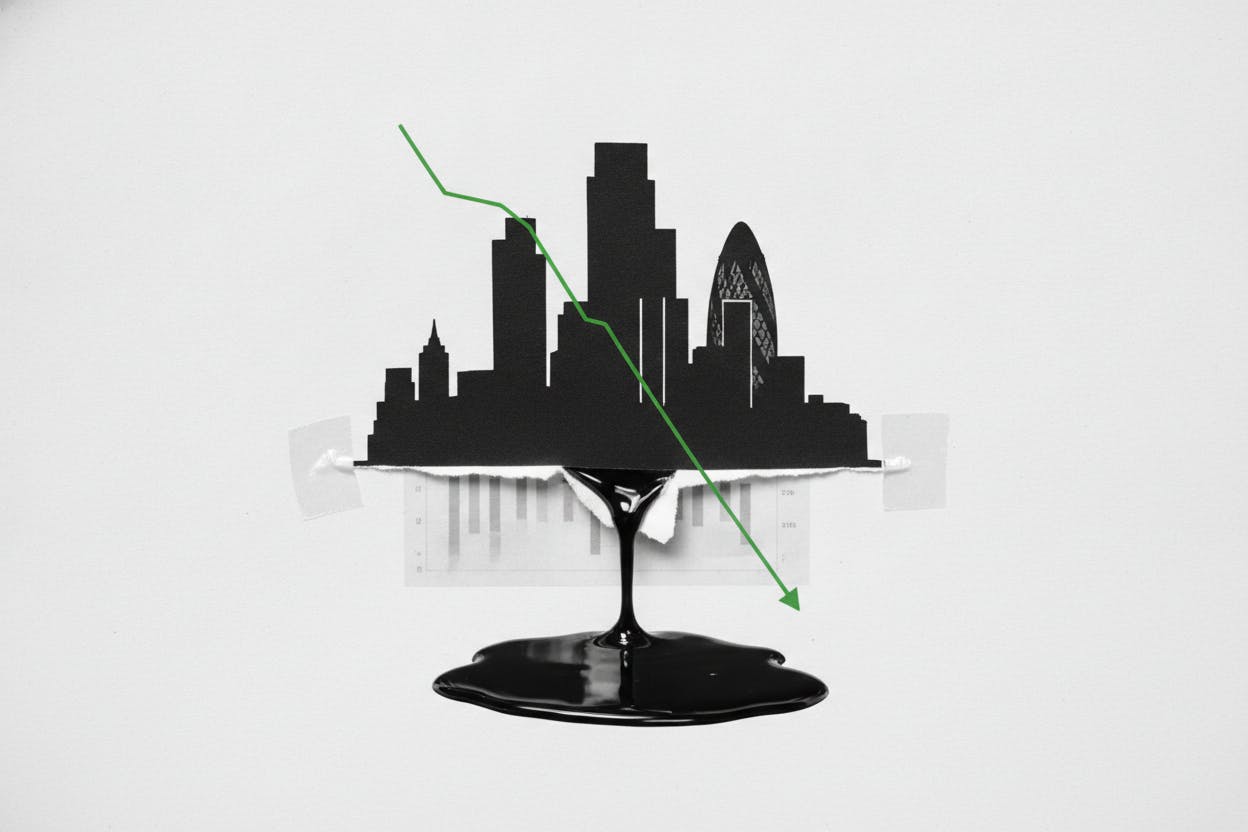
London's FTSE 100 is set to open slightly lower on Wednesday, with futures pointing to a drop of around 0.25% as a sustained decline in oil prices weighs on energy stocks and investors digest a raft of corporate earnings and economic data.
The move lower comes as crude prices extended their recent slide, falling by more than $1 a barrel in early trading. The drop was driven in part by signs that tensions between the United States and Iran may be easing, which tends to reduce the geopolitical risk premium that had been supporting oil prices in recent weeks.
For the FTSE 100, which has a heavy weighting of energy companies such as BP and Shell, a falling oil price is a direct headwind. When crude prices decline, the revenue and profits of these firms come under pressure, and their share prices typically fall in response.
What's behind the oil slide?
The latest leg lower in oil prices follows a broader trend that has seen crude retreat from recent highs. The easing of US-Iran tensions has been a key factor, as markets price in a lower likelihood of supply disruptions from the Middle East. This is part of a wider pattern: when geopolitical risks fade, oil's 'fear premium' tends to evaporate quickly.
At the same time, concerns about global demand persist, with economic data from major economies pointing to a slowdown. The combination of softer demand expectations and reduced supply fears has created a headwind for crude. For context, oil prices have fallen sharply in recent sessions, with Brent crude dropping more than 7% at one point, as we covered in our report on oil's recent plunge.
The impact is not limited to the UK. Lower oil prices are also providing relief to import-dependent economies, such as India, where a slide in crude can ease inflation pressures and reduce the cost of imported energy. We explored this dynamic in our analysis of Indian markets rallying on the oil slide.
A busy earnings day for UK blue chips
Beyond oil, investors are focused on a packed earnings calendar, with two of the FTSE 100's biggest names reporting results: Barclays and Unilever. Their numbers will give a snapshot of the health of the UK banking sector and the consumer goods industry, respectively.
Barclays, one of the UK's largest lenders, is expected to provide an update on its investment banking performance and net interest margins — the difference between what it earns on loans and pays on deposits. Investors will be watching for any signs of strain from higher interest rates or a slowing economy.
Unilever, the consumer goods giant behind brands like Dove, Ben & Jerry's and Hellmann's, will report its quarterly sales. The company has been navigating rising input costs and a cost-of-living squeeze that has pressured consumer spending. Its results will offer clues about how well it is managing pricing power and volume growth.
These earnings come at a time when UK shop-price inflation has softened, according to recent data. That could be a double-edged sword for retailers and consumer goods firms: lower inflation may ease cost pressures, but it could also signal weaker demand if consumers are cutting back.
What it means for investors
For everyday investors, the FTSE 100's dip is a reminder that index movements are often driven by a handful of heavyweight sectors. When oil prices fall, energy stocks drag the index down, even if other parts of the market are performing well. That's why it's important to look beyond the headline number and understand what's moving the market.
The easing of US-Iran tensions is broadly positive for risk appetite, as it reduces the chance of a disruptive conflict. But for energy investors, it's a direct negative because lower geopolitical risk means lower oil prices. This trade-off is a classic feature of markets: what's good for the economy can be bad for certain sectors.
Looking ahead, the key catalysts for the FTSE 100 will be the earnings reports from Barclays and Unilever, as well as any further moves in oil prices. If crude continues to slide, the index could face further pressure. But if earnings surprise to the upside, that could provide a floor for the market.
Investors should also keep an eye on the broader macro backdrop, including central bank policy. The Federal Reserve's next decision is a major event for global markets, and any shift in rate expectations can ripple through to the FTSE 100. We recently discussed how the dollar steadied ahead of the Fed decision, which is a key factor for UK-listed multinationals that earn in dollars.
In summary, today's expected dip is a microcosm of the forces shaping markets right now: geopolitics, commodity prices and corporate earnings all pulling in different directions. For the everyday investor, the best approach is to stay diversified and not overreact to any single day's move.