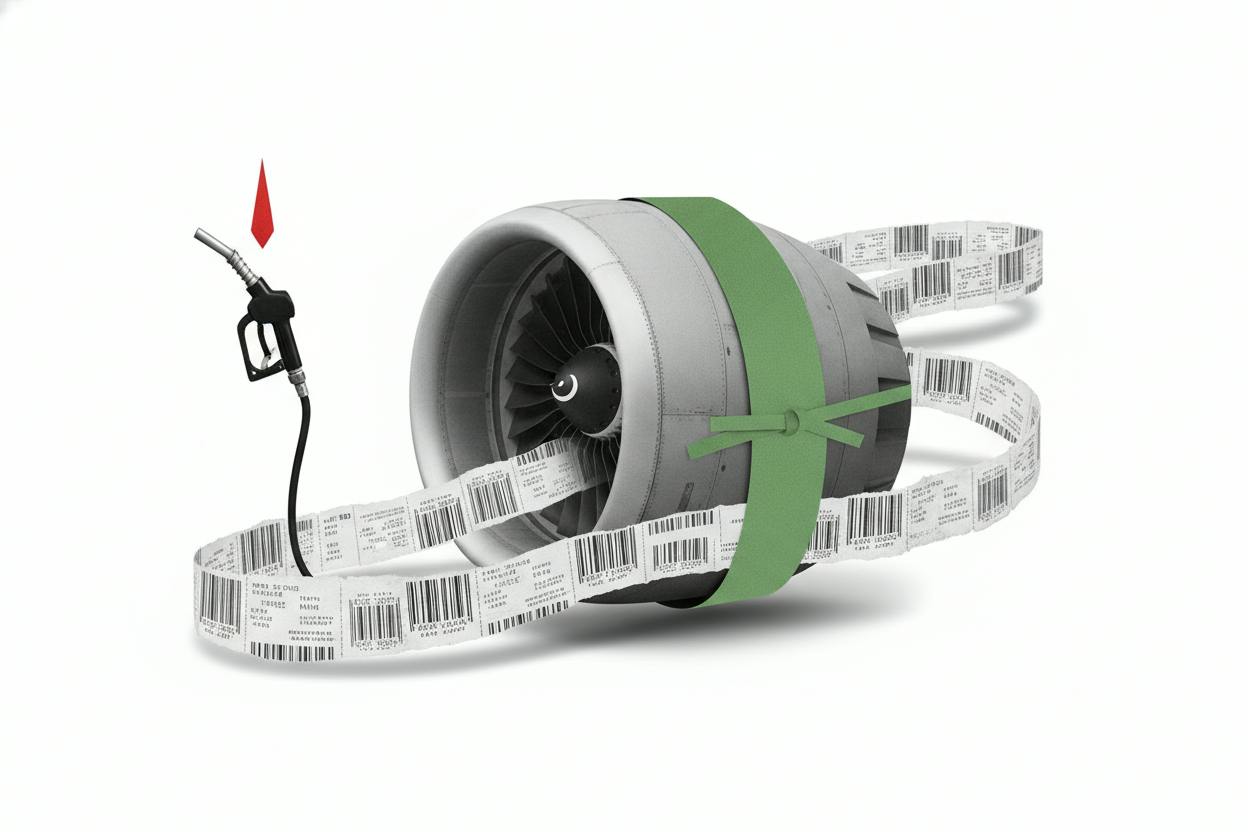
GE Aerospace has raised its 2026 earnings outlook for the second time, signaling that its lucrative jet-engine repair and spare-parts business remains robust even as airlines face higher fuel costs that could dampen flying.
The company now expects adjusted earnings of $8.00 to $8.10 per share for 2026, up from its previous range of $7.65 to $7.85. The upgrade follows a quarter that beat Wall Street expectations, with strong momentum in its commercial engines and services division.
Why services matter
GE Aerospace's business model leans heavily on servicing engines that are already in the sky. When an airline operates a fleet, it needs regular maintenance, replacement parts, and overhauls—regardless of whether it adds new flights. That recurring revenue stream provides a buffer against swings in new aircraft sales or short-term dips in travel demand.
In fact, services and spare parts now account for more than 70% of GE Aerospace's commercial revenue. That means the company doesn't need a big jump in new flights to keep growing; it just needs planes to keep flying and engines to keep needing attention.
This dynamic is similar to what investors see in other industrial companies that rely on aftermarket sales. For example, 3M recently lifted its profit outlook on the back of price hikes and steady demand, showing how diversified industrial firms can find growth even in a softer macro environment.
The fuel cost cloud
The main risk to GE Aerospace's outlook is the cost of jet fuel. If fuel prices stay high, airlines may cut back on flights, especially on less profitable routes. Fewer flights mean fewer engine cycles, which could eventually reduce the need for repairs and parts.
That concern is not hypothetical. Delta Air Lines recently issued a cautious fourth-quarter outlook, citing fuel costs as a looming headwind even as travel demand remains solid. If major carriers trim capacity, the ripple effect could reach engine makers like GE Aerospace.
However, GE Aerospace's management appears confident that the current repair pipeline is strong enough to offset any near-term softening. The company's raised guidance suggests it sees enough work in the hangars to support higher earnings, at least through 2026.
What it means for investors
For everyday investors, GE Aerospace's update is a reminder that companies with strong aftermarket businesses can be more resilient than those that depend solely on new sales. When a company earns a large chunk of revenue from servicing existing products, it often enjoys more predictable cash flows and better visibility into future earnings.
That said, the stock's valuation already reflects high expectations. GE Aerospace has been one of the best-performing industrial stocks in recent years, and any sign of weakness in the services business could hit the shares hard. Investors should watch for updates on airline capacity plans and fuel price trends, as those are the key variables that could change the story.
The broader aerospace and defense sector has also been in focus. Analysts at Morgan Stanley recently noted that demand in the sector remains solid despite a pullback in some defense stocks. That suggests the tailwinds for GE Aerospace are not unique to the company.
Still, the fuel cost issue is not going away. Oil prices have spiked above $100 a barrel at times, and any sustained rise in jet fuel prices could force airlines to rethink their schedules. If that happens, GE Aerospace's services revenue could eventually feel the pinch.
The bottom line
GE Aerospace's raised outlook is a positive sign for the company and its shareholders, but it is not without risks. The company is betting that the current strength in engine repairs will continue, even as airlines grapple with higher costs. For now, the market seems to agree, but investors should keep an eye on fuel prices and airline capacity decisions in the coming quarters.