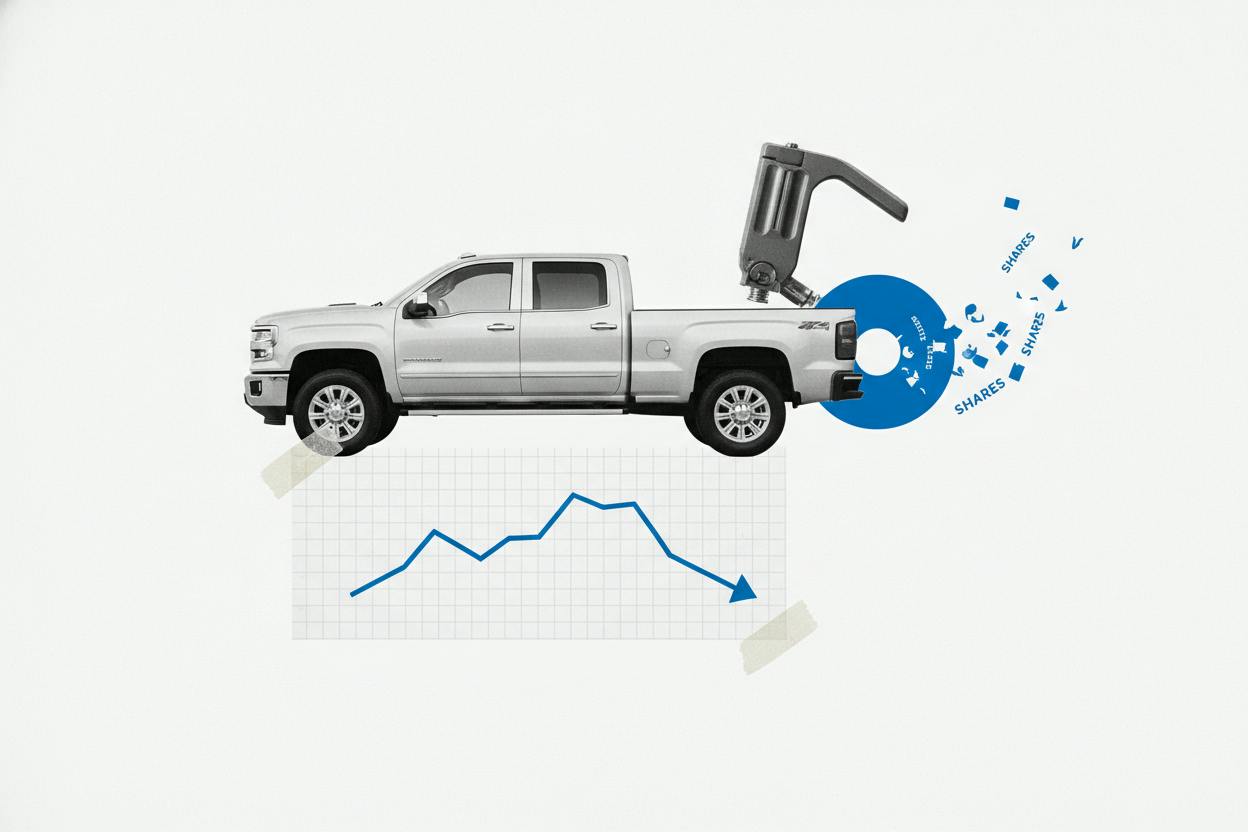
General Motors delivered a stronger-than-expected quarterly profit and doubled down on returning cash to shareholders, but investors still sent the stock lower in early trading.
The Detroit automaker said Tuesday that adjusted operating profit (a measure known as EBIT) rose 22% from a year earlier to $4.1 billion, while revenue climbed 2.9% to $50 billion. The results beat Wall Street's expectations, helped by steady demand for higher-priced pickups and SUVs.
GM also announced a new multi-year share repurchase program worth up to $20 billion, signaling confidence in its cash generation even as it continues to invest in electric vehicles and other new technology.
Despite the upbeat numbers, shares fell about 6% in premarket trading, a reminder that good earnings alone don't always move a stock higher.
What's driving the results
GM said a richer mix of large trucks and fewer money-losing electric vehicles helped boost profitability. In plain terms, the company is selling more of its most profitable vehicles—full-size pickups and SUVs—while scaling back on EVs that currently drag on earnings.
North America did most of the heavy lifting. The region's profit margin improved as production stabilized and pricing remained firm, even with interest rates still elevated and consumers showing signs of caution.
The company's ability to keep prices strong on its truck lineup is a key reason it can generate the cash needed to fund both its EV transition and shareholder payouts.
A big bet on buybacks
The new $20 billion repurchase plan is a significant commitment. Buybacks reduce the number of shares outstanding, which can boost earnings per share and support the stock price over time. For GM, it's also a way to return excess cash to investors without committing to a fixed dividend.
GM has been active in returning capital to shareholders in recent years, and this new plan extends that strategy. The company's management is essentially saying it believes the stock is undervalued and that it has more cash than it needs for its operational and investment plans.
For everyday investors, buybacks can be a positive signal, but they also carry risks. If a company overpays for its own shares or uses buybacks to mask weak underlying performance, the benefit can be limited. In GM's case, the buyback comes alongside solid operating results, which is generally a healthier combination.
What it means for investors
GM's earnings beat and buyback announcement highlight a broader trend among traditional automakers: they are trying to balance the costly transition to electric vehicles with the need to keep shareholders happy.
For investors, the key takeaway is that GM is still generating strong profits from its gasoline-powered trucks and SUVs, which provides a cushion for its EV investments. The company's ability to cut losses on EVs is also a positive sign, as it suggests management is being disciplined about where it spends money.
However, the premarket share decline shows that investors may have been expecting even more, or they may be worried about the broader economic environment. High interest rates and slowing consumer demand could eventually weigh on vehicle sales, even for popular models.
GM's results also come at a time when other companies are making big moves in the auto and industrial space. For example, Foxconn's deal to buy into Mitsubishi Electric Mobility highlights how global players are repositioning in the EV market. And Blackstone's new energy fund shows that capital is still flowing into sectors tied to the energy transition.
For those watching the broader market, GM's performance is a reminder that earnings season can be volatile. Even when a company beats expectations, the stock can move down if the news is already priced in or if guidance disappoints.
Looking ahead
Investors will likely focus on GM's full-year guidance and how quickly it can make its EV business profitable. The company has set ambitious targets for EV production, but it has also shown a willingness to slow down if demand doesn't materialize.
The buyback plan also raises questions about capital allocation. Will GM continue to prioritize buybacks over dividends or acquisitions? And how will it fund its EV investments if the economy slows?
For now, the message from GM is clear: the company is confident in its cash flow and committed to rewarding shareholders. Whether that confidence is justified will depend on how well it navigates the challenges ahead.