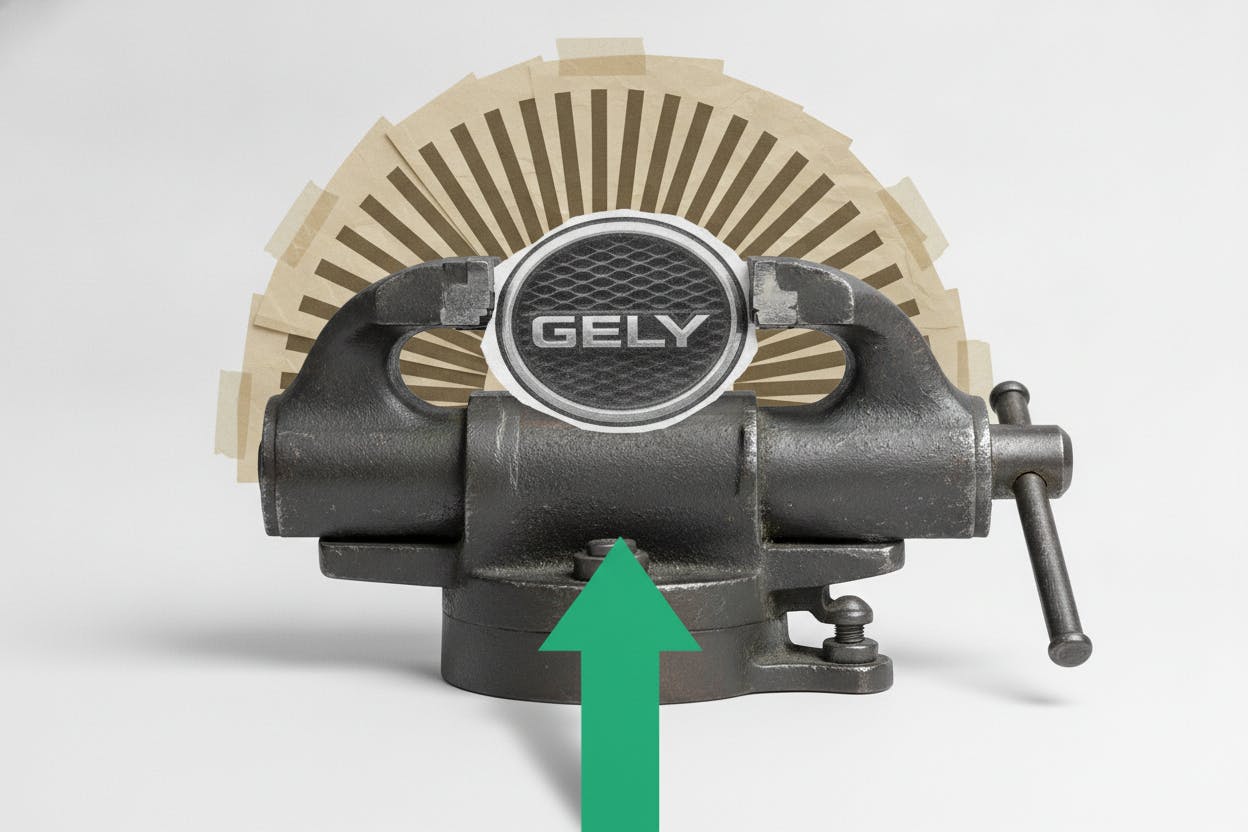
Geely Automobile, one of China's largest carmakers, reported record revenue for the first half of 2026, but the top-line growth didn't translate into higher profits. The company said net profit attributable to owners slipped 2% to 9.09 billion yuan from 9.26 billion yuan a year earlier, even as revenue climbed 15% to 173.6 billion yuan.
The gap between revenue growth and profit decline is a classic sign of margin compression. In a filing with the Hong Kong Stock Exchange, Geely attributed the squeeze to the rollback of government subsidies for electric vehicles (EVs) and intensifying competition in China's crowded auto market. With fewer subsidies, consumers face higher prices, and automakers are forced to offer discounts to keep sales moving—cuts that eat directly into profit per vehicle.
Exports provide a bright spot
One standout figure was exports, which jumped 158% year over year. That surge suggests Geely is finding success in overseas markets, where demand for Chinese-made EVs remains strong and competition may be less brutal than at home. The export boom helped offset some of the domestic pricing pressure, but it wasn't enough to lift overall profitability.
Geely's experience mirrors a broader trend among Chinese automakers. As domestic EV adoption matures and government incentives fade, companies are increasingly looking abroad for growth. However, exporting also brings its own challenges, including shipping costs, tariffs, and the need to build brand recognition in new markets.
What's behind the margin squeeze?
China's EV market has become fiercely competitive, with dozens of brands—from startups like Nio and Xpeng to tech giants like Xiaomi—fighting for market share. This has led to aggressive price cuts and promotional campaigns, which benefit consumers but pressure automakers' bottom lines.
Subsidy rollbacks add another layer of difficulty. For years, Chinese government incentives helped make EVs more affordable and boosted sales. As those subsidies are phased out, automakers must either absorb the cost or pass it on to buyers—both of which hurt profitability in the short term.
Geely's revenue growth of 15% shows that demand for its vehicles remains strong, but the company is clearly struggling to convert that demand into profit. This is a common challenge for automakers in high-volume, low-margin industries, especially during periods of intense competition.
What it means for investors
For everyday investors, Geely's results highlight the difference between revenue growth and profitability. A company can sell more cars and bring in more money, but if costs rise faster than revenue, profits can still fall. This is particularly relevant in capital-intensive industries like auto manufacturing, where fixed costs are high and pricing power is limited.
Investors should also note the importance of exports as a growth driver. Geely's 158% jump in exports suggests that overseas markets could be a key source of future earnings, especially if domestic competition remains intense. However, export growth doesn't automatically translate into higher profits—it depends on the margins those sales generate.
The broader takeaway is that China's EV market is entering a more mature phase, where growth is harder to come by and profitability is increasingly tied to operational efficiency and market positioning. Companies that can manage costs while expanding internationally may be better positioned than those that rely solely on domestic sales.
Geely's stock, listed in Hong Kong, will likely react to these results in the short term, but long-term investors will be watching whether the company can improve margins in the coming quarters. The company's ability to navigate the subsidy rollback and competitive pressures will be a key test of its resilience.
For context, other companies in the region are also facing similar dynamics. For instance, A2 Milk's profit drop shows how even consumer staples can be hit by market-specific challenges. Meanwhile, Chinese tech stocks have surged on AI enthusiasm, but auto stocks like Geely are more tied to cyclical demand and competition.
Geely's results also come amid a broader global shift toward EVs, with many governments pushing for greener transportation. While this creates long-term opportunities, the transition period is proving costly for many automakers. As EV-related companies like Dhoot Transmission have shown, the supply chain is booming, but the final assemblers face the toughest margin pressure.
In the end, Geely's record revenue is a sign of its scale and market reach, but the profit dip is a reminder that growth alone doesn't guarantee shareholder returns. Investors should keep an eye on how the company balances expansion with profitability in the months ahead.