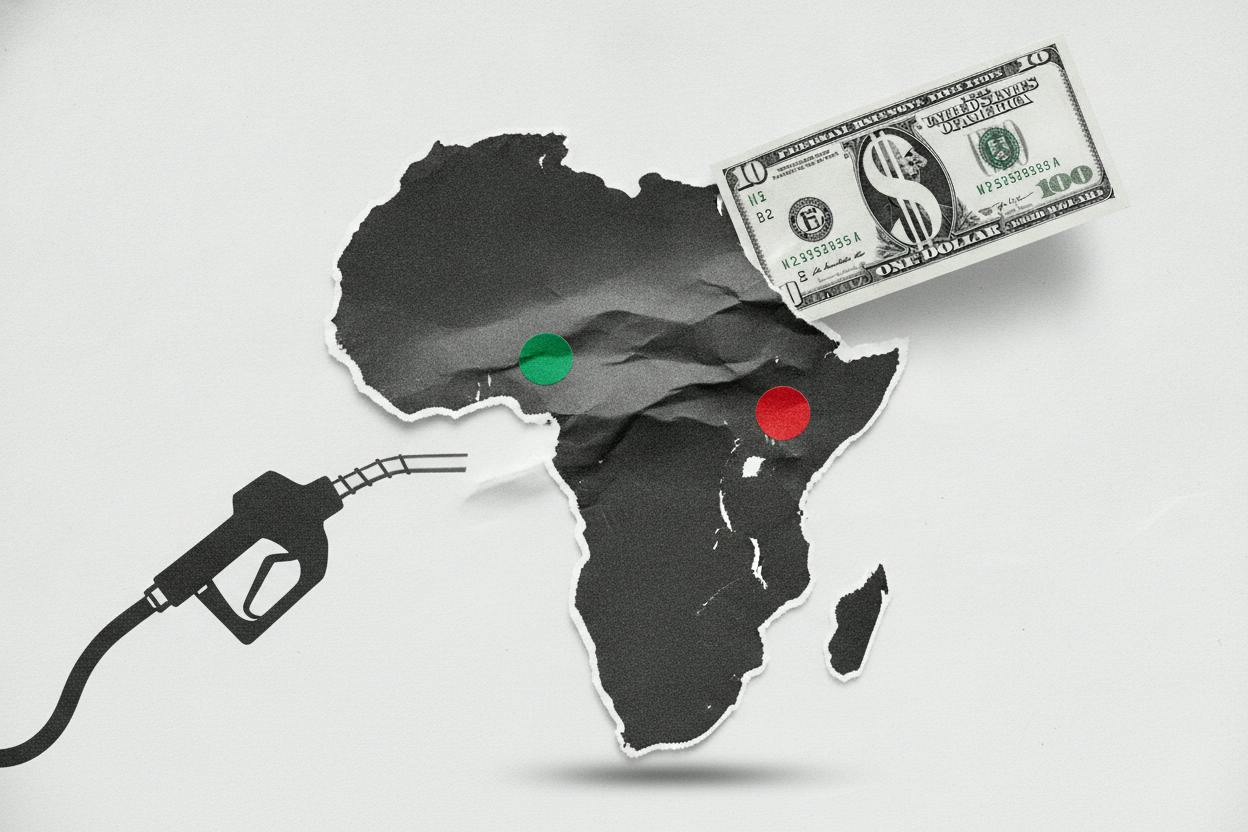
Ghana's cedi and Uganda's shilling are under renewed pressure as companies and energy importers step up their demand for US dollars, according to traders. The trend could keep both currencies drifting weaker in the near term, even as other African currencies such as Kenya's shilling and Zambia's kwacha are expected to hold their ground.
What's driving the weakness?
In Ghana, the cedi has slipped to 11.45 per dollar from 11.36 a week earlier, according to LSEG data. Ronald Mensah at Stanbic Bank Ghana, one of the country's largest banks, said corporate demand for foreign exchange is picking up again just as the Bank of Ghana supplies fewer dollars through its foreign-exchange auctions. That leaves less cushion when companies need to pay for imports or service debts.
Energy importers are a key part of the story. When oil prices climb, as they have recently, countries that rely on imported fuel need more dollars to pay for it. That extra demand can quickly eat into a central bank's reserves and put downward pressure on the local currency. The impact of higher oil prices on emerging markets has been a recurring theme this year, and Ghana and Uganda are no exception.
Uganda's shilling faces a similar dynamic. Traders point to corporate demand—especially from energy importers—as the main reason the currency is expected to weaken. Unlike Ghana, Uganda's central bank has not been as active in auctioning dollars, so the market has to absorb the demand on its own.
Why Kenya and Zambia are holding steady
Not all currencies in the region are feeling the pinch. Kenya's shilling and Zambia's kwacha are seen as stable, at least for now. In Kenya, the central bank has been more proactive in managing liquidity, and the country's diaspora remittances provide a steady flow of dollars. Zambia, meanwhile, has benefited from stronger copper prices and improved investor sentiment after its debt restructuring efforts.
The contrast highlights how different factors—central bank policy, commodity exports, and capital flows—can shape a currency's fate even within the same region.
What it means for investors
For everyday investors, a weakening currency can have several knock-on effects. If you hold local-currency assets in Ghana or Uganda, their value in dollar terms may fall. Imported goods become more expensive, which can feed into inflation. That, in turn, may prompt central banks to raise interest rates, which can affect bond prices and borrowing costs.
On the flip side, a weaker currency can make a country's exports more competitive, which could support local businesses that sell abroad. But for most people, the immediate impact is higher prices for imported fuel, food, and other goods.
Investors with exposure to these markets should watch how central banks respond. If the Bank of Ghana steps up its dollar auctions, the cedi could stabilise. If not, further declines are possible. Similarly, Uganda's central bank may choose to intervene if the shilling weakens too quickly.
For those invested in emerging market currencies more broadly, the current environment is a reminder that dollar strength and commodity prices remain powerful forces. The recent moves in carry trades also show how shifts in global liquidity can ripple into frontier markets.
The bigger picture
Ghana and Uganda are not alone in facing dollar pressure. Many emerging and frontier economies are dealing with a strong US dollar, elevated oil prices, and tighter global financial conditions. The combination of high oil and potential Fed rate hikes has been a headwind for riskier assets, including African currencies.
For now, traders are betting that the cedi and shilling will continue to weaken in the short term. But currency markets can turn quickly, especially if commodity prices ease or central banks step in. Investors should keep an eye on upcoming economic data and central bank announcements for clues about the next move.
As always, it's important to remember that currency movements are just one piece of the investment puzzle. A weakening currency doesn't automatically mean a bad investment, but it does add an extra layer of risk for those holding local-currency assets.