Wall Street futures pointed lower on Monday as investors juggled two big worries at once: crude oil hovering near $100 a barrel and the growing possibility that the Federal Reserve could raise interest rates at its meeting next week.
The moves come as traders prepare for a busy stretch of economic data, including the latest consumer price index (CPI) and producer price index (PPI) reports due this week. Those numbers will give the Fed fresh evidence on how fast prices are rising across the economy, and they could heavily influence the central bank's decision.
Oil's climb is the key driver
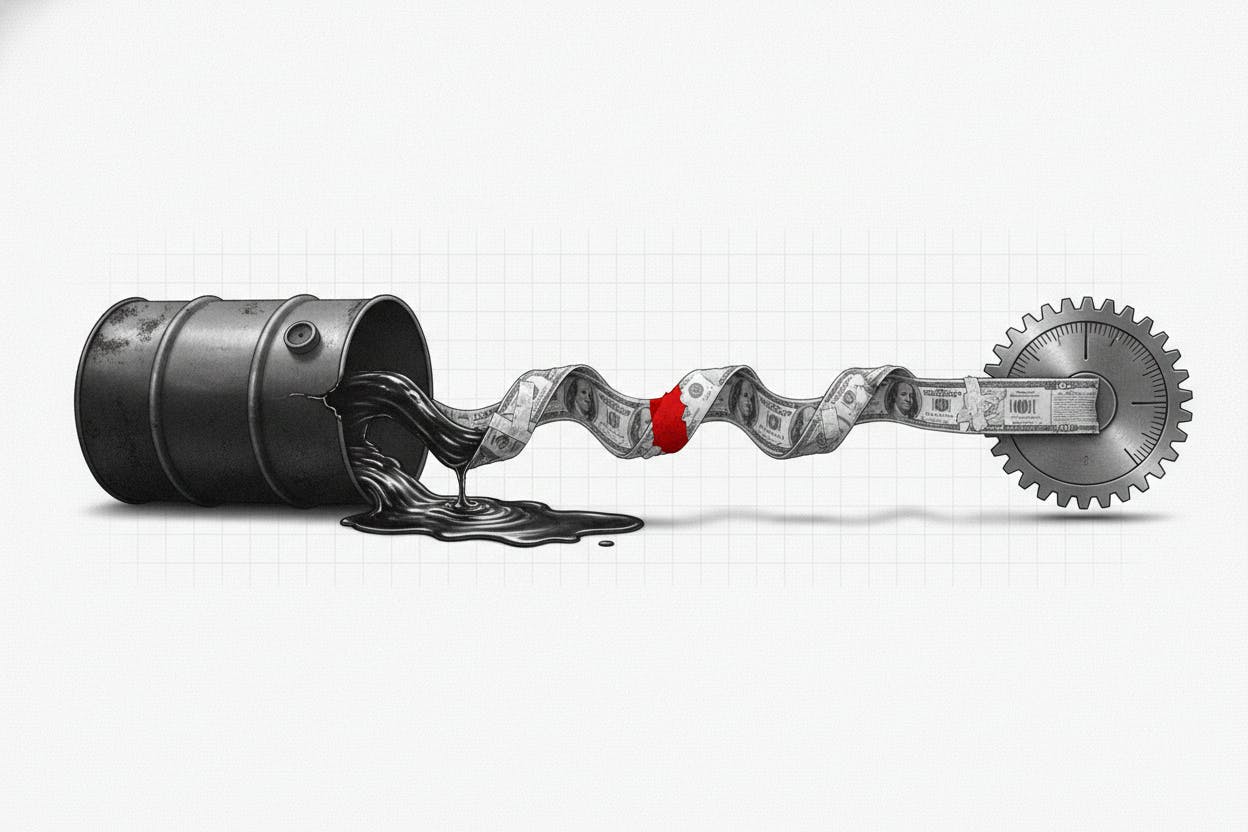
Brent crude, the international benchmark, has climbed back toward the $100 level, a threshold that tends to grab attention across financial markets. The recent surge is tied to the conflict between the US and Iran, with Reuters reporting that traders are reluctant to assume oil will quickly cool off given the risk of wider regional disruption.
Higher oil prices ripple through the economy in ways that matter for both businesses and households. Energy is a major input for shipping, manufacturing, and utilities, so when crude rises, those costs often get passed along to consumers. That is why oil is such a closely watched inflation signal, and why the current spike is making the Fed's job harder.
This is not the first time this year that oil has spiked on Middle East tensions. Earlier attacks in the region also pushed crude higher and dragged US stocks lower, showing how quickly geopolitical events can move markets. The current situation is similar, but with oil already near $100, the stakes feel higher.
Inflation data and the Fed's next move
This week's CPI and PPI reports will be closely watched for signs that inflation is cooling or heating up. CPI measures what consumers pay for a basket of goods and services, while PPI tracks what producers pay for their inputs. Both are important, but CPI tends to get more attention because it directly affects household budgets.
If the data comes in hot, it could push the Fed toward a 25-basis-point rate hike at its meeting next week. A basis point is one-hundredth of a percentage point, so a 25-basis-point move would raise the benchmark rate by a quarter of a percentage point. Markets are already pricing in a real chance of that outcome, which is why futures are on edge.
Rate hikes are a tool the Fed uses to cool inflation by making borrowing more expensive. That can slow spending and investment, but it also tends to weigh on stock prices, especially for growth companies that rely on cheap credit. The prospect of another hike, on top of the ones already delivered, is adding to the nervousness.
European stocks have also been feeling the pressure, as Brent crude returned to $100 ahead of key central bank decisions. The global nature of the oil shock means no major market is immune.
What it means for investors
For everyday investors, the combination of high oil prices and a potentially hawkish Fed creates a tricky environment. Higher energy costs can squeeze corporate profit margins, especially for airlines, trucking companies, and other fuel-intensive businesses. At the same time, rising interest rates make bonds more attractive relative to stocks, which can pull money out of equities.
But it is not all bad news. Energy companies and related sectors often benefit from higher crude prices, and some investors see them as a hedge against inflation. UAE stocks diverged as Brent topped $100, a reminder that oil's impact varies by region and sector.
The key takeaway is that the next few weeks could be volatile. The inflation reports this week will set the tone, and the Fed's decision next week will be the big event. Investors should expect swings in both directions as new data comes in.
It is also worth remembering that the Fed is trying to balance two goals: bringing inflation down without tipping the economy into a recession. That is a delicate act, and the oil spike makes it harder. If energy prices stay high, the Fed may feel pressure to keep rates higher for longer, which could weigh on markets well beyond this week.
For now, the best approach for most investors is to stay diversified and avoid making impulsive moves based on short-term headlines. The market is pricing in a lot of uncertainty, and that often means opportunities for those who can stay patient.