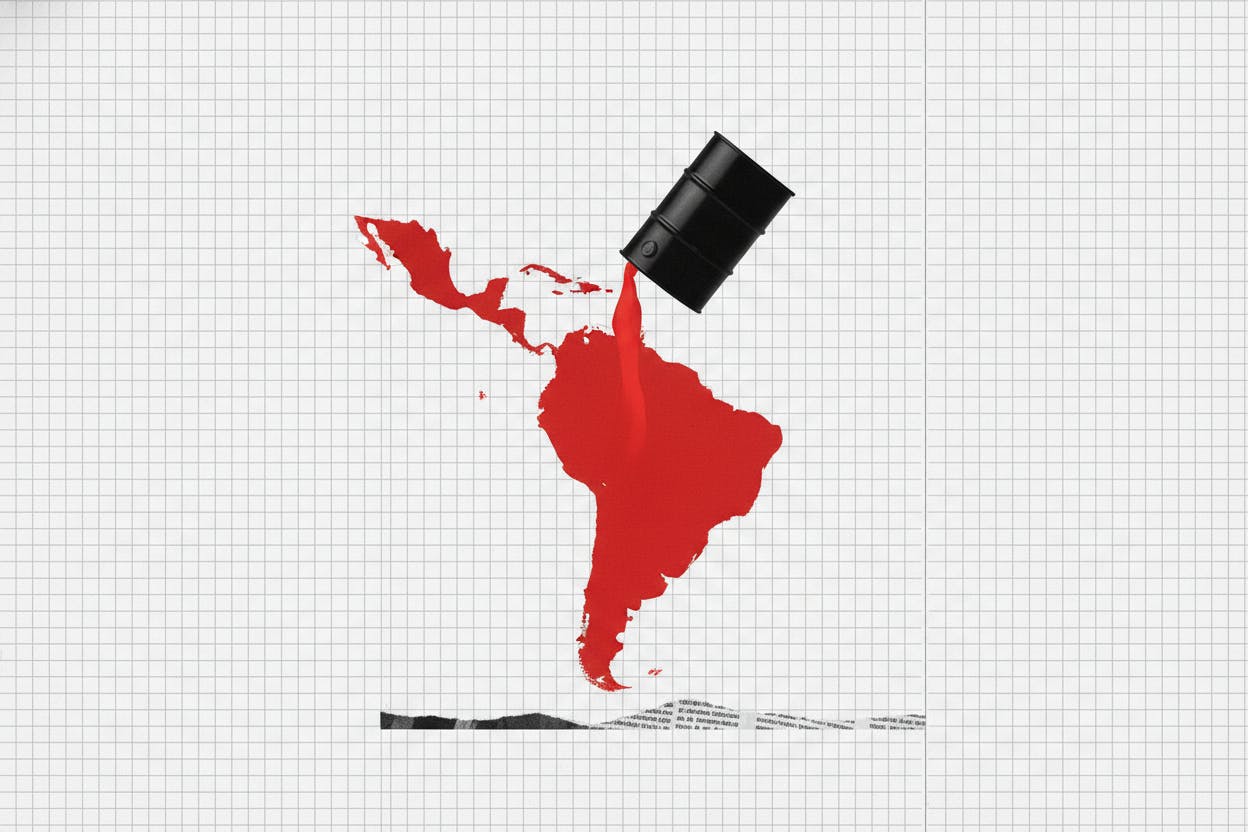
Oil's climb back above $100 a barrel is sending ripples through Latin American markets, as investors reassess the inflation outlook across the region. The MSCI Latin America index fell 0.9% on the day, a move that reflects growing anxiety that higher energy costs could complicate central banks' efforts to tame price pressures.
The drop came as investors digested two key regional data points: Mexico's August inflation reading and Chile's decision to hold its benchmark interest rate at 4.5% for the sixth consecutive meeting. Both underscored the delicate balancing act facing policymakers who are trying to support growth while keeping inflation in check.
Oil's double-edged sword
For Latin America, oil is a mixed blessing. The region includes major producers like Mexico and Colombia, which benefit from higher crude prices through increased export revenues and government income. But it also includes net importers such as Chile and much of Central America, where expensive energy feeds directly into consumer prices and widens trade deficits.
The recent surge in oil—driven by geopolitical tensions and supply concerns—has been particularly unsettling because it comes at a time when many central banks were hoping to declare victory over inflation. As oil's climb toward $100 rattles emerging markets, investors are worried that the commodity could keep inflation elevated for longer, forcing policymakers to keep interest rates higher than previously expected.
That dynamic was on full display in the region's currency markets, where several Latin American currencies weakened against the dollar. A stronger dollar, often a consequence of higher oil prices and risk aversion, makes it more expensive for countries to service dollar-denominated debt and can fuel imported inflation.
Mexico's inflation puzzle
Mexico's August inflation data added another layer of complexity. While the country is an oil exporter, its economy is closely tied to the United States, and its central bank has been wrestling with stubbornly high consumer prices. The latest figures likely showed that inflation remains above the central bank's target range, even as some components ease.
For Mexican investors, the key question is whether the central bank will feel compelled to keep rates restrictive for longer. Higher oil prices could push up transportation and food costs, which are significant components of Mexico's inflation basket. The peso, which had been one of the region's stronger performers, has come under pressure as global risk sentiment sours.
Chile's steady hand
Chile's central bank, meanwhile, held its key rate at 4.5% for the sixth straight meeting, signaling a patient approach. The decision was widely expected, but it highlights the challenges facing a country that imports most of its energy. Chile's inflation has been cooling, but the recent oil spike threatens to reverse some of that progress.
By holding rates steady, Chile's policymakers are betting that the current level is restrictive enough to keep inflation anchored without choking off economic growth. However, if oil prices stay elevated, the bank may need to reconsider its stance. The Chilean peso, like many of its regional peers, has been sensitive to commodity price swings.
What it means for investors
For everyday investors, the takeaway is that oil is not just an energy story—it's an inflation story with broad market implications. When crude prices spike, it can ripple through stock markets, bond yields, and currencies, especially in emerging economies that are more vulnerable to external shocks.
Latin American equities have historically been sensitive to commodity cycles, and the current environment is no exception. The MSCI index's 0.9% decline reflects a broader risk-off mood that has also affected other emerging markets. As yen surge and oil spike rattle Asian markets, the pattern is global: higher energy costs tend to hit risk assets across the board.
Investors should also watch how the oil rally interacts with U.S. monetary policy. If oil keeps pushing inflation higher, the Federal Reserve may be less inclined to cut interest rates, which would strengthen the dollar and put further pressure on emerging market assets. The 10-year Treasury yield nearing 5% is one indicator of these pressures, as higher yields attract capital away from riskier markets.
For those with exposure to Latin American funds or individual stocks, the key is to monitor inflation data and central bank communications closely. Companies in sectors like consumer staples and utilities may be more resilient, while those reliant on discretionary spending could face headwinds if inflation erodes purchasing power.
Ultimately, the oil price is a double-edged sword for the region. Producers may see a boost to their fiscal positions, but consumers and importers will feel the pinch. As the situation evolves, investors should stay alert to how policymakers respond—and whether the current oil spike proves temporary or becomes a longer-lasting trend.