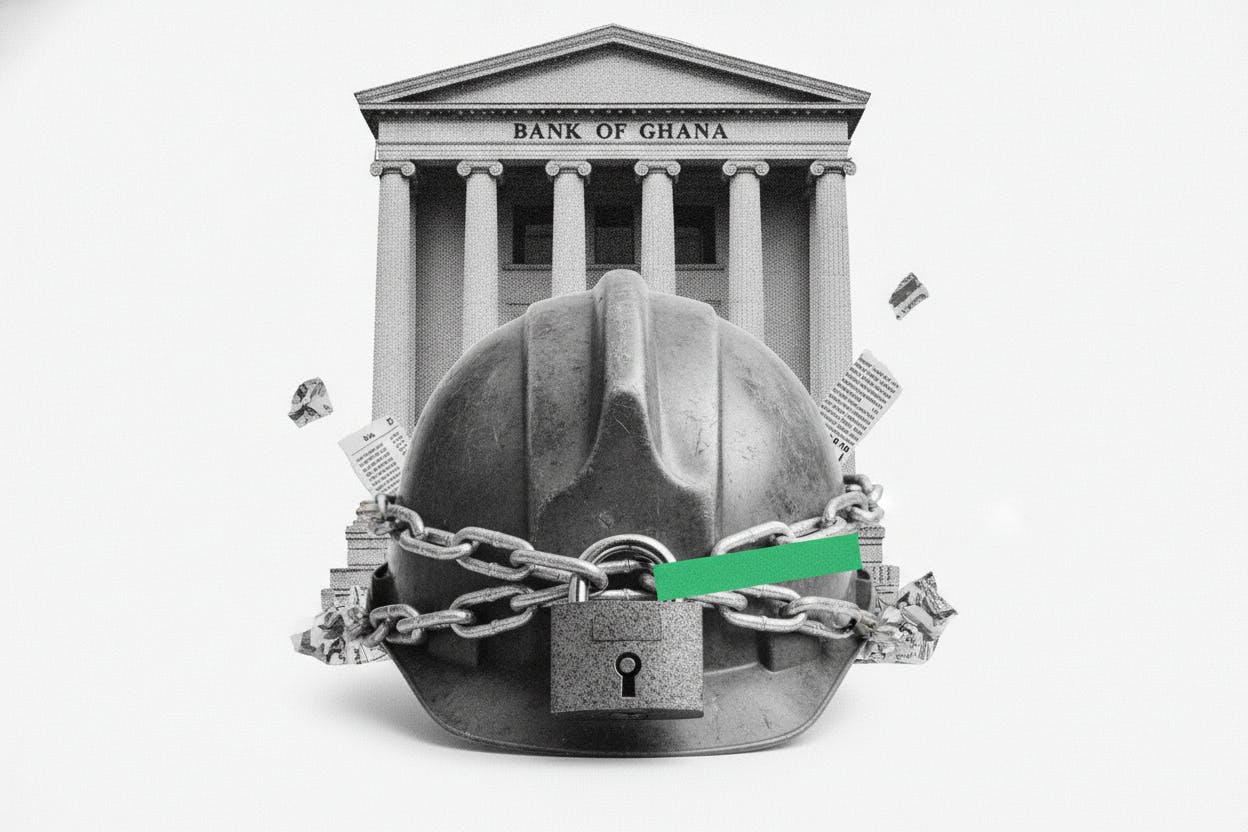
Ghana's Mine Workers' Union has formally asked the Bank of Ghana to release more than 380 million cedis (about $34.55 million) that it says has been locked up since the country's financial-sector clean-up between 2017 and 2019. The union says the money belongs to more than 19,000 people, including current and former mineworkers, retirees, widows, and dependents.
The funds come from provident funds, welfare savings, and severance packages that were swept into the central bank's restructuring of the financial industry. During that period, the Bank of Ghana shut down or merged hundreds of troubled lenders, citing insolvency and weak governance. The clean-up was designed to stabilise the banking system, but it also left many workers unable to access their savings.
What happened to the money?
When the central bank intervened in struggling financial institutions, it took control of their assets and liabilities. For many workers, their savings were held in accounts at these institutions, and when the institutions were closed or merged, those accounts were frozen. In practice, a promised cash benefit can turn into a claim that must be resolved through a lengthy administrative process.
The Mine Workers' Union argues that the money is not the property of the failed institutions but belongs to individual workers who contributed to their own savings plans. The union is asking the central bank to release the funds so that workers can access their money without further delay.
This situation is not unique to Ghana. When regulators clean up a financial system, there are often disputes over who owns what, and ordinary savers can find themselves caught in the middle. The challenge is balancing the need to protect the financial system with the rights of individuals who have done nothing wrong.
Why it matters for investors
For everyday investors, this case highlights the risks that can arise when financial institutions fail. Even in a well-regulated system, there is always the possibility that your money could be tied up if your bank or savings institution runs into trouble. That is why many countries have deposit insurance schemes that protect savers up to a certain amount.
In Ghana, the clean-up was a necessary step to restore confidence in the banking sector, but it has had lasting consequences for some of the most vulnerable people. The union's request is a reminder that financial regulation has human costs, and that the process of resolving failed institutions can take years.
For investors in mining companies, the dispute is a reminder that labour relations and regulatory issues can affect the operating environment. Mining is a major part of Ghana's economy, and any disruption to worker confidence could have broader implications. However, the direct impact on listed mining stocks is likely to be limited unless the dispute escalates.
The Bank of Ghana has not yet responded publicly to the union's request. The outcome will be watched closely by workers and by others who may have similar claims from the clean-up period.
What to watch next
The key question is whether the central bank will agree to release the funds, and if so, how quickly. The union is likely to continue pressing its case, and there may be legal or political pressure on the government to resolve the matter.
For those affected, the wait continues. For investors, the episode serves as a case study in the complexities of financial regulation and the importance of understanding where your money is held.
Similar situations have arisen in other countries, and the resolution often depends on the legal framework and the willingness of regulators to prioritise individual savers. In the meantime, the union's demand is a clear signal that the issue is not going away.