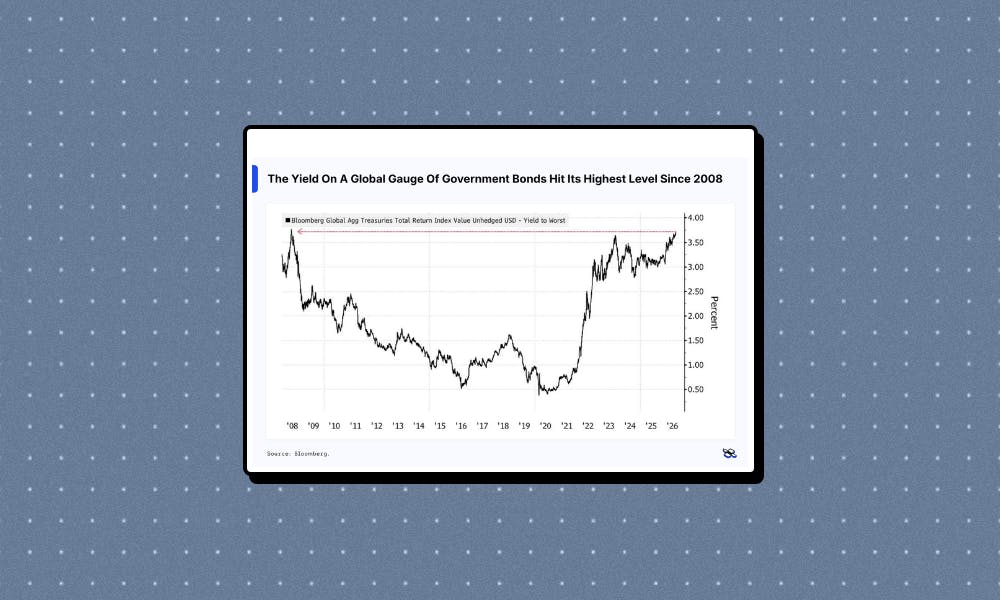
It has been a rough stretch for the world's bond markets. Yields on global government bonds have climbed to their highest level since 2008, as investors grapple with an uncomfortable mix of rising oil prices, stubborn inflation, and central banks that may need to keep interest rates higher for longer than previously expected.
A Bloomberg gauge of global sovereign bond yields topped 3.7% this week, a level not seen in over 15 years. The move marks a sharp reversal from the ultra-low interest rate era that followed the 2008 financial crisis, and it is sending ripples through stock markets and economies around the world.
What's driving the sell-off?
The latest trigger was Federal Reserve Chair Kevin Warsh reaffirming his commitment to fight inflation. His comments prompted economists at Barclays and Société Générale to pencil in US interest rate hikes that they had not previously expected. That is a notable shift, because just a few months ago many investors were betting that the Fed would soon start cutting rates.
It is not just the United States. Traders are also betting on rate increases in Japan and Australia, as those economies face their own inflation pressures. In Japan, yields on government bonds have hit levels not seen in years, and in Australia, the central bank has signaled it may need to tighten policy further.
The rise in yields is being compounded by higher oil prices, which have pushed up inflation expectations. When energy costs rise, they feed through to consumer prices, making it harder for central banks to bring inflation back to their targets. That forces them to keep rates higher, which in turn pushes bond yields up.
Why bond yields matter to you
For everyday investors, the move in bond yields is more than just a market curiosity. When yields rise, it means the cost of borrowing goes up for governments, companies, and consumers. That can slow economic growth and eat into corporate profits.
Higher yields also make bonds more attractive relative to stocks. When investors can earn a decent return from safe government bonds, they are less willing to take on the risk of equities. That is one reason why stock markets have been under pressure recently, as seen in Wall Street slipping as Treasury yields and oil prices climb.
The impact is being felt globally. European stocks have slid as oil and gas prices push bond yields higher, and Asian markets have been mixed as oil tops $92 and Japan's yields hit 3%. Even sterling has slipped as UK 10-year gilt yields hit their highest since 2008.
What investors should watch next
The key question is whether this is a temporary spike or the start of a longer-term trend. If central banks do end up raising rates again, bond yields could keep climbing, putting more pressure on stocks and other risk assets.
Investors should also keep an eye on oil prices. If they continue to rise, inflation could stay sticky, forcing central banks to keep rates higher for even longer. That would be a headwind for both bonds and stocks.
For those with diversified portfolios, the message is to stay patient. Bond yields at these levels mean that fixed-income investments are finally offering some income again, but they also signal that the era of cheap money is well and truly over. As always, it is important to focus on long-term goals rather than short-term market moves.
The situation is fluid, and any surprise in inflation data or central bank communication could shift the picture quickly. For now, the bond market is having a rough one, and stocks could be next.



