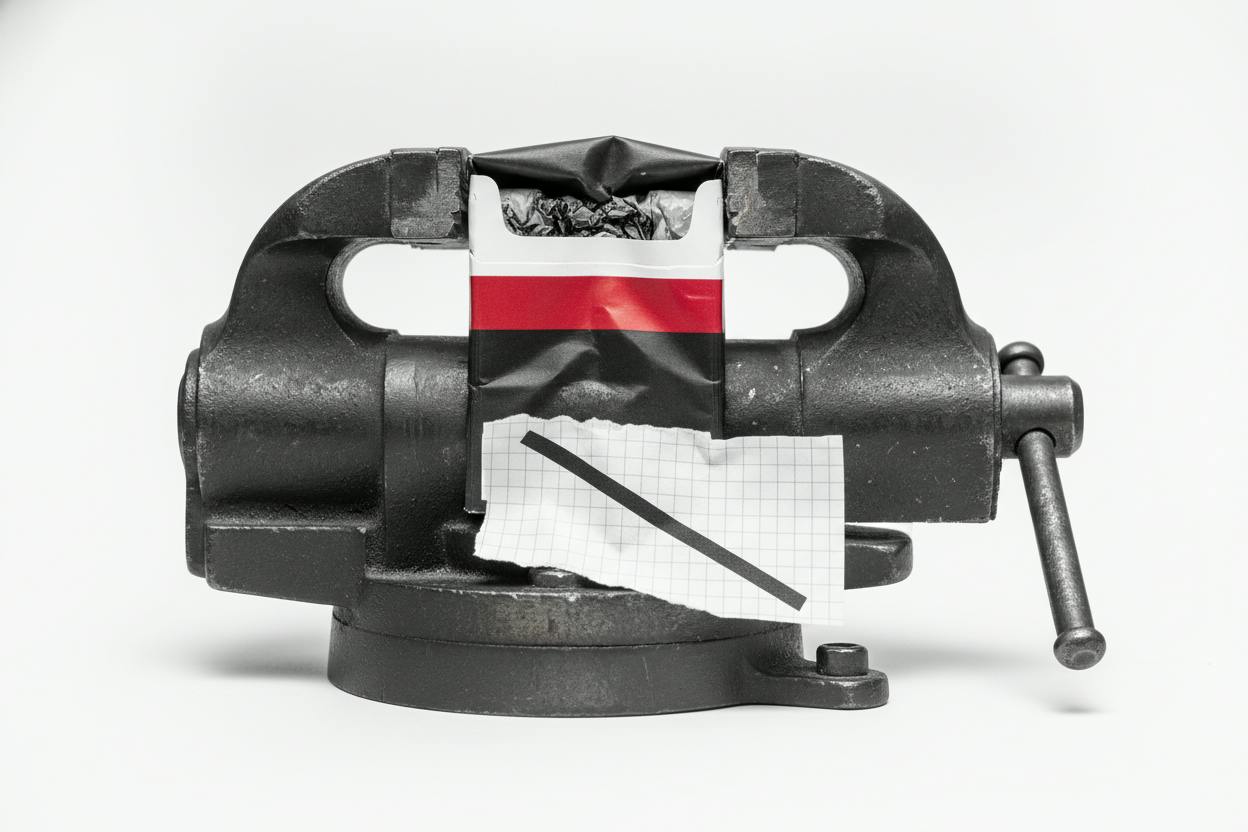
Godfrey Phillips India, the company that makes Marlboro cigarettes under license, reported a sharp drop in quarterly profit on Tuesday, blaming the higher excise duty introduced in January. Net profit fell 37.7% to 1.9 billion rupees ($23 million) in the July–September quarter, down from 3.05 billion rupees a year earlier.
Revenue from operations jumped to 42 billion rupees from 16.23 billion rupees, helped by price increases on its cigarette brands. But the company's expenses nearly tripled to 40.3 billion rupees, driven by the higher tax and costlier raw materials.
What is excise duty and why does it matter?
Excise duty is a tax charged per pack of cigarettes, rather than as a percentage of the selling price. That means when the government raises the duty, the cost to the manufacturer rises immediately, and it can only pass that cost on to consumers by raising prices. But higher prices often lead to lower demand, especially in a price-sensitive market like India.
In January, the Indian government raised excise duties on cigarettes as part of its efforts to discourage smoking and boost revenue. For companies like Godfrey Phillips, that tax hike directly eats into profit margins unless they can offset it with higher prices or cost cuts.
The company said the higher excise duty squeezed its margins in the quarter, even as revenue rose on price increases. That is a classic squeeze: revenue goes up, but costs go up even faster, leaving less profit per pack sold.
What does this mean for investors?
For everyday investors, this report is a reminder that companies in heavily taxed industries face a unique set of risks. Cigarette makers are not just competing with each other; they are also competing with government policy. When taxes rise, profits can take a hit even if the company is selling more or charging more.
Godfrey Phillips is one of India's largest cigarette makers, and its fortunes are closely tied to the regulatory environment. The company has been trying to diversify into other areas, but cigarettes still dominate its revenue. That makes it vulnerable to future tax changes.
Investors should also note that the company's revenue growth was impressive—revenue more than doubled year over year. But that growth came at a cost: the company had to raise prices significantly, and those price hikes may not be sustainable if consumers start to push back or switch to cheaper alternatives.
The broader Indian market has been volatile recently, with stocks rallying on falling oil prices and shifting political dynamics. But individual company results like this one show that not all news is positive, even in a rising market. For a look at how other Indian companies are faring, check out Titan's profit surge and Samvardhana Motherson's earnings jump.
What to watch next
Investors will be watching two things in the coming months. First, whether Godfrey Phillips can maintain its revenue growth without further eroding margins. The company may need to cut costs or find new revenue streams to offset the tax burden.
Second, whether the government will raise excise duties again. If it does, the pressure on cigarette makers will only intensify. If it doesn't, companies like Godfrey Phillips may have a chance to recover as they adjust to the new tax environment.
For now, the message from this quarter is clear: higher taxes can hurt profits even when a company is raising prices and growing revenue. That is a lesson that applies beyond cigarettes—any business that relies on products subject to heavy government taxation faces similar risks.
As always, investors should consider the broader context. The Indian economy is growing, but inflation and tax policy remain key risks. For more on how oil prices and politics are moving Indian markets, see this market update. And for a look at how other companies are navigating cost pressures, check out Turkish Airlines' response to fuel costs.