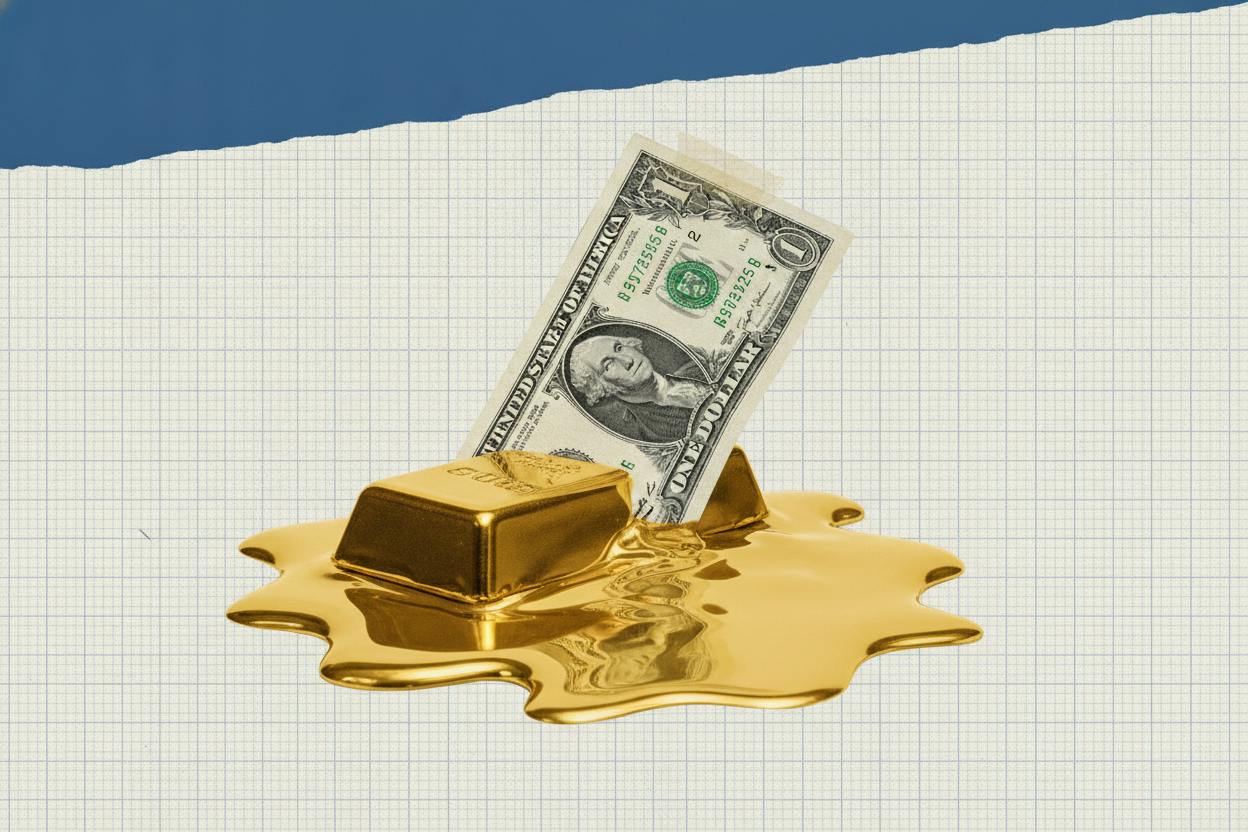
Gold prices took a sharp hit on Tuesday, sliding 1.7% to $4,282.53 an ounce, as a chorus of hawkish comments from Federal Reserve officials dampened hopes that the central bank is done raising interest rates. The selloff was compounded by a strengthening US dollar, which climbed to a two-month high, making gold more expensive for holders of other currencies.
The drop came after several Fed policymakers pushed back against the idea that inflation is cooling quickly enough to pause rate increases. Chicago Fed President Austan Goolsbee pointed to energy-driven inflation as a lingering concern, while Richmond Fed President Tom Barkin and Boston Fed President Susan Collins both voiced support for last week's rate hike. Their remarks revived expectations that the Fed may need to tighten policy further, with traders now pricing in a 77% chance of another hike in October.
Why the dollar and gold are moving together
Gold and the US dollar typically move in opposite directions. When the dollar strengthens, gold becomes more expensive for international buyers, which tends to weigh on demand. The dollar's rise to a two-month high was fueled by the Fed's more hawkish tone, as higher interest rates make dollar-denominated assets more attractive to yield-seeking investors.
For everyday investors, the key takeaway is that gold's recent slide reflects a shift in expectations about the path of interest rates. When rates are high, holding gold—which pays no interest—becomes less appealing compared with bonds or cash that offer yields. That dynamic is playing out now as the market adjusts to the possibility of more hikes.
What it means for investors
For those with gold in their portfolios, this pullback is a reminder that the metal is sensitive to interest-rate expectations. If the Fed does hike again in October, gold could face further pressure. Conversely, if inflation data surprises to the downside and the Fed signals an end to hikes, gold could rebound quickly.
It's also worth noting that gold is often seen as a hedge against inflation and economic uncertainty. While the current environment—with sticky inflation and a resilient economy—might seem supportive, the reality is that higher rates tend to overshadow those factors. Investors should watch upcoming inflation reports and Fed speeches for clues about the next move.
The broader market context is also relevant. A stronger dollar has ripple effects across commodities, as seen in copper slipping on the firmer dollar. Similarly, the dollar's firmness is setting the tone for global markets this week, with traders awaiting more Fed speeches and economic data.
Looking ahead
The immediate focus will be on upcoming economic data, particularly inflation readings, which could either reinforce or challenge the Fed's hawkish stance. If inflation shows signs of cooling, the case for another hike weakens, potentially giving gold a lift. On the other hand, if price pressures remain elevated, the dollar could stay strong and gold could remain under pressure.
For now, the market is clearly leaning toward more tightening. The 77% probability of an October hike is a significant shift from just a few weeks ago, when many investors expected the Fed to hold steady. This repricing is what's driving both the dollar's strength and gold's decline.
As always, it's important for investors to focus on their long-term goals rather than reacting to short-term swings. Gold can play a role in a diversified portfolio, but its price movements are often volatile and tied to macroeconomic factors that are hard to predict. Staying informed and understanding the drivers—like interest rates and the dollar—can help you make more confident decisions.