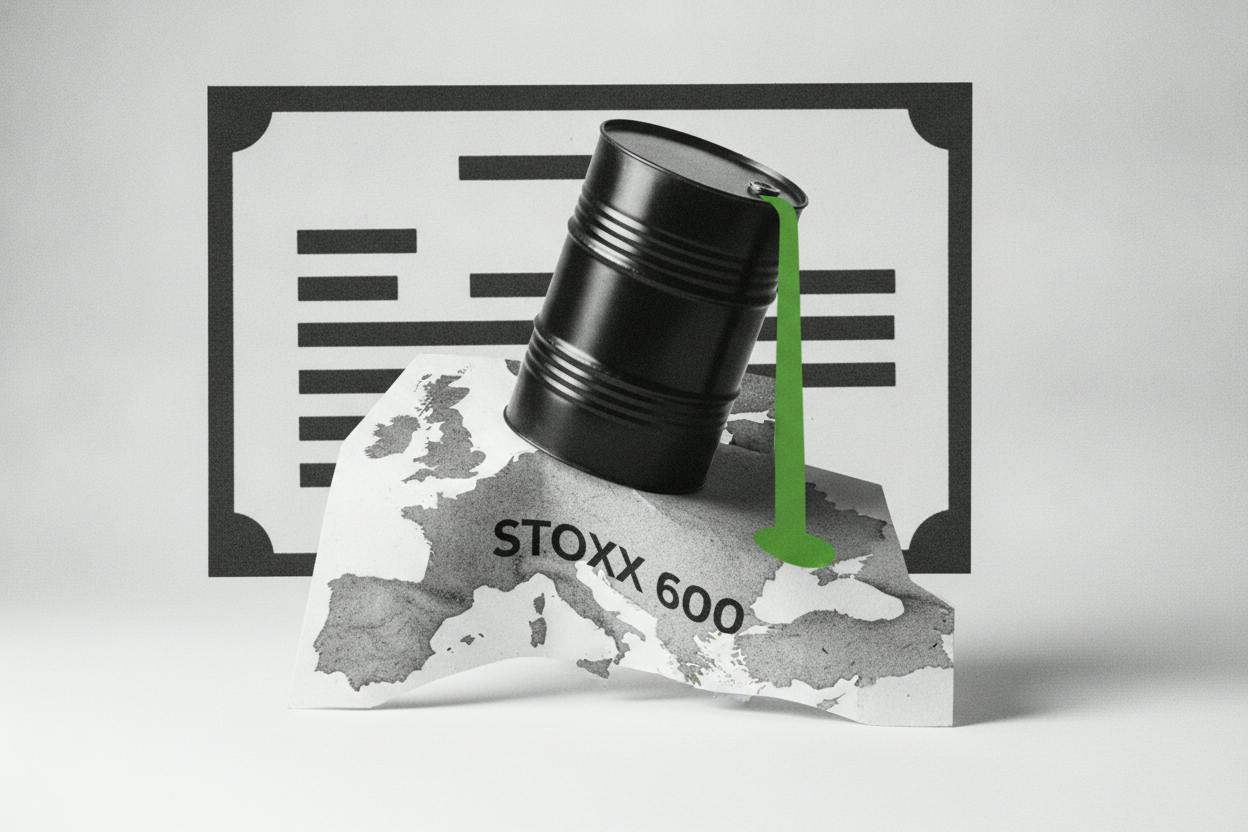
European stocks slipped on Tuesday as oil prices climbed back above $100 a barrel and US government bond yields reached their highest level since 2007, reviving concerns about energy-driven inflation and tighter financial conditions.
The pan-European STOXX 600 index fell 0.4%, with losses spread across most sectors. The one bright spot was energy: energy shares rose 1.3% as Brent crude gained more than 1%, snapping a five-session losing streak.
Why oil and yields are moving together
Oil's rebound above $100 is a reminder that energy prices remain a key driver of inflation. When crude rises, it feeds directly into the cost of fuel, heating, and transport, which can push up consumer prices and complicate central banks' efforts to bring inflation under control.
At the same time, US 10-year Treasury yields hit 5.085%, their highest level since 2007. That matters globally because US government bonds are considered the benchmark for the “risk-free” return—the baseline against which all other investments are measured. When those yields rise, they pull money away from riskier assets like stocks, and they also raise borrowing costs for companies and households.
Germany's 10-year government bond yield also climbed to 3.550%, reflecting the broader upward pressure on global borrowing costs.
What this means for investors
For everyday investors, the combination of higher oil and higher yields is a double-edged sword. On one hand, energy companies benefit from stronger crude prices, which is why energy shares outperformed on Tuesday. On the other hand, higher yields make bonds more attractive relative to stocks, and they increase the discount rate used to value future earnings, which can weigh on equity valuations—especially for growth and technology stocks that promise profits far in the future.
The move also signals that markets are bracing for interest rates to stay higher for longer. Central banks, including the US Federal Reserve and the European Central Bank, have been raising rates to fight inflation, and a renewed spike in oil could force them to keep policy tight even as economic growth slows.
Investors will be watching upcoming economic data and central bank commentary for clues about the path of rates. As bond yields hit multi-decade highs, the pressure on stock valuations is likely to persist.
Energy stocks stand out
Despite the overall decline, energy was the clear winner on Tuesday. The sector's 1.3% gain came as Brent crude rose more than 1% after a five-session slide. Oil had been under pressure recently on concerns about global demand, but the rebound suggests traders see supply risks as still elevated.
For investors with exposure to energy stocks, this is a reminder that the sector can provide a hedge against inflation, but it also comes with volatility. Energy prices can swing sharply on news about supply, demand, and geopolitical events.
Broader market context
The STOXX 600's decline is part of a broader trend of risk aversion in global markets. Rising US bond yields and falling metals dragged Canada's TSX down 1% on the same day, showing that the pressure is not limited to Europe.
Meanwhile, European shares had edged higher earlier in the week as oil slipped, but Tuesday's reversal highlights how sensitive markets are to energy prices and interest rates.
Investors are also keeping an eye on corporate earnings. Paychex slid 7% despite an earnings beat, dragging financial stocks lower in the US, a reminder that even good results can be punished if valuations are stretched.
What to watch next
For the rest of the week, traders will focus on US inflation data and speeches by central bank officials. Any sign that inflation is reaccelerating could push yields even higher and put more pressure on stocks. Conversely, if oil prices retreat and yields stabilize, markets could find some footing.
For ordinary investors, the key takeaway is that the era of cheap money is firmly over. Higher yields mean bonds offer a more compelling alternative to stocks, and that dynamic is likely to keep equity markets volatile. Diversification—across asset classes and sectors—remains a prudent strategy, but it's important to remember that no investment is without risk.
As always, it's wise to focus on long-term goals rather than reacting to daily market swings.