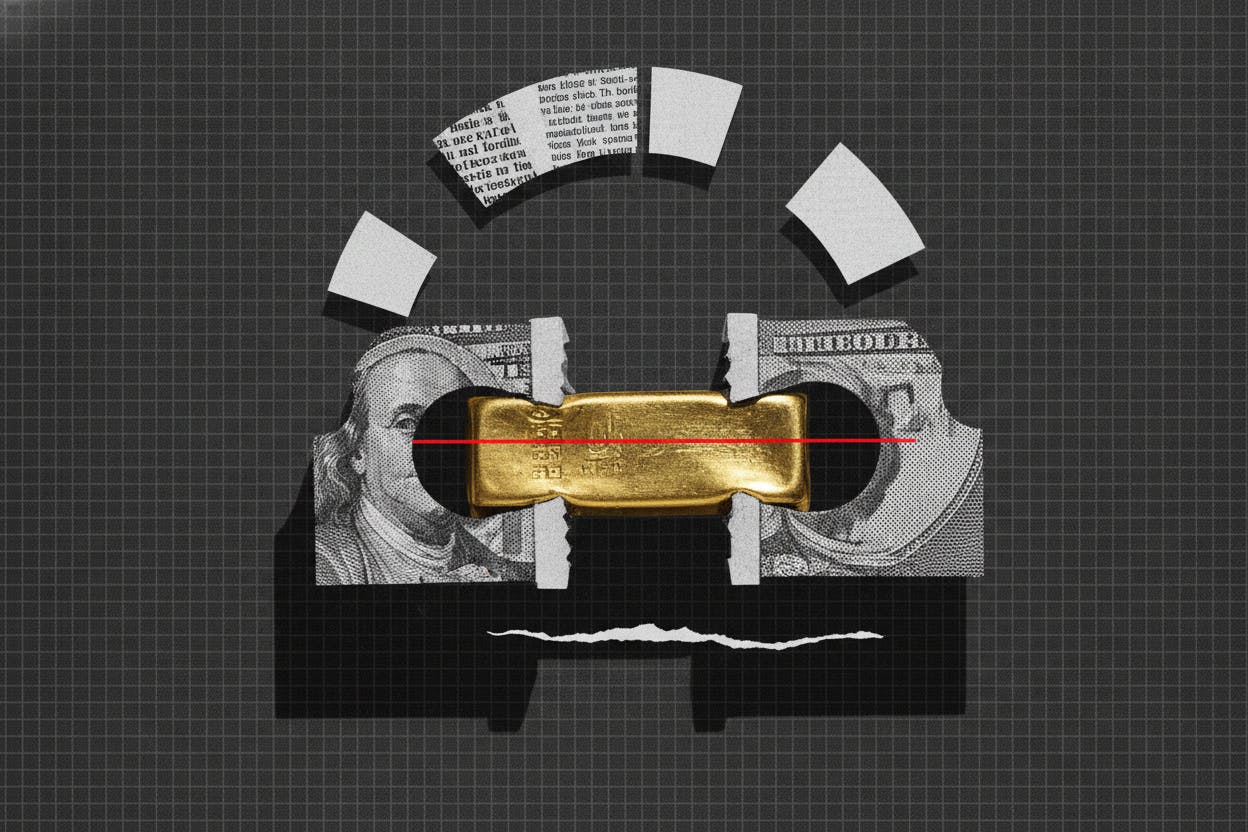
Gold is heading for its fourth consecutive weekly decline, as a strengthening US dollar and hotter-than-expected May inflation data keep traders leaning toward further Federal Reserve rate hikes. Even fresh geopolitical tension in the Strait of Hormuz, which briefly lifted prices, has not been enough to reverse the downward trend.
Bullion often benefits when investors seek a hedge against uncertainty, but it struggles when the dollar and interest-rate expectations move against it. A firmer dollar makes gold more expensive for buyers using other currencies, while higher rate expectations increase the return investors can get from cash and bonds, reducing the appeal of non-yielding assets like gold.
Why the Dollar and Inflation Matter for Gold
The US dollar has been firming as markets digest May's inflation data, which came in above forecasts. That has reinforced expectations that the Fed will need to keep raising rates to cool the economy, even as some policymakers have signaled a possible pause. Higher rates tend to boost the dollar and weigh on gold, creating a double headwind for the metal.
Geopolitical headlines can lift gold prices briefly, as they did this week when reports emerged of fresh tension in the Strait of Hormuz, a key shipping route for oil. However, those gains tend to fade quickly if the currency and rates backdrop remains unfavorable. For everyday investors, this means that short-term rallies in gold may not be sustainable unless the dollar weakens or the Fed signals a shift in policy.
For context, the Fed's preferred inflation gauge, the Personal Consumption Expenditures (PCE) index, recently hit 4.1%, as reported in May PCE Inflation Hits 4.1% as Expected; JPMorgan Names New Co-Presidents. That level, while expected, keeps pressure on the central bank to act.
Physical Demand from China Slips
Adding to the pressure on gold, physical demand from China—a major buyer—has softened. China's net gold imports via Hong Kong fell to 53.674 metric tons in May, down about 38% from 86.715 tons in April. That drop matters because physical demand can act like a baseline bid for bullion when futures traders are selling. When that support is lighter, the price tends to be set more by fast financial flows—mainly the US dollar and shifting expectations for Fed policy.
So if the dollar keeps firming and markets keep leaning toward more hikes, gold is more likely to give back any risk-driven pop and stay vulnerable on days when rate expectations jump. Investors should watch for any signs of a shift in Fed rhetoric or a reversal in the dollar's strength, which could provide a floor for gold prices.
What It Means for Investors
For everyday investors, the current environment suggests caution around gold as a short-term trade. The metal's traditional role as a hedge against uncertainty is being overshadowed by the stronger dollar and rising rate expectations. However, gold can still serve as a long-term portfolio diversifier, especially if inflation remains sticky or geopolitical risks escalate further.
Investors should also keep an eye on other markets that are sensitive to the dollar and rate expectations. For example, the Canadian dollar has been under pressure, as noted in Oil Bounces but Canadian Dollar Stays Stuck Near Tariff-Era Lows as Yield Gap Widens, while Latin American currencies have rallied when the dollar weakens, as seen in Latin American Stocks and Currencies Rally as US Dollar Weakens. These moves highlight how interconnected currency and commodity markets are.
Ultimately, gold's path will depend on whether the Fed delivers more rate hikes or signals a pause. Until then, the metal is likely to remain under pressure, with any geopolitical spikes offering only temporary relief.