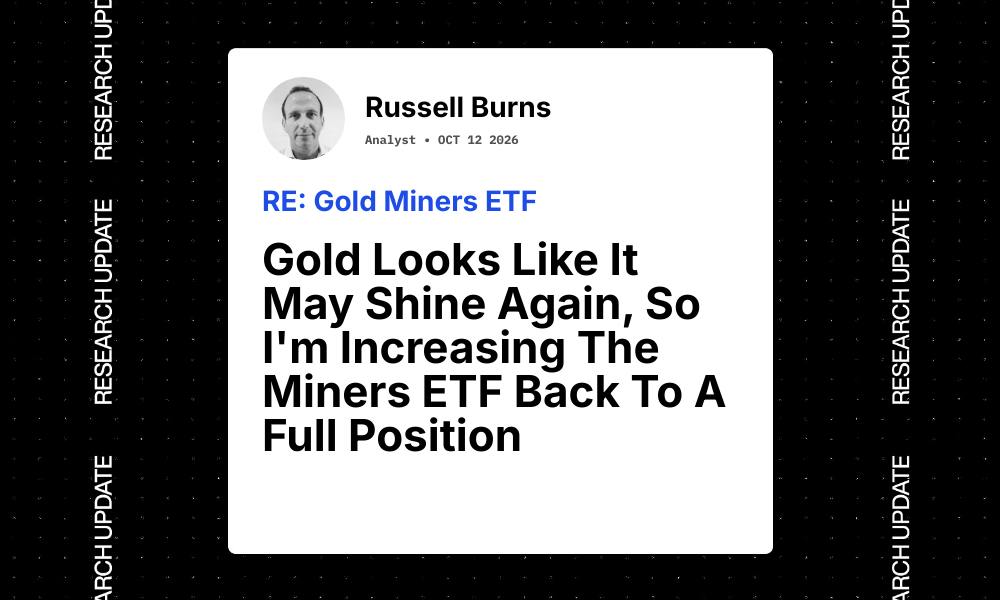
Back in August, the Finimize Portfolio made a tactical decision: it halved its position in the VanEck Gold Miners ETF. At the time, gold had enjoyed a strong rally, but momentum was fading as prices approached a key technical marker—the 200-day moving average. The ETF was trading around $100.
Since then, both gold and the miners have given back some ground. The ETF now trades near $89, a roughly 11% pullback. For investors who trimmed at the top, that move looked like a smart bit of timing.
But now the portfolio is reversing course. The reason: central banks are still buying gold, and momentum is picking up again. So the team has brought the gold miners ETF position back up to full strength.
Why central bank buying matters
Central banks are not your average gold buyers. They tend to buy in bulk and hold for the long term, often as a way to diversify reserves away from currencies like the dollar. When central banks are net buyers, it provides a steady floor under gold prices, even when retail or ETF demand wavers.
That institutional support is one reason the recent pullback may have been seen as a buying opportunity rather than the start of a longer decline. The fact that momentum is now turning higher—after a period of weakness—adds to the case.
What the 200-day moving average means
For those new to technical analysis, the 200-day moving average is simply the average price of an asset over the past 200 trading days. It's a widely watched gauge of long-term trend. When prices are above it, the trend is considered bullish; when they fall below, it can signal a shift.
In August, gold was approaching that level from above, and the fading momentum suggested it might struggle to push through. That's why the portfolio trimmed. Now that prices have pulled back, the risk-reward looks different—especially with central banks still in the market.
What this means for everyday investors
For ordinary investors, the key takeaway isn't about timing the market perfectly. It's about understanding that even professional portfolios make tactical adjustments based on momentum and valuation. The decision to re-enter after a pullback reflects a belief that the long-term drivers—central bank demand, geopolitical uncertainty, and inflation hedging—remain intact.
Gold miners ETFs, like the VanEck fund, offer exposure to a basket of mining companies rather than the metal itself. That means they can be more volatile than gold, as mining profits are sensitive to operating costs, production levels, and commodity prices. But they also offer leverage to rising gold prices, which can amplify gains when the trend turns up.
Investors considering a similar move should remember that past performance isn't a guarantee. The gold market can be influenced by interest rates, currency moves, and investor sentiment. Higher bond yields, for instance, tend to make gold less attractive because it pays no interest—a factor that was part of the August decision.
Broader market context
The gold trade is playing out against a backdrop of mixed economic signals. While some big banks are forecasting a dip in near-term earnings, the longer-term outlook remains brighter. That kind of uncertainty often supports gold as a safe haven.
Meanwhile, China's trade data this week could test Asia's export momentum, which may have ripple effects on global growth and, in turn, on gold demand. And with central banks around the world asserting their independence, monetary policy decisions will continue to shape the investment landscape.
What to watch next
For those following the gold miners space, the key indicators are gold's price action relative to its moving averages, central bank buying announcements, and any shifts in interest rate expectations. If momentum continues to build, the recent pullback could look like a classic buying opportunity in hindsight.
But as always, it's important to remember that no one can predict the future. The Finimize Portfolio's move is a signal, not a guarantee. For everyday investors, the lesson is to stay informed, understand the drivers, and make decisions that fit your own risk tolerance and time horizon.