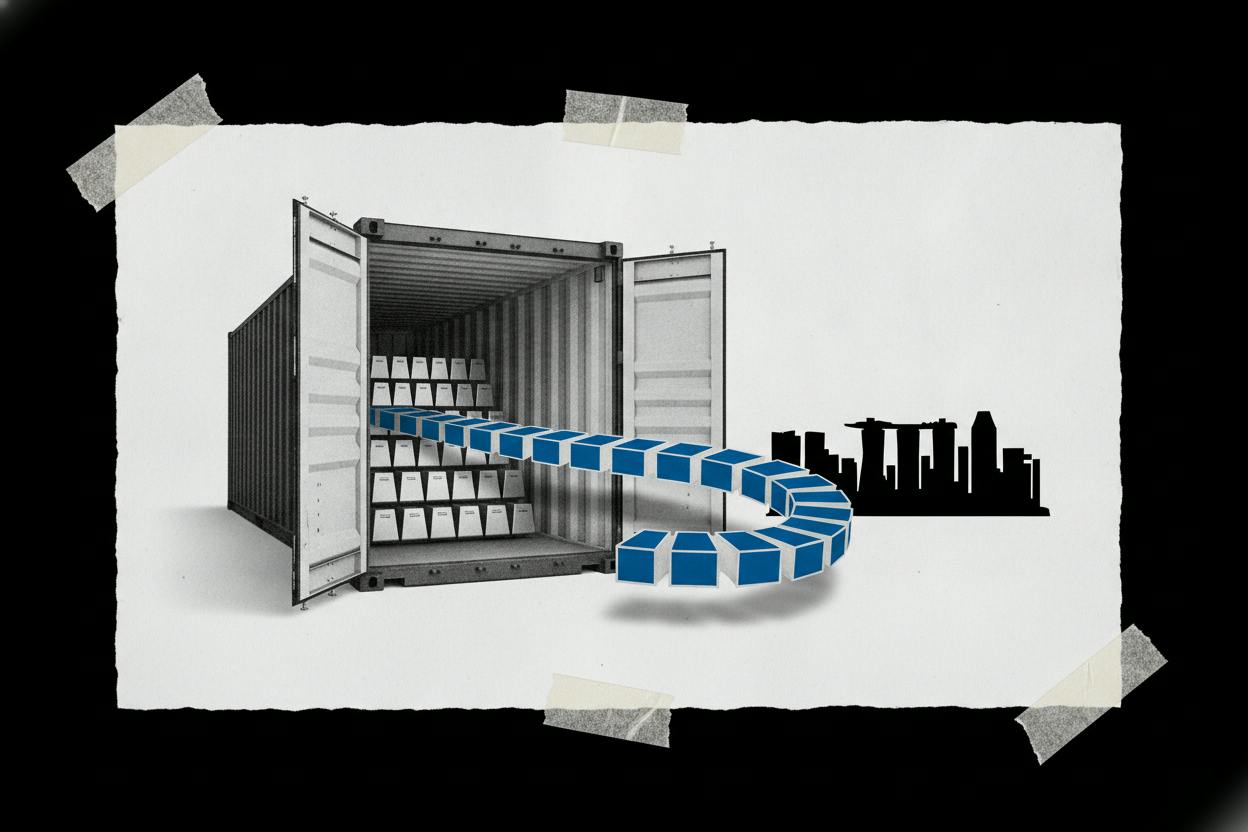
Shanghai International Port Group (SIPG), the state-backed operator of one of the world's busiest ports, is in talks to buy H&M Metal Warehousing, a Singapore-based company that is approved to store metals for the London Metal Exchange (LME), according to Reuters.
At first glance, warehousing might seem like a mundane, low-margin business. But the real prize, as Reuters notes, is the information that comes with it. LME-approved warehouses are part of the exchange's delivery system: they track how much aluminum, copper, zinc, and other metals are "on warrant"—meaning registered and ready for delivery—and where those stocks are located. That inventory data is a crucial signal for traders trying to gauge whether supply is tight or abundant.
Why the LME matters
The London Metal Exchange is the world's premier marketplace for industrial metals, setting benchmark prices for contracts that underpin global trade. Its warehouse network spans dozens of locations across Europe, Asia, and the Americas. Each day, the LME publishes data on the amount of metal stored in its approved facilities, and traders watch these numbers closely. A sudden drop in inventories can signal a supply squeeze, pushing prices up; a build-up can indicate oversupply, pressuring prices down.
For a company like SIPG, owning an LME-approved warehouse operator would provide direct, real-time visibility into these inventory flows. That could give China—already the world's largest consumer of industrial metals—a strategic edge in understanding and potentially influencing global metal markets.
The move also fits a broader pattern. China has been steadily increasing its footprint in global commodities infrastructure, from ports and pipelines to storage and trading hubs. By acquiring a piece of the LME's delivery system, SIPG would be inserting itself into the heart of the metals trading ecosystem.
What it means for investors
For everyday investors, this deal is a reminder that the physical infrastructure behind commodities can be as valuable as the commodities themselves. While most people think of metal prices as being driven by mines and smelters, the warehouses that store and deliver the metal are a critical part of the supply chain. Control over that infrastructure can translate into market influence.
If the acquisition goes through, it could have several ripple effects. First, it might increase China's ability to monitor and respond to global metal supply dynamics, potentially affecting how Chinese companies hedge their raw material costs. Second, it could raise concerns among Western regulators about the concentration of market data in Chinese hands. The LME, owned by Hong Kong Exchanges and Clearing, has already faced scrutiny over its governance and the role of Chinese players.
For investors in metals and mining stocks, the deal is a signal that China is thinking strategically about its access to commodities. It could also be a precursor to further consolidation in the warehouse sector, as other players seek to strengthen their own data and logistics capabilities.
It's worth noting that the talks are still at an early stage, and there's no guarantee a deal will be reached. Regulatory approvals, including from the LME and possibly Singaporean authorities, would be required. But the very fact that SIPG is pursuing this acquisition underscores the growing importance of data in the commodities world.
For those watching the broader China story, this is another example of how the country is using its financial muscle to secure strategic advantages. As China's trade data continues to shape Asia's export outlook, moves like this one show that Beijing is thinking beyond just buying raw materials—it wants to control the pipes through which they flow.
In the meantime, investors should keep an eye on the LME's inventory reports, which remain a key barometer for metal prices. Any significant shifts in those numbers—whether due to this deal or other factors—could have implications for the broader market.
As always, this is a developing story, and more details are likely to emerge in the coming weeks. For now, the potential acquisition is a reminder that in the world of commodities, information is power—and China is positioning itself to have more of it.