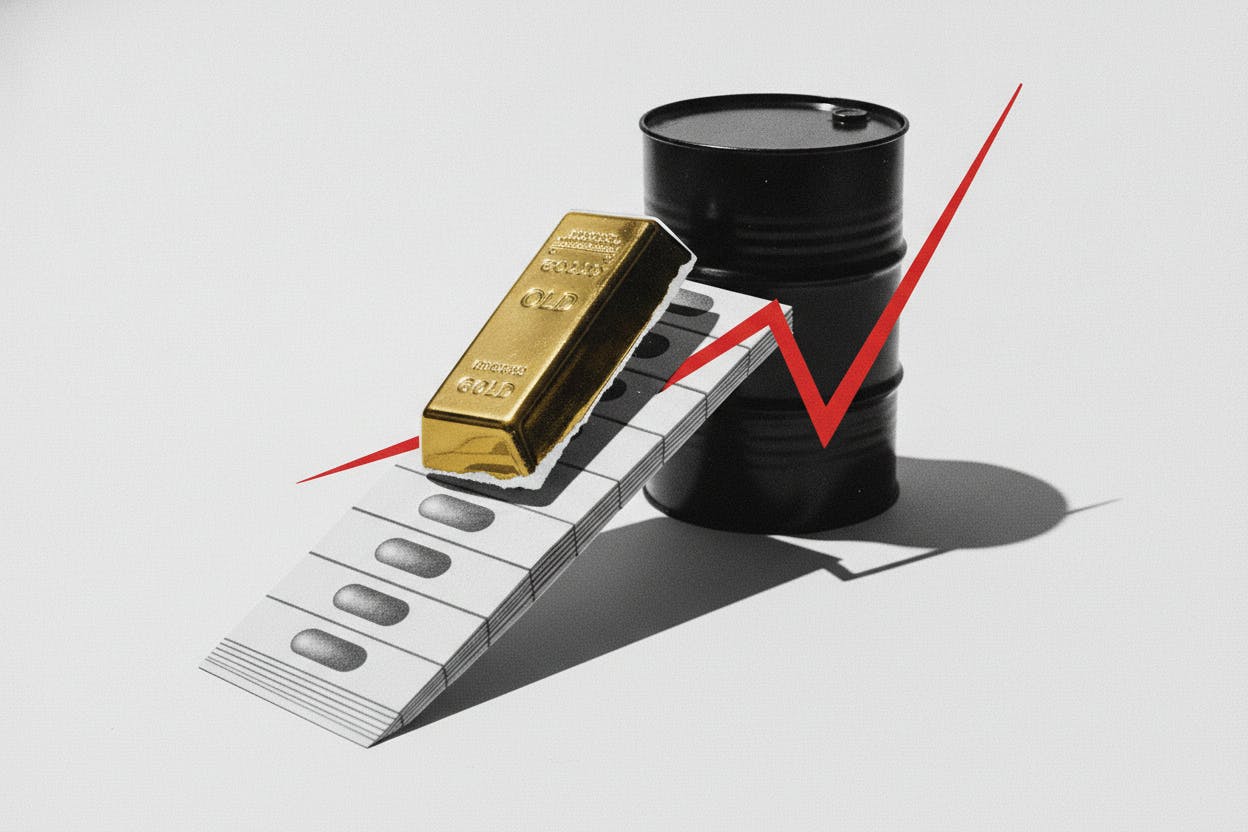
Gold prices edged lower on Tuesday as a sharp jump in oil prices above $90 a barrel revived fears that the Federal Reserve may keep interest rates higher for longer. The move came after fresh escalation in the Middle East pushed Brent crude up 3%, reigniting inflation concerns that have weighed on the precious metal.
What Happened
Brent crude, the global benchmark for oil, surged past $90 a barrel following reports of increased military activity in the Middle East. The 3% jump was the latest in a series of oil price spikes tied to geopolitical tensions in the region, which have disrupted shipping routes and raised supply risks.
The oil rally quickly spilled over into rate expectations. Traders in the federal funds futures market now price an 82% probability that the Fed will raise its benchmark rate at its December meeting, up from roughly 70% before the oil move. That shift reflects a growing belief that higher energy costs could keep inflation sticky, forcing the central bank to tighten further.
Why Gold Is Feeling the Heat
Gold is often seen as a safe-haven asset during times of geopolitical uncertainty, but it faces a unique headwind when interest rates rise. Unlike bonds or savings accounts, gold pays no interest or yield. So when the Fed hikes rates, the opportunity cost of holding gold increases—investors can earn a return elsewhere without taking on the risks of commodity price swings.
Higher rate expectations also tend to boost the US dollar, which makes gold more expensive for buyers using other currencies. The dollar edged up alongside oil prices, adding another layer of pressure on the metal.
“Gold is caught between two forces,” said a market strategist quoted in the brief. “Geopolitical risk supports it as a haven, but the rate outlook is a powerful drag.”
Oil’s Double-Edged Impact on Markets
The oil price jump has broader implications for financial markets. While energy stocks often benefit from higher crude prices, the knock-on effects on inflation and interest rates can hurt other sectors. Tech and growth stocks, which are sensitive to higher discount rates, have already come under pressure in recent weeks.
In a related development, Asian markets were rattled by oil above $90, with the AI rally facing a fresh threat from higher rate expectations. Similarly, the dollar edged up as Middle East tensions boosted oil and safe-haven demand, compounding the headwinds for gold.
The situation echoes earlier episodes this year when oil spikes triggered broad selloffs in equities and commodities. Chip stocks slid 17% as Middle East tensions overrode cooling inflation, a pattern that may repeat if oil stays elevated.
What It Means for Everyday Investors
For ordinary investors, the gold-oil-rate triangle is a reminder that no asset moves in isolation. Gold’s slip shows that even traditional safe havens can lose luster when the rate outlook turns hawkish.
Investors holding gold or gold-focused exchange-traded funds (ETFs) should watch oil prices and Fed commentary closely. If crude remains above $90 and inflation data stays hot, the Fed may indeed deliver a December hike, which could keep gold under pressure. Conversely, if geopolitical tensions ease and oil retreats, rate expectations could unwind, giving gold room to recover.
Diversification remains key. Gold can still play a role in a portfolio as a hedge against extreme events, but its performance in a rising-rate environment has historically been mixed. Investors should consider their own time horizons and risk tolerance rather than making knee-jerk moves based on daily price swings.
Looking Ahead
The next major data point for gold investors will be the US consumer price index (CPI) report, due later this month. If inflation shows signs of accelerating, the case for a December hike will strengthen, potentially pushing gold lower. On the other hand, a softer CPI reading could ease rate fears and support the metal.
Geopolitical developments in the Middle East will also remain in focus. Any de-escalation could quickly reverse oil’s gains, while further escalation might push crude even higher, amplifying the pressure on gold and other non-yielding assets.
For now, the market is pricing in a high probability of a December rate hike, and gold is feeling the weight of that expectation. Investors should stay informed and avoid overreacting to short-term moves, while keeping an eye on the broader forces shaping the outlook.



