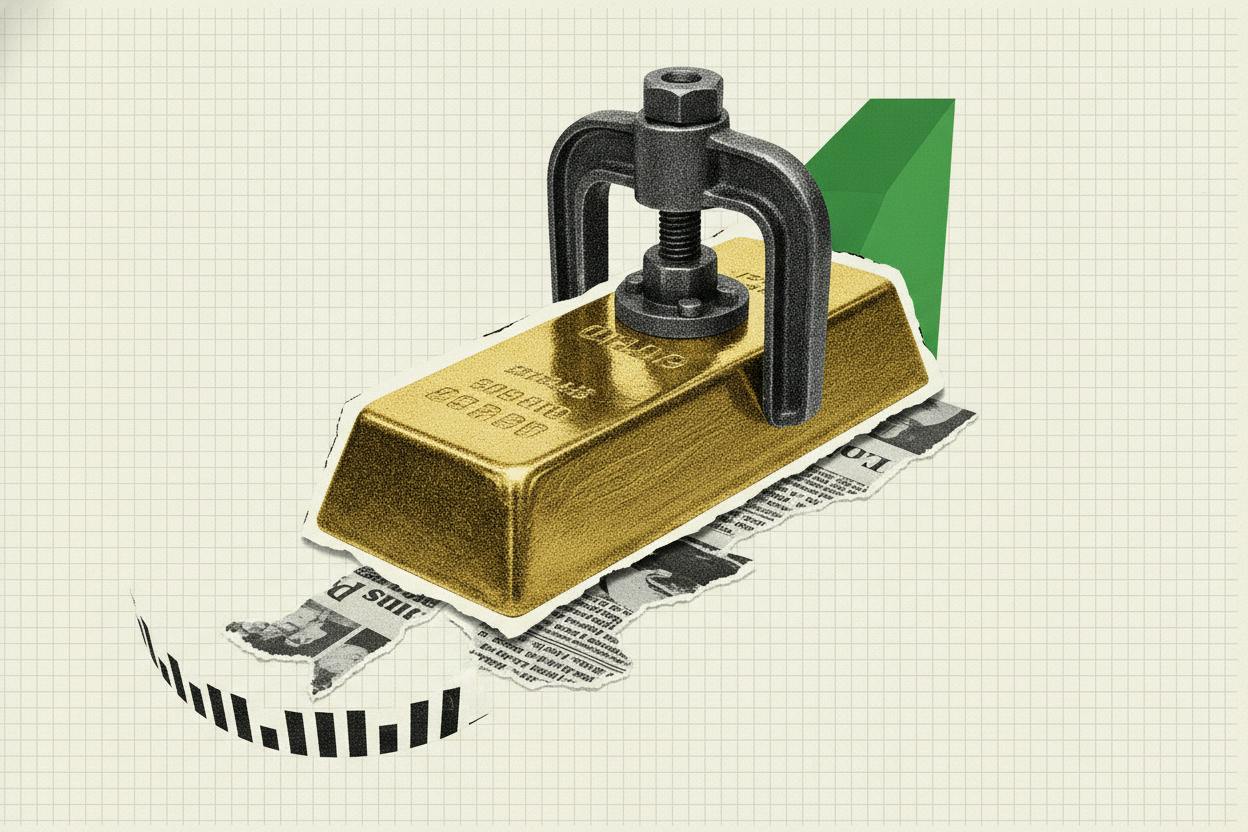
Gold prices tumbled to a one-year low this week, and Goldman Sachs says the near-term outlook remains bumpy. The investment bank cautions that additional Federal Reserve interest rate hikes could keep the metal volatile, as higher yields and a stronger dollar weigh on prices. Yet Goldman also laid out a longer-term path that ends with gold trading at $4,650 an ounce by the end of 2027 and $5,800 by the end of 2028.
The dual message — near-term pain, long-term gain — hinges on two very different types of buyers, and understanding that split is key for anyone with gold exposure or considering it.
Why higher rates hurt gold
Gold is a non-yielding asset. When interest rates rise, investors can earn more from safer alternatives like U.S. Treasuries, which makes gold relatively less attractive. A stronger dollar compounds the problem: because gold is priced in dollars, a rising greenback makes bullion more expensive for buyers using other currencies, dampening demand.
That dynamic has been on full display as the Fed continues its tightening campaign. The central bank has been raising rates to combat inflation, and those moves have pressured gold. Goldman acknowledges this phase can bring "downside risk and choppy trading," meaning investors should brace for wide price swings and sudden reversals.
This pattern is not new. In 2022, during a similar period of aggressive Fed tightening, gold held up better than silver. Goldman expects a repeat of that relative performance, arguing that gold has a structural backstop that silver lacks.
The central bank backstop
That backstop comes from central banks, which have been steady buyers of gold in recent years. Unlike private investors, central banks tend to be less sensitive to short-term price moves. They buy for strategic reasons — diversifying reserves, reducing reliance on the dollar, or hedging geopolitical risks — and they often keep buying even when prices dip.
Goldman calls this a "baseline bid" that could help keep a floor under prices and allow a slow grind higher even if private investors stay cautious. In other words, while rate hikes may push prices down, central bank demand could limit the damage and set the stage for recovery.
This official-sector support is a key reason Goldman favors gold over silver in the current environment. Silver, which is more heavily tied to industrial demand and lacks the same central bank buying, may struggle more if the Fed keeps tightening.
The second wave: ETF demand
Goldman's more aggressive targets — $4,650 by end-2027 and $5,800 by end-2028 — assume a second wave of demand arrives later. That wave would come from Western exchange-traded funds (ETFs), which hold physical gold and trade like stocks. ETF flows are highly sensitive to interest rates: when rates are high, investors often pull money out; when rates fall, they tend to pour back in.
If the Fed eventually shifts from hiking to cutting rates, Goldman expects ETF inflows to recover. Those flows can swing quickly and amplify price trends, potentially pushing gold toward the $5,800 level by the end of 2028. The bank's timeline suggests it does not expect the Fed pivot to happen immediately, but rather over the next few years.
What it means for investors
For everyday investors, Goldman's outlook highlights an important distinction: the behavior of gold can differ dramatically depending on the phase of the rate cycle. During a hiking cycle, expect wide trading ranges and sudden reversals. During a cutting cycle, trends can be cleaner and more persistent.
That split matters for portfolio construction. Gold is often used as a hedge against inflation, currency weakness, and market turmoil. But it is not a one-way bet. Investors who hold gold or gold-related funds should be prepared for volatility in the near term, especially if the Fed continues to raise rates.
It's also worth noting that Goldman's targets are not guarantees. They depend on central banks maintaining their buying pace and on ETF demand returning once rates fall. If either assumption fails, the path to $4,650 or $5,800 could be delayed or derailed.
For those watching the broader market, gold's performance can also signal shifts in investor sentiment. A sustained rally in gold often coincides with concerns about inflation, recession, or geopolitical instability. Conversely, a sharp drop can indicate confidence in the economy and a preference for riskier assets.
As the Fed weighs its next moves, gold investors will be watching economic data closely — particularly inflation readings and employment reports — for clues about how long the tightening cycle will last. The eventual pivot to rate cuts could be the catalyst that unlocks the next leg higher for gold, but until then, the road is likely to remain bumpy.