Google Cloud delivered a standout third quarter, with revenue more than doubling to $30.71 billion for the period ended September, easily surpassing the $29.57 billion analysts had expected, according to LSEG data cited by Reuters. The surge underscores how deeply artificial intelligence has become a core driver of cloud spending, as businesses of all sizes shift more of their AI workloads into the cloud.
Google, the world's third-largest cloud provider behind Amazon Web Services and Microsoft Azure, said the growth came from companies paying for AI computing power and Google's Gemini suite of AI tools. The results are a clear signal that enterprise demand for AI infrastructure remains robust, even as concerns about a potential slowdown in tech spending linger.
What's driving the growth?
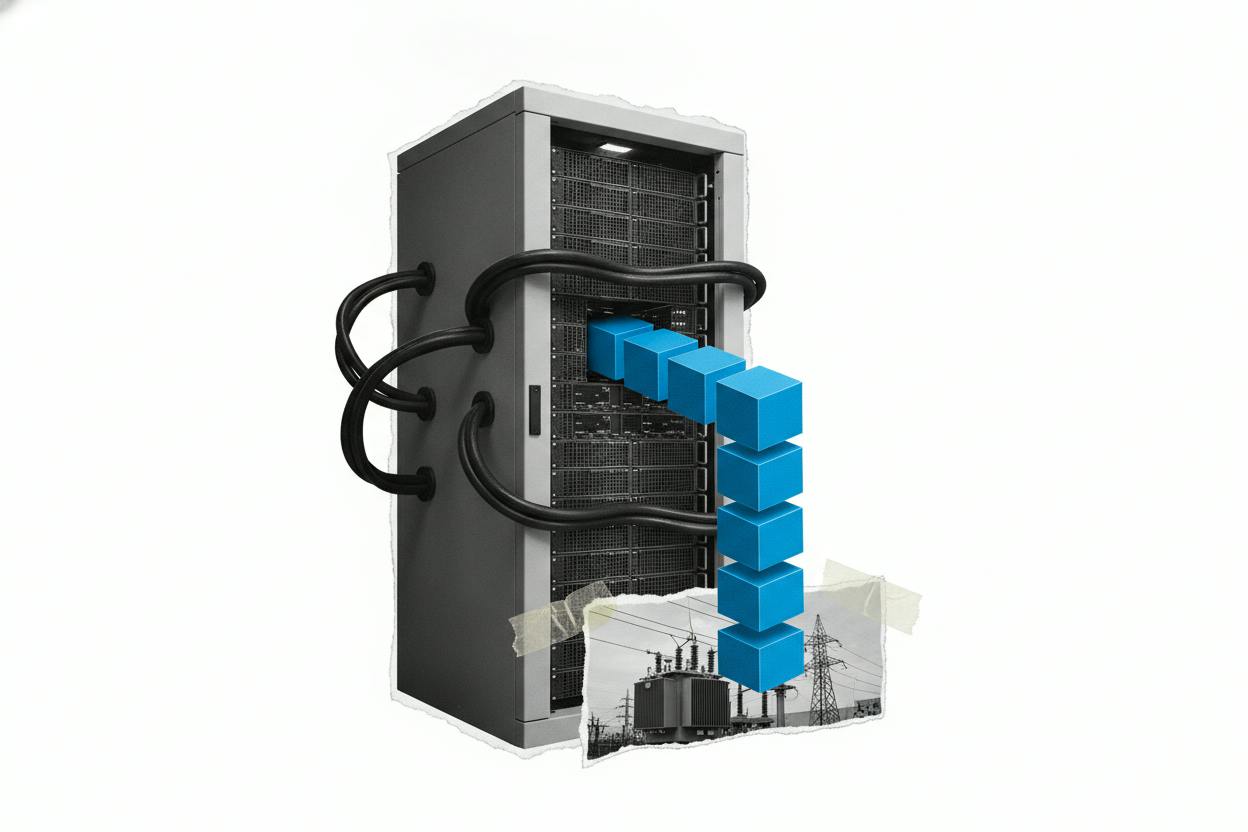
The key detail is the type of work fueling the demand: AI “training” (building models) and “inference” (running them) are extremely compute-intensive. These workloads keep data centers humming, which is exactly what cloud providers need to justify their massive capital expenditures. Alphabet has been spending heavily on servers, chips, and power capacity, and investors want proof that this supply can be absorbed without hurting returns.
But scaling AI isn't just about customer budgets. Reuters pointed to bottlenecks in advanced chip supply and in data-center power. That's why Google's mix of its own tensor processing units (TPUs) and third-party graphics processing units (GPUs), plus longer-term cloud and AI contracts across industries, is becoming a competitive lever as the major cloud firms race to add capacity.
This dynamic is not unique to Google. Rivals like Oracle have also been making bold AI-driven revenue projections, while companies like F5 have seen stock drops when cloud deals fail to reassure investors. The broader market is watching how these infrastructure bets play out.
What it means for investors
Google Cloud's $30.71 billion quarter is a utilization tell, not just a revenue beat. Cloud businesses carry big fixed costs: once the data centers and networks are built, each extra unit of demand can be relatively cheap to serve. So when AI training and inference keep servers highly utilized, a small revenue beat can translate into a bigger shift in profit and free-cash-flow expectations than the headline gap suggests.
That's also the lens for the next phase of spending. Reuters said Alphabet, Microsoft, Amazon, and Meta are projected to spend well over $700 billion in 2026 on AI data centers, chips, and networking. If workloads keep filling capacity, markets tend to treat that outlay as productive scaling. If utilization slips, the same spending can look like an arms race with a slower payback.
For everyday investors, this means the health of the AI trade isn't just about which company has the best model. It's about whether the enormous sums being poured into infrastructure can generate returns. Google's beat is a positive sign, but the sustainability of that demand will be tested as more capacity comes online.
Investors should also keep an eye on how cloud providers manage their own chip supply. Google's use of its own TPUs alongside Nvidia GPUs gives it flexibility, but the broader industry still faces supply constraints. As Oracle's ambitious AI revenue goals show, the race to capture AI workloads is intensifying, and any hiccup in chip availability could slow the momentum.
For now, Google Cloud's performance suggests that enterprise AI demand is not just hype. The company's ability to convert that demand into revenue growth will be a key metric for investors to watch in the coming quarters.