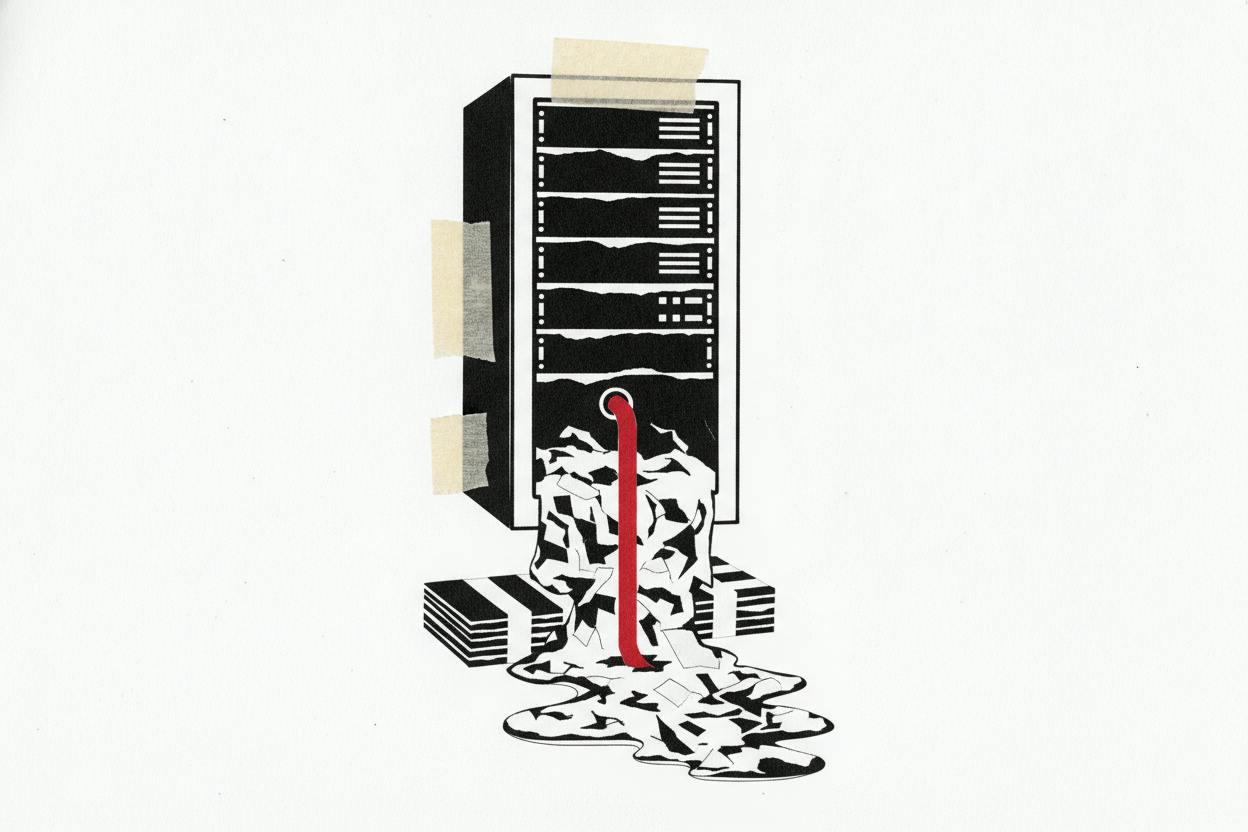
Alphabet, the parent company of Google, reported a rare miss on revenue and a swing to negative free cash flow in the third quarter, underscoring the heavy cost of its artificial intelligence expansion. The company said free cash flow—the cash left after operating costs and capital spending—was negative $9.07 billion for the quarter ended September 30, according to Reuters. That marks the first time Alphabet has posted a negative free-cash-flow quarter since it became a public company 22 years ago.
The results highlight a growing tension for Big Tech: AI demand is pushing companies to spend enormous sums on data centers, chips, and networking, but investors are waiting to see when that infrastructure turns into durable profit and cash. Alphabet's experience is a clear example of that tradeoff.
Revenue miss and rising costs
Alphabet reported revenue of $127.6 billion for the quarter, just below the $128.2 billion that analysts had expected, according to LSEG data cited by Reuters. The shortfall came largely from Google's core advertising business, which brought in less than forecast. At the same time, spending climbed as the company expanded data-center capacity and funded AI research.
A notable drag was a $7.66 billion operating loss in what Alphabet calls “Alphabet-level activities,” which the company said largely reflected AI research and development costs. That loss, combined with heavy capital spending, pushed free cash flow to a $9.07 billion burn—worse than the prior quarter's $5.9 billion burn.
For context, free cash flow is a key measure of a company's financial health because it shows how much cash is available for things like dividends, share buybacks, and new investments without taking on debt. When that number turns negative, it means the company is spending more than it generates from its operations and capital investments, often relying on its balance sheet or borrowing to bridge the gap.
Google Cloud shines, but the bigger picture is caution
One bright spot was Google Cloud, which topped expectations and grew to $30.71 billion in revenue. That growth reflects strong demand for cloud services and AI-related tools, a trend that has also benefited rivals like Microsoft and Amazon. In fact, Google Cloud's strong quarter shows that enterprise AI spending is still surging, even as the costs of building that capacity weigh on the bottom line.
But the broader market reaction is likely to focus on the cash burn. When a company's free cash flow turns negative, investors tend to get stricter about efficiency: how much revenue and profit each new dollar of data-center spending produces. That's why Alphabet's valuation can stay under pressure even if the cloud unit keeps scaling.
The same dynamic is playing out across the industry. Reuters notes that Alphabet, Microsoft, Amazon, and Meta are expected to spend well over $700 billion in 2026 on AI-related infrastructure. That's a massive bet, and the next key debate is whether that spending shows up as cash generation, not just faster revenue. Microsoft's Azure growth has helped ease some fears about AI spending, but the pressure remains on all hyperscalers to prove the returns.
What it means for investors
For everyday investors, Alphabet's negative free cash flow is a signal to watch how the company balances growth and profitability. A negative cash flow doesn't necessarily mean the company is in trouble—Alphabet has a strong balance sheet and generates plenty of revenue—but it does mean that the AI buildout is consuming cash that might otherwise go to shareholders.
Investors often look at free cash flow as a measure of a company's ability to return money to shareholders through dividends or buybacks. With cash flow now negative, Alphabet may need to be more careful about those payouts, or it may need to borrow to fund them. That's a shift from recent years when the company was a cash machine.
The broader lesson is that the AI boom comes with a price tag. Companies like Alphabet are betting that the infrastructure they build today will pay off in the future, but that payoff isn't guaranteed. As Oracle has set a timeline for AI spending to pay off, investors are increasingly focused on when the spending will translate into profits.
For now, Alphabet's results are a reminder that even the biggest tech companies face tough choices when it comes to AI. The next few quarters will be crucial to see whether the spending starts to generate the kind of cash flow that investors expect.