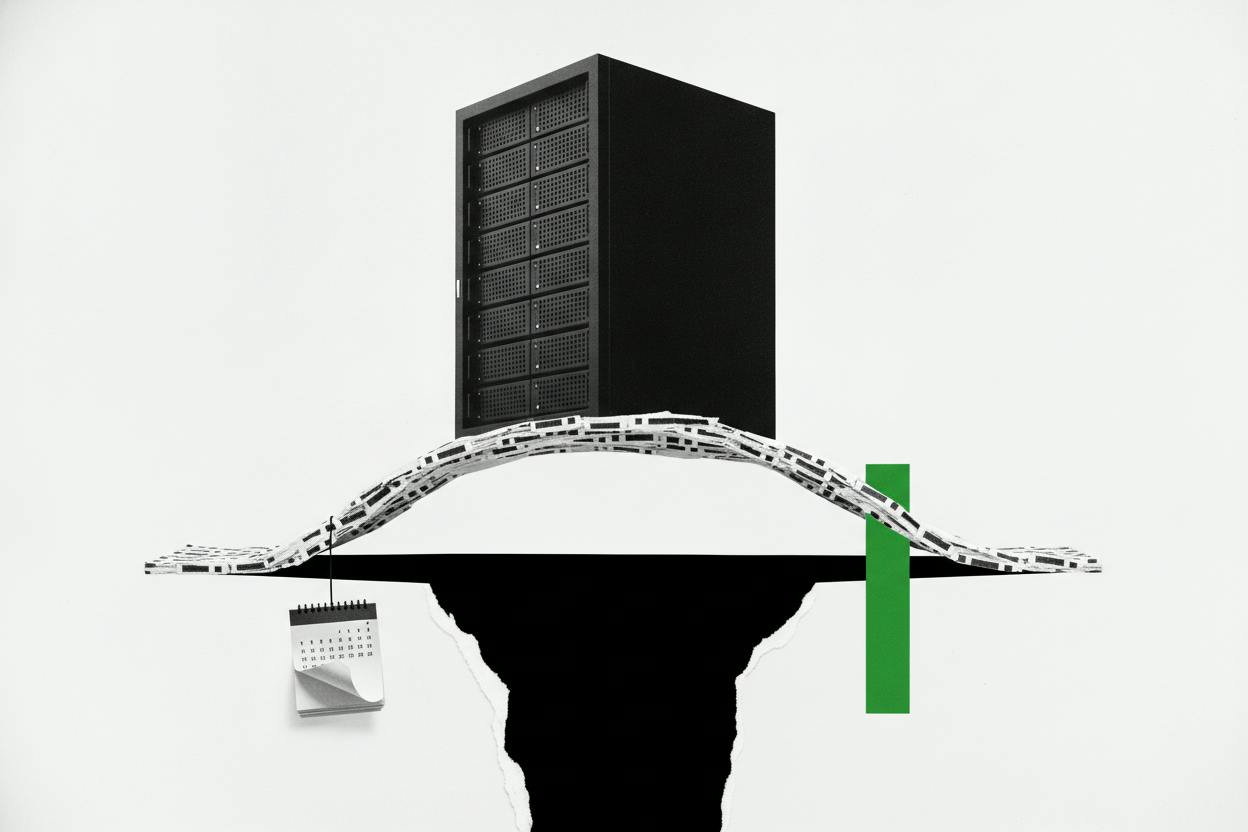
Oracle has given investors a clearer picture of when its massive spending on artificial intelligence infrastructure will start generating cash. At its investor day, the software company said free cash flow should turn positive in the second half of fiscal 2028 and top $30 billion in fiscal 2029, as capital expenditures ease.
The announcement comes as markets grow increasingly anxious about the soaring costs of building AI data centers and cloud capacity. Oracle, like other tech giants, has been pouring billions into new infrastructure to meet demand for AI computing power, but investors have been questioning when those investments will translate into profits.
What Oracle promised
Chief Financial Officer Hilary Maxson said Oracle expects capital spending to fall enough for cash generation to swing back to positive. She added that the business should start to “self-fund” its growth in fiscal 2029, and the company plans to limit additional capital raises to $20 billion through fiscal 2030, according to Reuters.
That is a notable promise in a market worried about the rising price tag of AI infrastructure. Many investors have been concerned that companies like Oracle are spending heavily on AI without a clear timeline for returns. By putting a specific timeframe on when free cash flow will turn positive, Oracle is trying to reassure shareholders that the spending spree will eventually pay off.
Free cash flow is the cash a company generates after paying for capital expenditures like buildings and equipment. It is a key measure of financial health because it shows how much money a business has left to pay dividends, buy back stock, or invest in new projects. Turning positive means Oracle will no longer need to rely on debt or new equity to fund its growth.
Why this matters for investors
For everyday investors, Oracle's timeline is a signal that the company believes its AI investments will start generating returns within a few years. That is important because Oracle's stock has been closely tied to its AI ambitions, and any sign that the spending is not paying off could hit the share price.
The broader tech sector has been grappling with the same question. Big Tech cloud earnings face an AI payback test this week, as investors look for evidence that massive AI spending is translating into revenue growth. Oracle's announcement is part of that larger narrative.
Oracle has also been expanding its AI server lineup beyond Nvidia, adding Google and SambaNova chips to its offerings. That diversification could help the company manage costs and supply chain risks, but it also adds complexity to its infrastructure strategy.
In addition, Oracle has said it will offer Google TPUs and Snowflake on its cloud by 2027, which could broaden its appeal to customers. These moves are part of Oracle's effort to compete with cloud giants like Amazon and Microsoft, but they also require significant upfront investment.
What to watch next
Investors will be watching Oracle's quarterly earnings for signs that capital spending is indeed easing and that revenue growth is keeping pace. The company's fiscal year ends in May, so the second half of fiscal 2028 would be roughly early 2028.
Oracle's promise to limit additional capital raises to $20 billion through fiscal 2030 is also significant. It suggests the company expects to fund most of its growth internally after that point, which would reduce dilution for existing shareholders.
However, there are risks. If AI demand slows or competition intensifies, Oracle might need to spend more than planned, pushing the payback timeline further out. The company's heavy reliance on AI infrastructure also makes it sensitive to changes in technology and customer preferences.
For now, Oracle has given investors a concrete target to measure against. Whether it can hit those numbers will depend on how quickly AI demand grows and how efficiently the company can deploy its capital.
As the AI spending boom continues, it could also influence broader economic conditions, including interest rates. If companies keep borrowing to fund AI projects, that could keep upward pressure on rates, affecting all investors.
Oracle's announcement is a reminder that the AI revolution comes with a price tag. The company is betting that the payoff will be worth it, and now it has put a timeline on that bet.