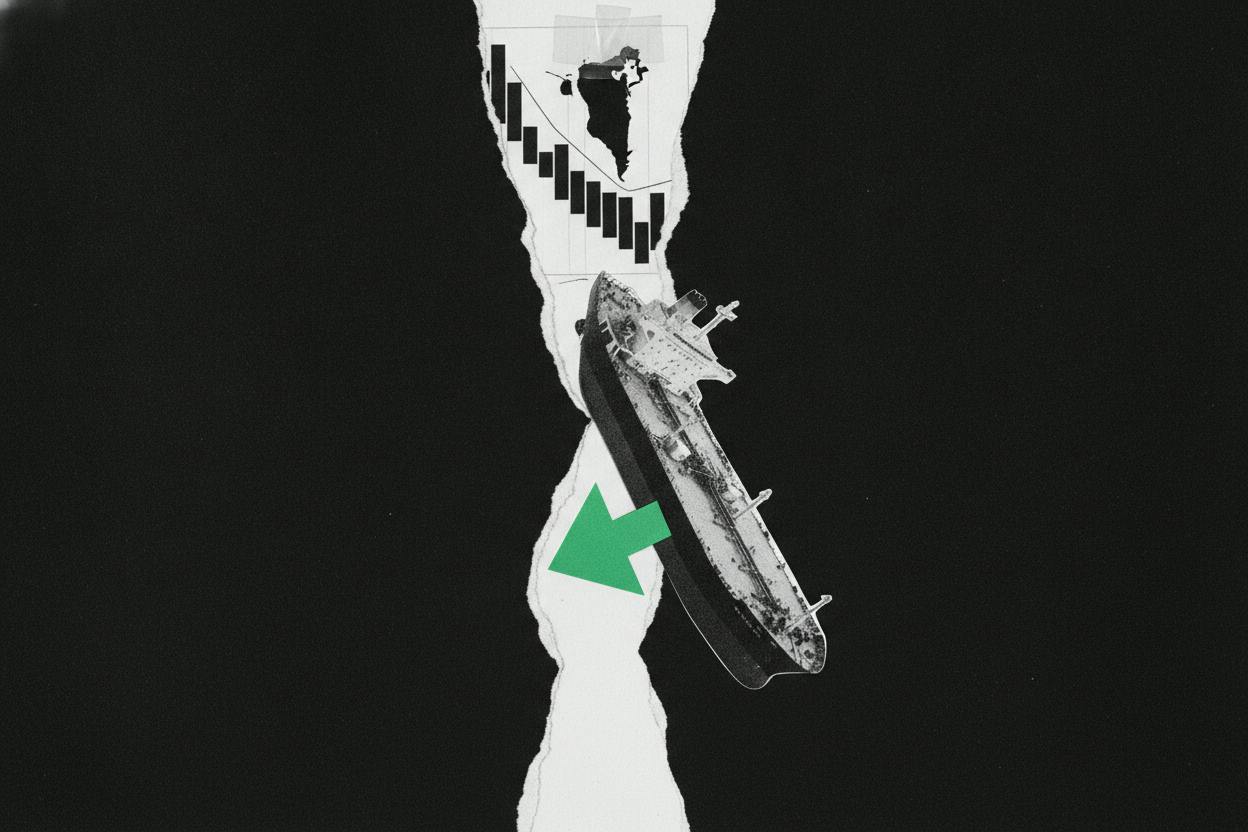
Gulf stock markets opened lower on Sunday as investors weighed a burst of security headlines from the region. Bahrain said it intercepted and destroyed several Iranian aerial attacks, while Iran claimed it struck a US military base in Bahrain, according to Reuters. Iran's military also said a tanker caught fire after hitting a mine in the eastern Strait of Hormuz and warned vessels to avoid restricted areas; Reuters said it could not independently verify that report.
The moves were quick and broad. Dubai's main index fell 0.6%, led by a 2% drop in Emirates NBD, one of the region's largest banks. Saudi Arabia's benchmark slipped 0.5%, with Al Rajhi Bank down 0.6% and oil giant Saudi Aramco easing 0.2%. The pattern is typical of a "risk-off" session, where investors pull back from assets seen as more sensitive to uncertainty.
Why the Strait of Hormuz matters
The Strait of Hormuz is a narrow waterway between the Persian Gulf and the Gulf of Oman. Roughly one-fifth of the world's oil passes through it, making it one of the most critical chokepoints for global energy supplies. Even the possibility of disruption can raise perceived risks around trade, shipping costs, and energy supply.
When attention shifts from politics to potential disruption in the Strait, markets tend to price the "what if," not just the facts on the ground. That usually shows up as a higher risk premium – investors demand more return to hold risky assets – and thinner liquidity as some foreign money pauses. It can also lift hedging and shipping-insurance costs, which pressures the most confidence-sensitive stocks first.
Gulf indexes are heavy on banks, and lenders like Emirates NBD and Al Rajhi are closely tied to credit growth and cross-border capital flows, so they often take the first hit. Oil producers such as Saudi Aramco can be relatively steadier on days like this, since tighter supply risks can support oil prices even as broader sentiment worsens.
What it means for investors
For everyday investors, the key takeaway is that geopolitical headlines can move markets quickly, but the effects are often short-lived unless the situation escalates. A single day's dip in a regional index does not necessarily signal a long-term trend. Still, it's worth watching how the situation develops, because any sustained disruption to shipping through the Strait could have wider implications for oil prices and global inflation.
Investors with exposure to Gulf stocks or energy funds may see more volatility in the coming days. Those with diversified portfolios are generally better positioned to ride out such swings, as the impact on a broad global portfolio is likely to be muted unless the conflict spreads or disrupts oil flows for an extended period.
For context, similar episodes in the past – such as drone attacks on Saudi oil facilities or tanker seizures near the Strait – have caused brief market jitters but rarely led to sustained sell-offs. Markets tend to revert to fundamentals once the immediate threat fades.
That said, the situation remains fluid. Iran's warning about mines is particularly notable because mines can be difficult to detect and clear, potentially disrupting shipping for weeks. If such a threat materialises, shipping insurance premiums could rise, and some vessels might avoid the area, adding to supply concerns.
Investors will also be watching for any response from the US or its allies, as well as any further statements from Iran or Bahrain. Any escalation could push oil prices higher, which would benefit energy producers but could weigh on consumer spending and inflation-sensitive sectors.
For now, the market's reaction has been measured – a modest decline in Gulf indexes rather than a panic. That suggests investors are treating the news as a risk to monitor rather than a reason to flee. But with tensions in the region often unpredictable, the situation bears close watching.



