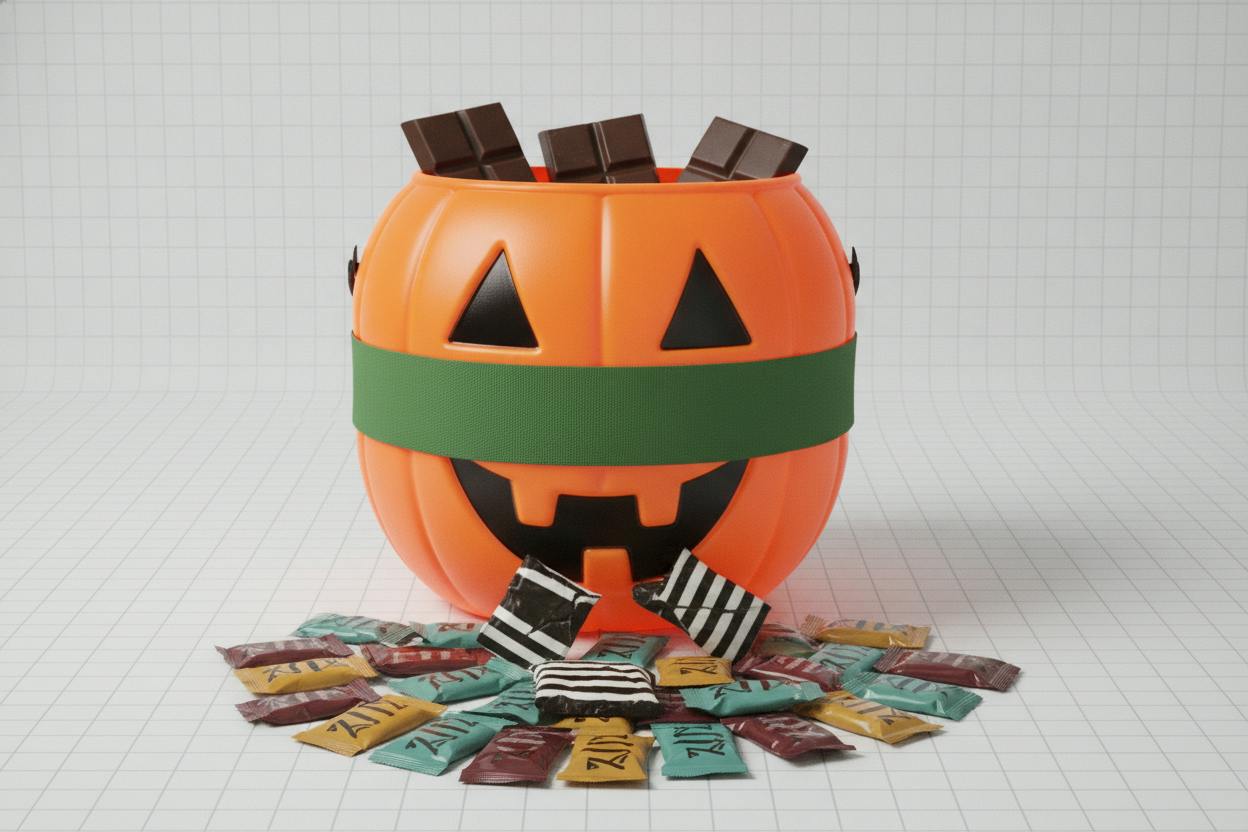
Halloween is supposed to be one of the most reliable sales events of the year for candy makers, but this season is shaping up differently. New data from NielsenIQ shows that US chocolate sales for Halloween fell by $33.1 million in the nine weeks ending October 17, as shoppers increasingly reached for smaller packs and lower-sugar snacks instead of traditional chocolate bars.
The pullback is a sign that cost-of-living pressures are reshaping even the most entrenched seasonal habits. For everyday investors, it's a reminder that consumer staples—often seen as steady, defensive bets—are not immune to shifts in how people spend when budgets tighten.
What the data shows
NielsenIQ's figures, reported by Reuters, point to a clear pattern: the decline is concentrated in milk chocolate, the category that dominates Halloween candy bowls. Meanwhile, white chocolate held steady and dark chocolate actually inched up. That split suggests shoppers aren't giving up chocolate entirely—they're getting pickier or trading down to cheaper options.
Chris Costagli, a NielsenIQ analyst, noted that smaller pack sizes rose in popularity. That's a classic response to inflation: when prices rise, consumers often buy less or switch to formats that feel more affordable, even if the per-unit cost is higher.
The trend is visible in the basket itself. Instead of the usual jumbo bags of milk chocolate, many shoppers are opting for miniatures, fun-size bars, or non-chocolate alternatives that carry a lower price tag. Lower-sugar snacks are also gaining ground, reflecting a longer-term health-consciousness that has been building for years.
What it means for big candy makers
The Halloween season is a major revenue driver for companies like Hershey and Mondelez, which own many of the iconic brands that fill trick-or-treat bags. A dip in chocolate sales during this window can dent quarterly results, especially if the trend extends beyond Halloween into the holiday season.
For investors, the key question is whether this is a one-off blip or a structural shift. Cost-of-living pressures have been squeezing households across the US, and discretionary spending on non-essentials like premium chocolate is often among the first casualties. But the fact that dark chocolate and white chocolate held up suggests that the overall chocolate market isn't collapsing—just changing shape.
Companies in this position often respond by adjusting product mixes, pushing smaller pack sizes, or emphasizing value-oriented offerings. Some may also lean into premium lines, where margins are higher and consumers are less price-sensitive. The challenge is balancing affordability with profitability.
What it means for investors
For everyday investors, this news is a useful lens on the consumer sector. Candy and snack companies are often considered defensive stocks—they tend to hold up better than most during economic downturns because people still buy treats even when times are tough. But this data shows that even defensive categories can feel the pinch when inflation runs hot.
If you hold shares in Hershey, Mondelez, or similar companies, it's worth watching whether this Halloween weakness spills over into the fourth-quarter earnings season. Management commentary on consumer behavior and pricing power will be key. If companies can pass on higher costs without losing too many customers, margins may hold. If shoppers keep trading down, revenue growth could slow.
It's also a reminder that consumer preferences are never static. The rise of lower-sugar snacks and smaller packs reflects broader health trends that have been reshaping the food industry for years. Companies that adapt—by offering better-for-you options or right-sized portions—may be better positioned than those that stick to the old playbook.
For those not directly invested in candy makers, the story still matters as a barometer of consumer confidence. When people start trimming even their Halloween chocolate budget, it's a sign that household finances are under strain—something that has implications for the broader economy and for sectors from retail to housing.
As the holiday season approaches, all eyes will be on whether this trend continues. If shoppers remain cautious, it could be a tough winter for the companies that rely on seasonal indulgence. But if the pullback is just a temporary reaction to high prices, the chocolate industry could bounce back quickly once inflation eases.
Either way, the data offers a clear takeaway: even the most beloved seasonal traditions are not immune to economic reality.