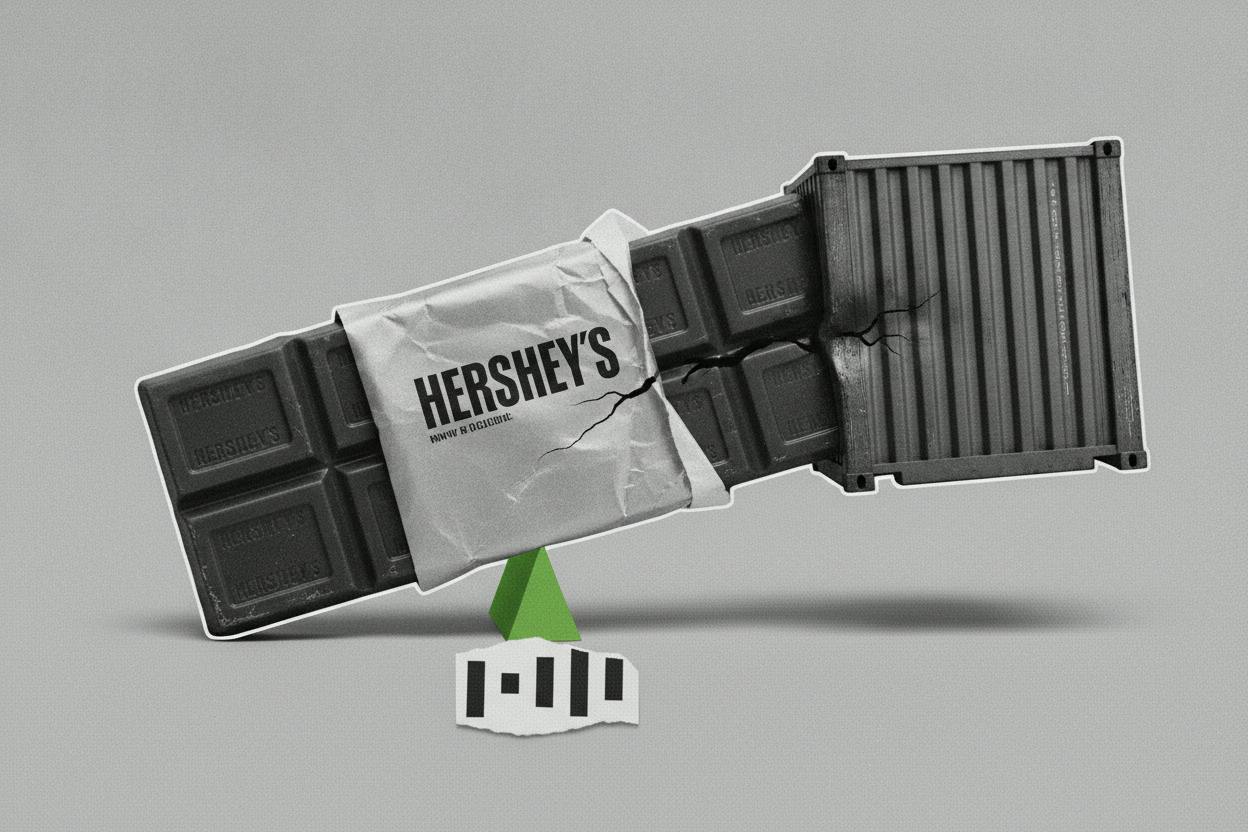
Hershey raised its 2026 earnings outlook after a better-than-expected third quarter, but analysts at RBC Capital Markets caution that the shine could fade by 2027. The chocolate and snacks giant's upbeat headline is partly a one-off, they argue, driven by tariff refunds that won't repeat.
RBC kept a 'sector perform' rating on the stock and cut its price target to $190 from $206, even as shares traded near $165. The move signals that the market's attention should shift from 2026's accounting lift to the sustainability of Hershey's underlying growth.
What the numbers say
Hershey said adjusted earnings could grow 36% to 38.5% next year, a figure that includes the benefit of tariff refunds. Excluding that one-time boost, the company guided to growth of 32.5% to 35%, with net sales expected to rise about 5%.
For 2027, Hershey maintained targets of 2% to 4% sales growth and 15% to 20% adjusted earnings growth, explicitly excluding any refund effect. That means the bar for 2027 is set on the strength of the underlying business, not on accounting adjustments.
RBC flagged several headwinds that could push results toward the low end of those ranges: a weaker consumer, continued market share losses in convenience stores, and higher freight and logistics costs. Even with plans to expand its new-product pipeline by 50%, the bank sees limited upside in the near term.
Why 2027 matters more than 2026
Investors often value consumer-staples stocks on 'normalized' forward earnings—the year that best reflects repeatable profit. For Hershey, that's 2027, because 2026's growth rate is inflated by tariff refunds that won't reset the longer-term baseline.
If the market decides next year's jump is non-recurring, the key driver becomes whether analysts lift or cut their 2027 forecasts as new data rolls in. RBC's concerns about demand, convenience-store share, and shipping costs point in the opposite direction: estimates could drift toward the low end of management's 2027 ranges, which can limit how far the stock can be re-rated on a 2026 'beat-and-raise' story alone.
This is a common pattern in consumer staples. A one-time benefit can flatter near-term results, but investors eventually look through it to the underlying earnings power. Companies in this position often see their valuations hinge on whether they can sustain growth without the crutch of a non-recurring gain.
What it means for investors
For everyday investors, the takeaway is to look beyond the headline growth rate. Hershey's 2026 outlook is impressive, but the real test is whether the company can meet its 2027 targets without the tariff refund boost.
RBC's price target cut suggests the stock may not have much room to run in the near term, even if the company beats expectations this year. The focus should be on the health of the underlying business: consumer demand, market share trends, and cost pressures.
Hershey's situation is not unique. Other consumer giants have faced similar dynamics, as seen with Colgate-Palmolive's profit outlook and Church & Dwight's buyback plan. In each case, the market rewards companies that can grow consistently, not just on one-time gains.
Investors should also watch whether Hershey's new-product pipeline can offset market share losses in convenience stores, a key channel for impulse purchases. If the company can regain momentum there, 2027 estimates could hold up. If not, the low end of guidance may become the reality.
For now, RBC's cautious stance serves as a reminder that a strong quarter doesn't always translate into a strong year ahead. The market will be watching Hershey's next moves closely, especially any updates on consumer spending and cost trends.