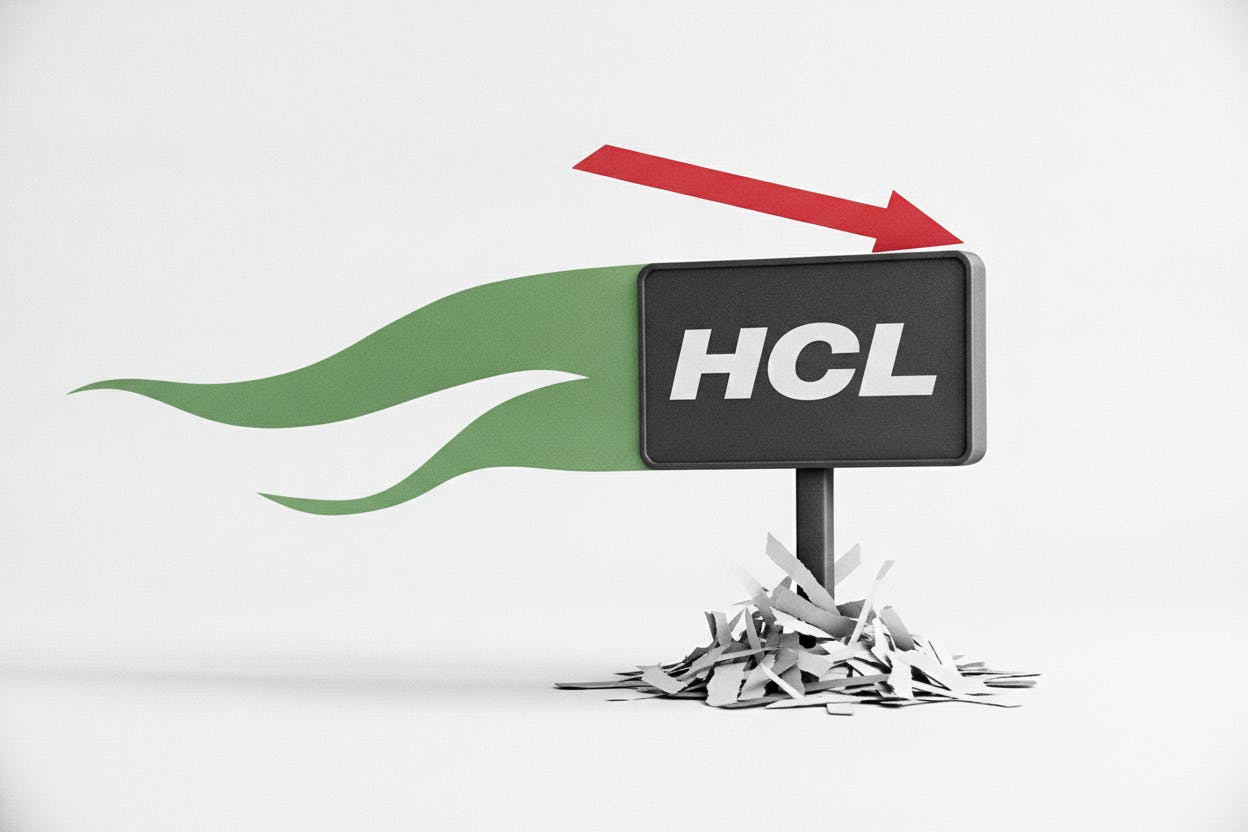
HCL Technologies reported better-than-expected first-quarter results, but investors focused on the company's cautious full-year outlook, sending shares down as much as 3.2%. The Indian IT services firm kept its constant-currency revenue growth forecast at 1%-4% and its operating margin target at 17.5%-18.5%, signaling that management sees no meaningful improvement in client spending.
What Happened
HCL's profit and revenue topped analyst estimates for the quarter ended June 30, according to Reuters. Strength in financial services and a weaker rupee helped boost the headline numbers. However, the company's decision to maintain its full-year guidance—rather than raise it—disappointed investors who had hoped for a more upbeat outlook.
Constant-currency guidance strips out the impact of exchange rate fluctuations, giving a clearer picture of underlying business trends. By keeping that range unchanged, HCL indicated that the demand environment hasn't improved enough to justify a higher forecast. The rupee's weakness against the dollar provided a temporary lift to reported revenue, but that tailwind doesn't reflect stronger customer demand.
Why the Market Reacted Negatively
Investors had been watching for signs that recent deal wins were translating into higher client spending, particularly on discretionary projects that companies can delay during uncertain times. Analysts cited by Reuters pointed to soft discretionary tech budgets and continued pressure in telecom and manufacturing sectors. HCL's CEO also noted that the West Asia conflict has weighed on decision-making.
This pattern—a beat on the quarter but flat guidance—often triggers a negative market reaction because it suggests the earnings beat was driven by one-off factors rather than sustainable growth. In HCL's case, the weaker rupee made overseas revenue look better in reported terms, even though customers aren't ordering more work. When volume growth stays capped, IT services firms have less ability to spread fixed delivery costs across more projects, limiting profit expansion even within the 17.5%-18.5% margin band.
That dynamic helps explain why HCL's stock fell as much as 3.2% and has lagged India's broader IT index so far this year. The market is effectively pricing in lower future earnings expectations and a cheaper valuation multiple.
What It Means for Investors
For everyday investors, HCL's cautious outlook is a reminder that currency effects can distort a company's reported performance. A weaker rupee may boost reported revenue and profit, but it doesn't signal stronger demand. Investors should focus on constant-currency metrics and forward guidance to gauge the true health of an IT services business.
The broader context matters too. Indian IT firms like HCL, Infosys, and Tata Consultancy Services have been navigating a challenging environment where clients—especially in the US and Europe—are tightening tech budgets. The AI infrastructure boom is driving deal flow for some tech companies, but discretionary spending on traditional IT services remains subdued. HCL's guidance suggests that recovery in client spending may take longer than expected.
Investors should also watch how currency movements affect other Indian IT stocks. The weaker rupee has helped LTTS and other firms report better revenue, but the underlying demand picture remains mixed. Similarly, IBM's recent AI spending shift highlights how tech companies are reallocating budgets, which can create winners and losers in the IT services space.
Looking Ahead
HCL's next catalyst will be its second-quarter results and any updates to guidance. Investors will be watching for signs of a pickup in discretionary spending, especially in financial services and manufacturing. The company's ability to win large deals and convert them into revenue growth will be key.
For now, HCL's steady guidance has spooked investors, but it also provides a realistic view of the demand environment. The stock's decline reflects a reassessment of near-term earnings prospects, not a fundamental deterioration in the business. Long-term investors may want to monitor the company's deal pipeline and margin trends before making any decisions.