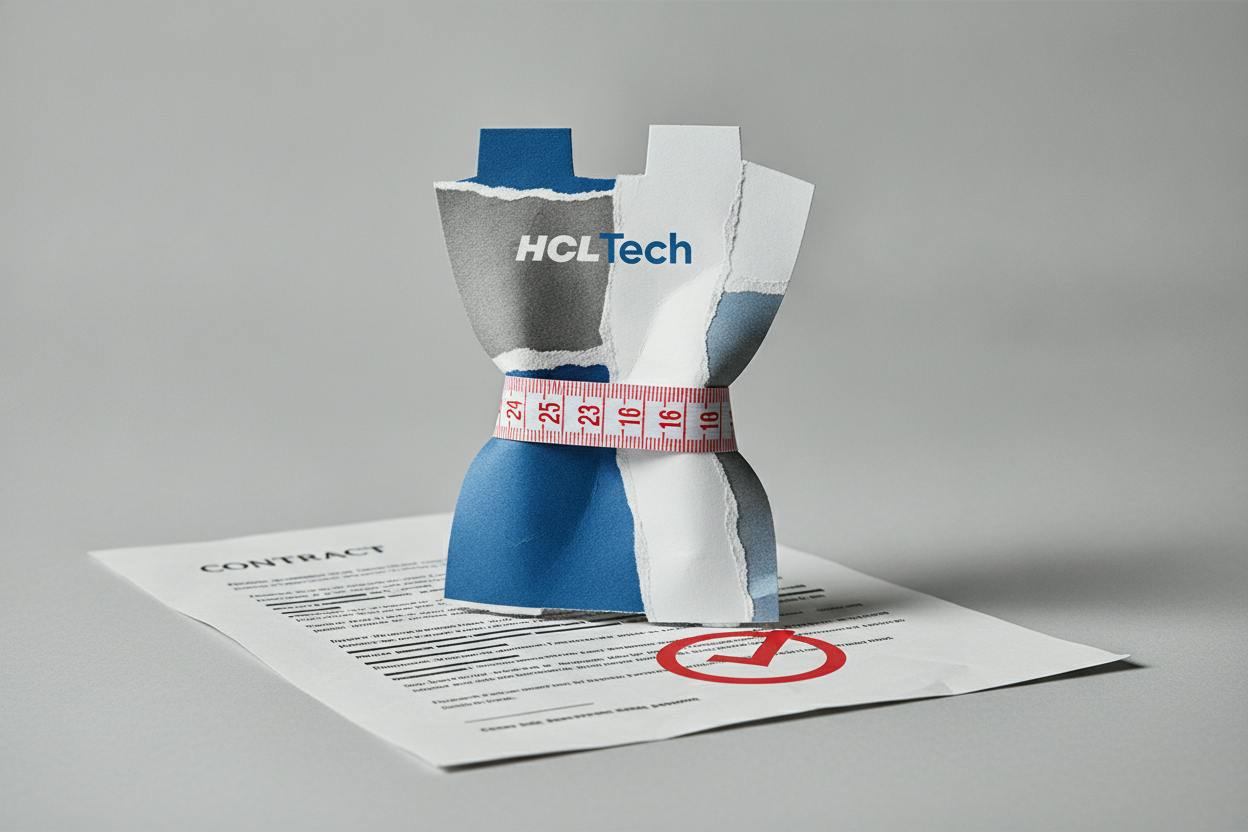
HCLTech's latest quarterly results were a near miss on the top line, but the real story lies beneath the numbers: artificial intelligence is fundamentally changing how India's IT services giants get paid. Clients are increasingly demanding discounts and tying fees to specific performance targets rather than the traditional time-and-materials billing model.
For the September quarter, HCLTech reported revenue of 356.20 billion rupees ($3.72 billion), an 11.5% increase from a year earlier. That just missed the 356.86 billion-rupee consensus estimate compiled by LSEG. Net profit figures were not immediately detailed in the brief, but the revenue shortfall underscores the pricing pressure rippling through the sector.
The company's advanced AI revenue climbed to $219 million, a sign that demand for AI-powered services is growing. Yet that growth is coming with a catch: customers want to pay for outcomes, not effort.
Why outcome-based pricing is a double-edged sword
For decades, Indian IT services firms billed clients by the hour or by the number of engineers deployed. That model rewarded headcount and hours worked. But AI is upending that logic. Automation can now handle tasks that once required large teams, so clients are pushing back on the old billing structure.
Instead, they are asking for contracts where fees are linked to measurable results—such as faster processing times, lower error rates, or specific cost savings. This shift is part of a broader transformation across India's $315 billion IT services industry, as reported by Reuters.
For HCLTech and its peers, outcome-based pricing is a double-edged sword. On one hand, it can lead to higher margins if AI delivers results efficiently. On the other, it transfers more risk to the service provider. If the promised outcomes aren't achieved, revenue takes a hit.
The near miss on revenue suggests that this transition is not frictionless. Clients are negotiating harder, and the shift to performance-linked fees may be compressing near-term billing.
What it means for investors
For everyday investors, the key takeaway is that AI is not just a growth story—it's a pricing story. Companies like HCLTech are investing heavily in AI capabilities, but the payoff depends on how quickly they can adapt to a new commercial model.
Investors should watch for signs that HCLTech can maintain or improve margins while transitioning to outcome-based contracts. If the company can demonstrate that AI-driven services are both effective and profitable, the stock could benefit. Conversely, if pricing pressure persists, revenue growth may continue to lag expectations.
The broader context is also important. India's IT services sector is a major employer and a key driver of the country's economy. Any sustained shift in how these firms are paid could have ripple effects on hiring, wage growth, and even inflation dynamics.
HCLTech's results also come amid a global tech spending environment where clients are more cautious. Many companies are scrutinizing IT budgets, and AI is often seen as a way to do more with less. That's good for AI adoption but tough for traditional IT services pricing.
The road ahead
HCLTech's management will likely face questions about the pace of the shift to outcome-based pricing and how it affects the company's financial outlook. The $219 million in advanced AI revenue is a positive sign, but it's still a small slice of the overall revenue pie.
Investors should also keep an eye on the broader competitive landscape. Rivals like Infosys and Tata Consultancy Services are navigating similar changes, and the success of one could set the tone for the industry.
For now, the message from HCLTech's quarter is clear: AI is rewriting the rules of engagement in IT services. The companies that can deliver measurable results efficiently will thrive, while those that cling to the old billing model may find themselves left behind.
As the industry evolves, investors would do well to monitor not just revenue growth but also the terms of new contracts. The shift to outcome-based pricing is a structural change that could define the next decade for India's IT services giants.