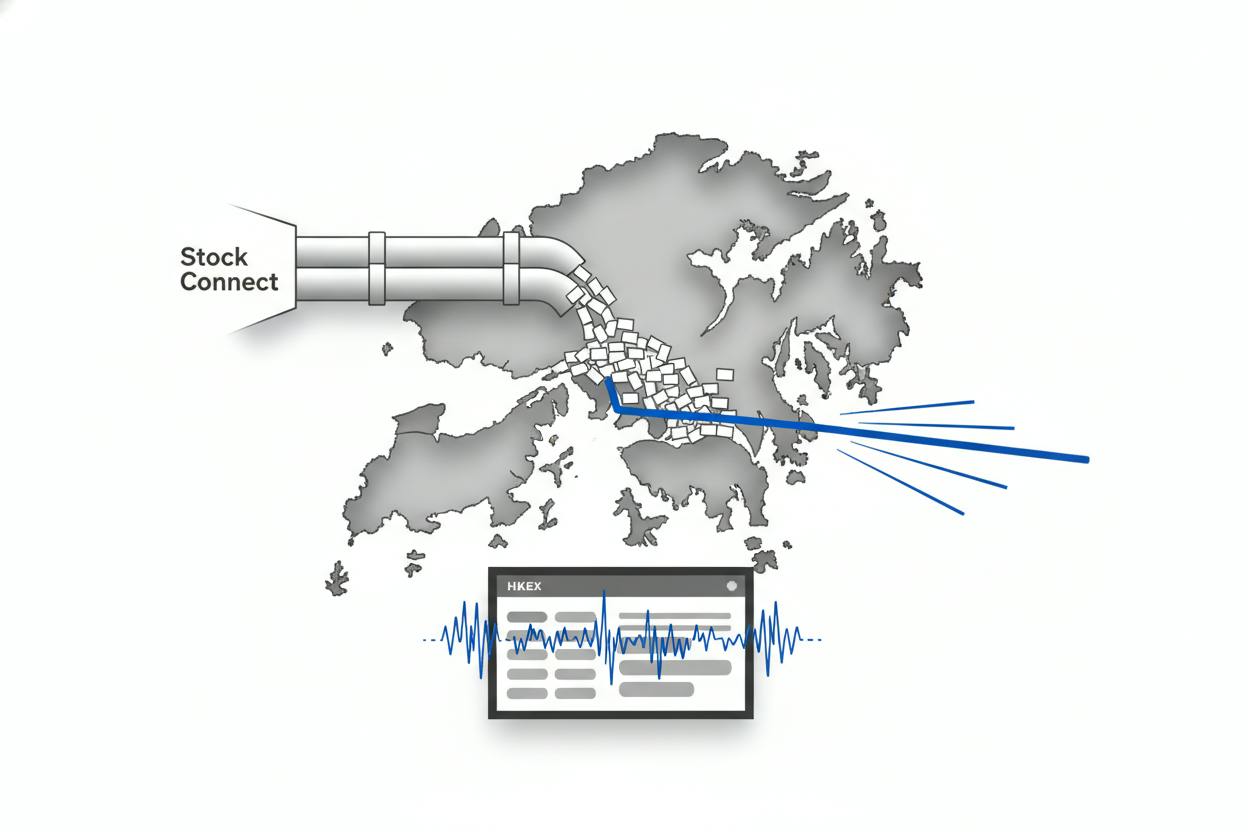
Hong Kong has listed eight new exchange-traded funds (ETFs) that track HKEX cross-market indexes, in a move designed to attract mainland Chinese capital through a newly expanded investment channel. The funds, reported by Reuters, follow a fresh Southbound Stock Connect route that now allows mainland insurance companies to buy Hong Kong-listed ETFs.
This launch is less about product variety and more about distribution. Beijing has been widening the channels that let mainland investors reach offshore assets, as returns at home have looked less compelling than in several overseas markets. Last month, China's financial regulator added a key new buyer group by allowing mainland insurance firms to buy Hong Kong-listed ETFs through Southbound Stock Connect, giving a large pool of institutional money a new way to diversify.
What is Southbound Stock Connect?
Stock Connect is a cross-border investment scheme that links the stock exchanges of mainland China and Hong Kong. It has two directions: northbound, which lets international investors buy mainland-listed shares, and southbound, which lets mainland investors buy Hong Kong-listed securities. The southbound leg has traditionally been open to mutual funds, private funds, and certain qualified individual investors, but insurers were previously restricted.
The recent regulatory change expands that eligibility. Insurance companies, which manage vast pools of premium income, can now use the southbound channel to purchase Hong Kong-listed ETFs. That is significant because insurers tend to invest for the long term and in size, making them a potentially stable source of demand for these new funds.
The eight new ETFs track HKEX cross-market indexes, which are designed to reflect the performance of companies listed in Hong Kong and mainland China. By offering these products, Hong Kong's exchange is positioning itself as a gateway for mainland capital seeking exposure to a broader set of assets.
Why does this matter for investors?
For everyday investors, the immediate effect is likely to be modest. These ETFs are primarily aimed at institutional buyers, not retail traders. But the broader trend is worth watching: mainland money flowing into Hong Kong-listed ETFs could increase trading volumes and liquidity in those funds, which can benefit all investors through tighter bid-ask spreads and lower transaction costs.
It also signals that Chinese authorities are serious about opening up capital outflows, even as they maintain controls on the yuan. For investors with exposure to Hong Kong markets, this could mean more demand for Hong Kong-listed equities and ETFs over time, potentially supporting valuations.
However, it is important to keep expectations in check. The scale of insurer participation will depend on how quickly they adapt to the new rules and how attractive Hong Kong assets look relative to domestic alternatives. The move is a step, not a floodgate.
What to watch next
Investors should monitor how much money actually flows through this new route in the coming months. Data on southbound flows is published regularly and will give a sense of whether insurers are taking advantage of the new access. Also watch for any further expansion of the eligible asset list or additional regulatory tweaks that could broaden participation.
For those interested in the broader picture, the expansion of Stock Connect is part of a larger effort by Beijing to internationalise the yuan and deepen its capital markets. Similar initiatives have been seen in other areas, such as the recent push to attract foreign investment into Chinese bonds. The success of these efforts will shape how global investors view China's financial system.
In the meantime, the eight new ETFs add to the growing menu of products available to investors in Hong Kong. While they may not be on every retail investor's radar, they represent another brick in the wall connecting mainland savings with offshore opportunities.