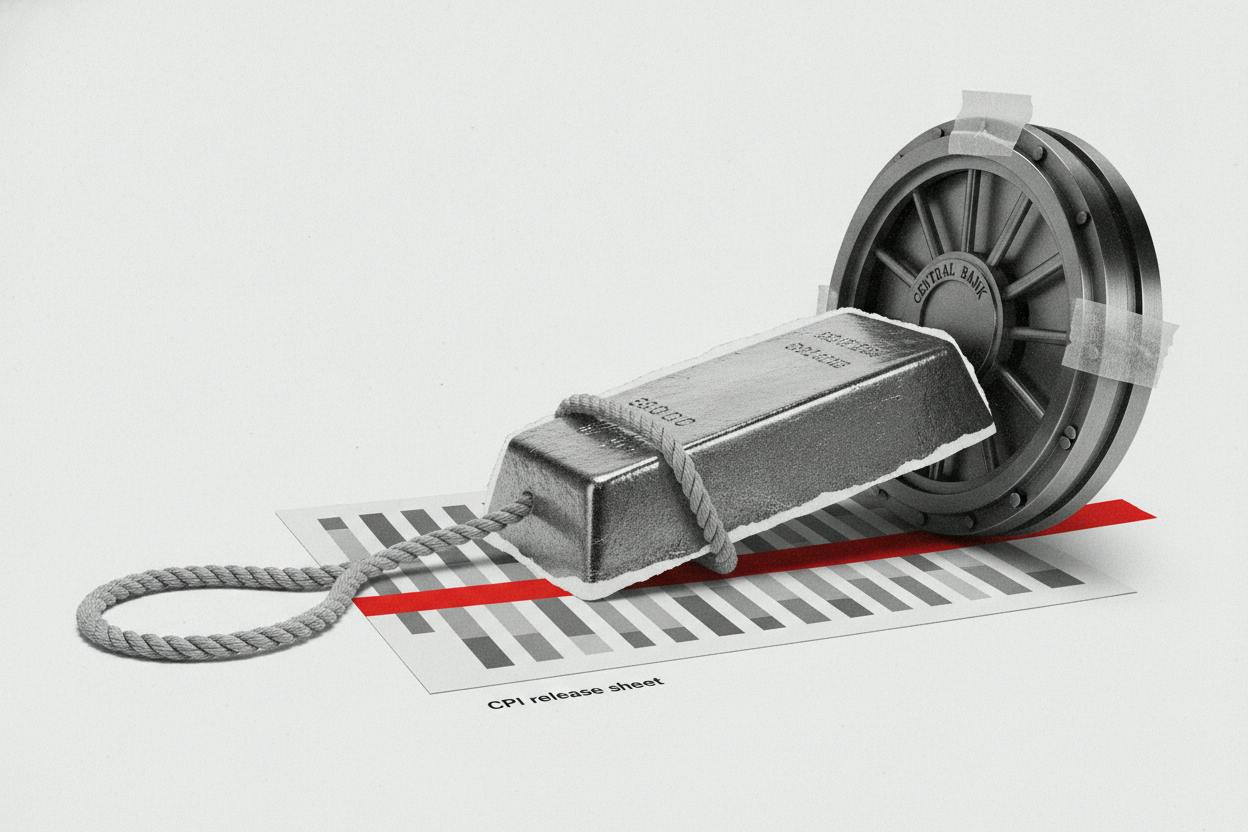
Gold prices slipped on Wednesday after October's US Consumer Price Index (CPI) came in hotter than economists had expected. The data lifted the dollar to a four-week high and kept alive market bets that the Federal Reserve will raise interest rates again in December.
The CPI rose 0.4% in October, versus a 0.3% forecast. While the difference may seem small, it was enough to shift expectations in financial markets, where traders quickly adjusted their outlook for Fed policy.
Why inflation matters for gold
Gold is often seen as a hedge against inflation, but in the short term, hotter inflation can actually hurt the metal. That's because investors focus on what the data means for interest rates, not just the price level itself.
When inflation runs hot, the Fed tends to respond by keeping rates higher for longer. And gold pays no interest, unlike cash or bonds. So when rates rise, the opportunity cost of holding gold increases — investors can earn a yield elsewhere, making the metal less attractive.
That dynamic played out in the market reaction. The dollar strengthened as traders bet on more Fed tightening, and US Treasury yields also moved higher. Since gold is priced in dollars, a stronger dollar makes it more expensive for buyers using other currencies, adding further pressure.
Fed rate-hike bets in focus
Before the CPI release, markets were already pricing in a quarter-point rate hike at the Fed's December meeting. After the data, traders also began assigning a meaningful chance to a larger half-point move, according to the brief.
That shift reflects a broader concern that inflation is proving stickier than hoped. The Fed has been trying to bring inflation down to its 2% target, but the latest numbers suggest that process may be slower than expected.
For everyday investors, the key takeaway is that the path of interest rates remains the dominant force in markets. When rate expectations rise, it tends to ripple through asset prices — not just gold, but also stocks, bonds, and currencies.
What it means for investors
For those holding gold or gold-related investments, the immediate outlook is clouded by the prospect of higher rates. But it's worth remembering that gold's long-term appeal as a store of value hasn't disappeared. Many investors still use it to diversify their portfolios or protect against extreme scenarios.
The dollar's strength is another factor to watch. A stronger dollar can weigh on US multinational companies' earnings and on emerging-market assets. In fact, the same inflation data that pressured gold also had ripple effects across global markets, as seen in emerging-market currencies diverging and the pound slipping against the dollar.
Investors should also keep an eye on how the Fed communicates in the coming weeks. If officials signal that a half-point hike is on the table, that could push gold even lower. Conversely, any hint that inflation is cooling could reverse the recent trend.
For now, the message from the markets is clear: inflation is still running too hot for comfort, and that's keeping pressure on gold and other non-yielding assets.



