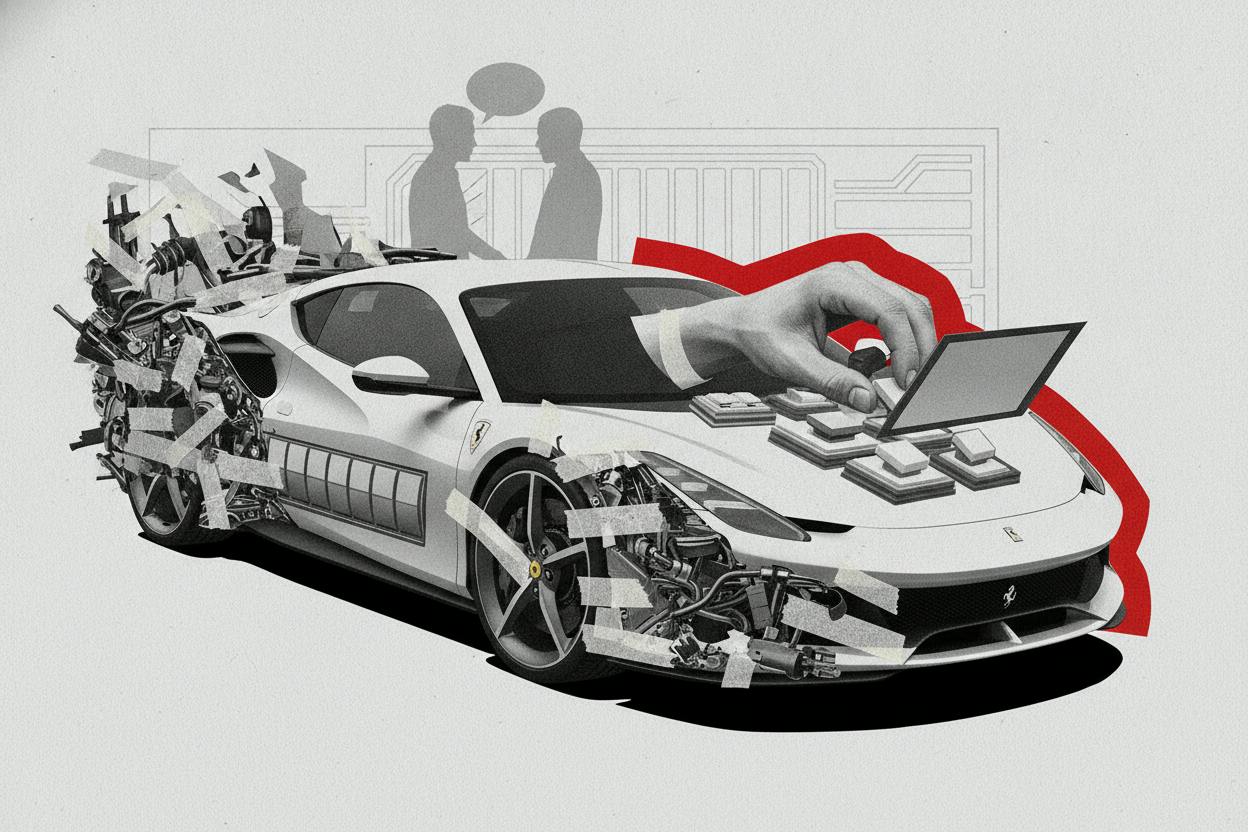
Ferrari chairman John Elkann says the company's first fully electric car traces its origins to an unlikely spark: a July 2016 walk-and-talk with Amazon founder Jeff Bezos about innovation and electric vehicles. That conversation, Elkann says, helped set Ferrari on the path to the Luce, its first fully electric model, which is being co-designed with Jony Ive, the former Apple design chief.
The revelation, shared in a recent interview, offers a rare glimpse into how one of the world's most iconic sports car makers is navigating the industry's shift away from internal combustion engines. For everyday investors, it's a reminder that even the most traditional luxury brands are being forced to rethink their futures as regulators and markets push toward electrification.
From a walk to a production model
According to Elkann, the idea for Ferrari's electric future began during a casual walk with Bezos in 2016. At the time, Tesla was already proving that electric cars could be desirable and fast, but most legacy automakers were still years away from committing to battery-powered lineups. The conversation with Bezos, who had been pushing Amazon into new frontiers like cloud computing and artificial intelligence, apparently planted a seed in Elkann's mind about the potential of EVs.
It would take years for that seed to grow. Ferrari has been cautious about electrification, rolling out hybrid models first, such as the SF90 Stradale, before committing to a fully electric vehicle. The Luce, whose name means "light" in Italian, is expected to be unveiled in the coming months, with production slated to begin in 2026. The car is being developed in collaboration with Jony Ive, who left Apple in 2019 to found his own design firm, LoveFrom. Ive's involvement signals that Ferrari is aiming for more than just a powertrain swap; it wants the Luce to be a design statement.
Ferrari's approach mirrors a broader trend in the auto industry, where traditional manufacturers are partnering with tech and design experts to make EVs stand out in a crowded market. The company has also said it will continue to offer combustion and hybrid models, giving customers a choice as the transition unfolds.
What it means for investors
For investors, the story of the Luce is about more than a single car. It's a case study in how a luxury brand manages the tension between heritage and innovation. Ferrari has long been known for the sound and feel of its V8 and V12 engines, and some enthusiasts worry that going electric could dilute the brand's appeal. However, a recent UBS survey found that Ferrari's EV shift isn't cooling dealer demand, suggesting that customers are willing to embrace the change.
That's crucial because Ferrari's business model depends on exclusivity and pricing power. The company has consistently been one of the most profitable automakers in the world, with high margins and a waiting list for many models. If the Luce can command premium prices and maintain the brand's cachet, it could open a new revenue stream without cannibalizing sales of existing models.
But there are risks. Building an EV from scratch is expensive, and Ferrari has said it will invest heavily in new production lines and technology. The company is also facing increasing competition from other luxury EV makers, including Tesla, Porsche, and newcomers like Lucid. And while Ferrari's customer base is loyal, it's not immune to broader economic trends; a slowdown in luxury spending could hurt demand for a car that will likely cost six figures.
For now, the Luce remains a closely guarded secret, with few details about its range, performance, or price. Investors will be watching the official reveal closely, as it will offer clues about Ferrari's strategy and its ability to execute on the electric transition. The company has said it expects EVs to account for a growing share of sales over the next decade, but it hasn't given specific targets.
Elkann's anecdote about Bezos is a reminder that big strategic shifts often start with small conversations. For Ferrari, that 2016 walk may turn out to be as significant as any engineering breakthrough. For investors, it's a signal that the company is thinking long-term, even as it navigates the short-term challenges of a changing industry.
As the automotive world continues to evolve, Ferrari's bet on the Luce will be a test of whether tradition and innovation can coexist. If successful, it could set a template for other luxury brands facing the same crossroads. If not, it could be a costly misstep. Either way, the story of how a walk with Jeff Bezos helped shape Ferrari's electric future is a fascinating chapter in the ongoing transformation of the auto industry.