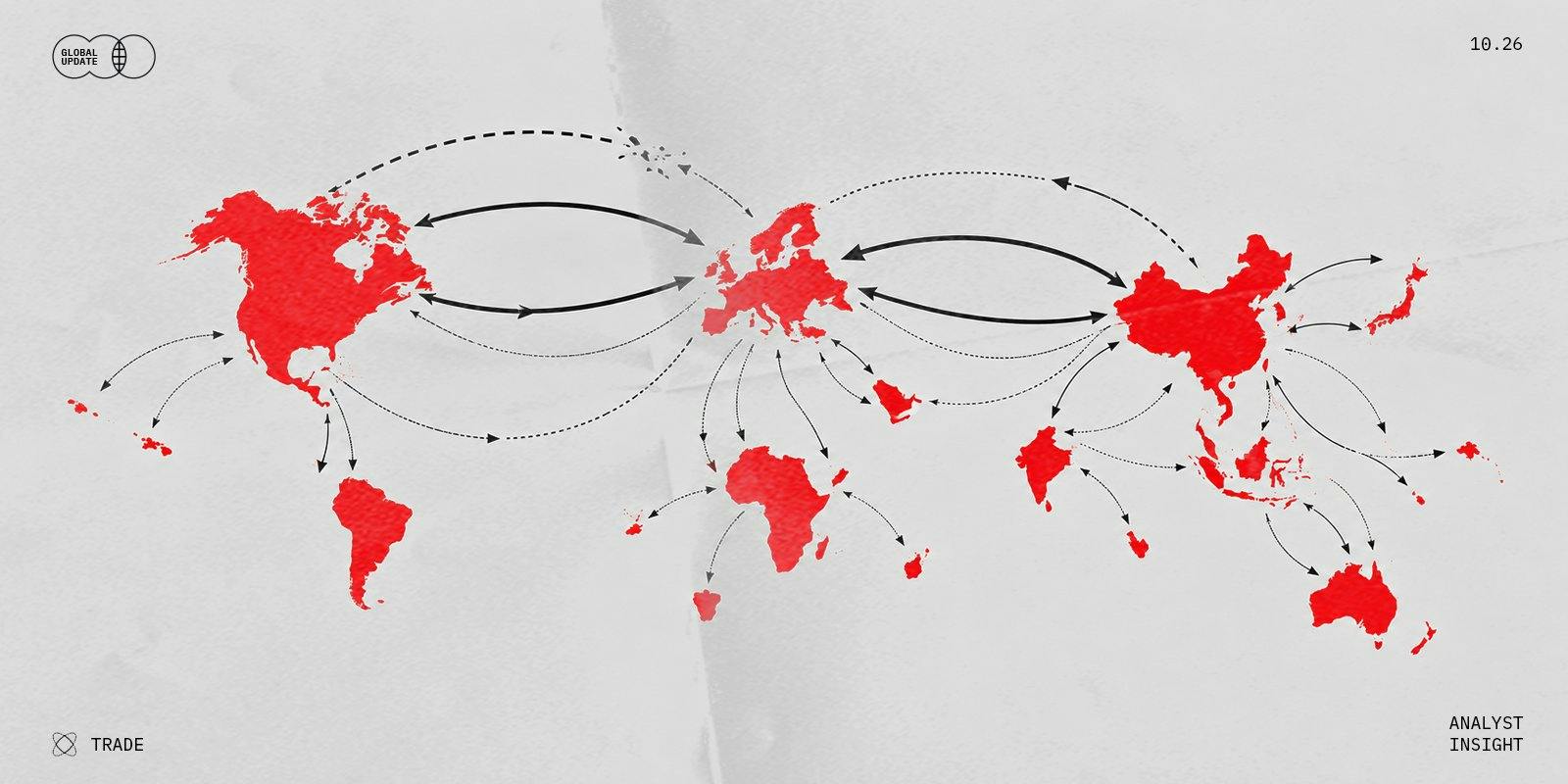
The era of predictable, frictionless global trade is fading. Tariffs, geopolitical tensions, and rising costs have made the trading landscape far less certain, forcing companies to rethink where they manufacture, who they buy from, and which markets they depend on. For emerging markets, this shake-up is a double-edged sword: some exporters are seeing demand shrink, while others are winning new business as supply chains reconfigure.
For everyday investors, the takeaway is that the old playbook of simply buying broad emerging-market exposure may no longer work. The winners and losers are diverging sharply, and understanding the forces at play is key to navigating the shift.
Why trade has become so unpredictable
Tariffs are the most visible driver. The United States and the European Union have been piling on trade barriers, particularly targeting Chinese goods, as China stocks slip under the weight of these restrictions. But tariffs are not the only headwind. Rising energy prices and other input costs are squeezing exporters' profit margins—the money a business keeps after covering its expenses. When margins shrink, companies have less room to absorb tariff costs or invest in growth.
Geopolitical tensions add another layer of complexity. Companies are increasingly wary of relying on single suppliers or markets that could be disrupted by political conflict or sanctions. This has accelerated a trend known as "friendshoring" or "nearshoring," where firms shift production to countries considered politically and economically safer. The result is a more fragmented global trade system, with supply chains that are longer, more complex, and more expensive to run.
Emerging markets: a mixed picture
The impact on emerging markets is far from uniform. Some exporters are being hit hard. For example, countries that rely heavily on exporting goods to the US or EU may face higher tariffs, making their products less competitive. Others, particularly those seen as alternative manufacturing hubs, are picking up new orders as companies diversify away from China.
This divergence is creating what analysts call "uneven outcomes across the asset class." A single emerging-market fund might hold stocks from countries that are thriving and others that are struggling, diluting the overall performance. Investors need to look beneath the surface to identify which countries and companies are best positioned.
One key factor is energy costs. Exporters in countries with access to cheaper energy have a competitive advantage, as energy is a major input for manufacturing and transportation. Conversely, those facing high energy prices will see their margins squeezed further.
What it means for investors
For investors, the shifting trade landscape demands a more selective approach. Instead of buying a broad emerging-market index, consider focusing on countries and sectors that are benefiting from the reconfiguration of global supply chains. Look for companies with pricing power—the ability to pass on higher costs to customers—and those with diversified supply chains that can adapt to changing trade rules.
It's also important to watch currency movements. A stronger dollar can hurt emerging-market exporters by making their goods more expensive on the global market. As the dollar wavers ahead of US economic data, its direction will be a key factor for trade-sensitive stocks.
Bond markets also offer clues. When US Treasury yields are high, as they have been recently, capital tends to flow toward US assets, putting pressure on emerging-market currencies and debt. This can create headwinds for exporters in those countries.
How to spot the winners
So, how can investors identify the winners in this new trade environment? Here are a few things to consider:
- Look for "friendshoring" beneficiaries: Countries that are politically aligned with major economies like the US and EU, and that have the infrastructure to take on new manufacturing, are likely to see increased investment.
- Check energy exposure: Exporters in countries with low-cost energy, such as those with abundant natural gas or renewable resources, are better positioned to maintain margins.
- Assess supply chain resilience: Companies that have already diversified their suppliers or moved production closer to their end markets are less vulnerable to trade disruptions.
- Watch for policy shifts: Government incentives, such as subsidies for domestic manufacturing or tax breaks for exporters, can create tailwinds for specific industries.
It's also worth noting that the shift is not just about emerging markets. Developed economies are feeling the effects too. For instance, German exports have fallen again, deepening trade worries for the DAX. Similarly, Porsche's global deliveries dropped 16% as it sticks to its value strategy, a sign that even premium brands are not immune to trade headwinds.
In this environment, diversification is more important than ever. But diversification alone isn't enough—investors need to be aware of the specific risks and opportunities in each market. The global trade shift is not a temporary blip; it's a structural change that will reshape the investment landscape for years to come.
As you assess your portfolio, consider how the companies you own are adapting to this new reality. Are they stuck in old supply chains, or are they actively repositioning to capture new opportunities? The answers could determine whether your investments thrive or merely survive in the new world of fragmented trade.