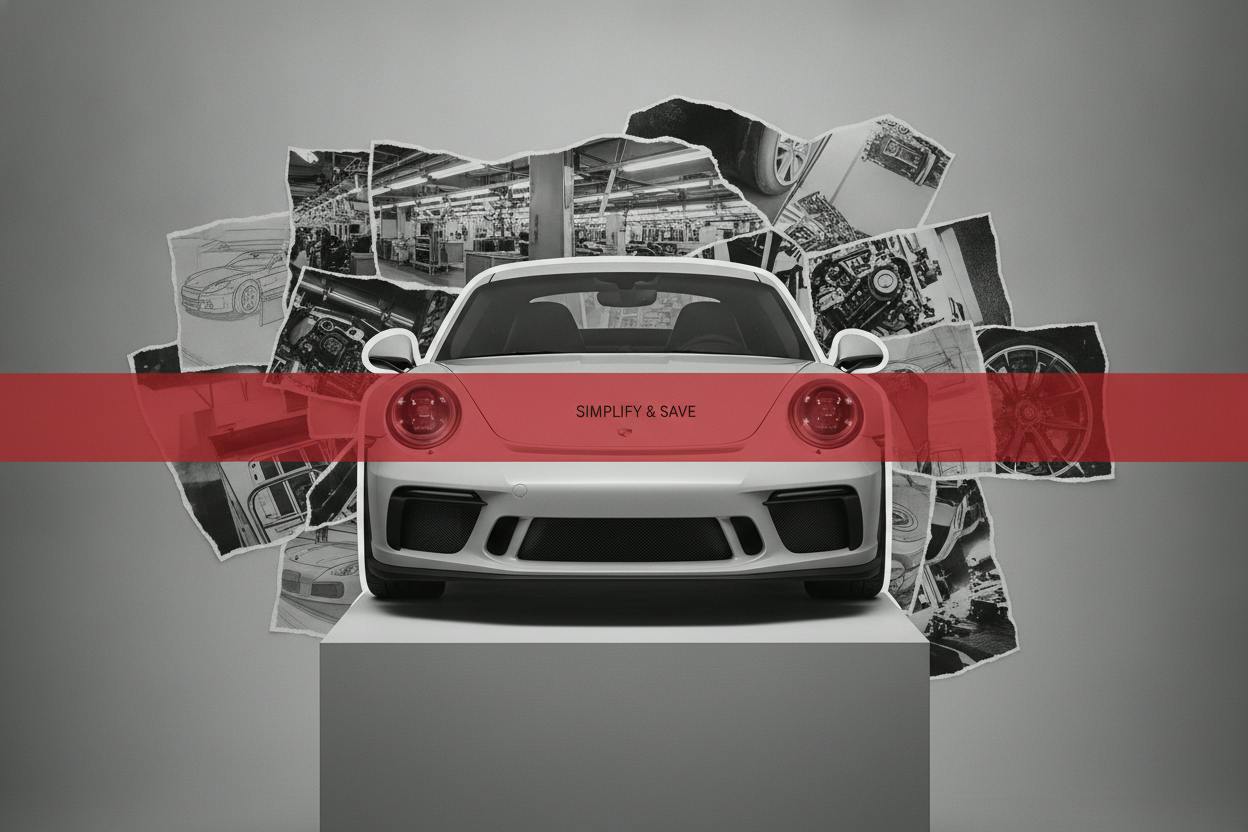
Porsche is staying the course with its “value over volume” strategy even as global deliveries fell 16% year over year in the first nine months of 2026. The luxury carmaker’s latest numbers show a market that is cooling in key regions, but the company is choosing to protect pricing power rather than chase sales volume.
What the numbers show
Deliveries across all models totaled fewer vehicles than the same period a year earlier, with the decline driven by two main factors. First, demand in China—once Porsche’s largest market—slumped 33% year over year. Second, production of the 718 Boxster and Cayman models has ended, removing a significant chunk of volume from the lineup.
Partially offsetting those drags, the iconic 911 saw deliveries rise 12% during the same stretch. That strength in the flagship sports car underscores the brand’s ability to command premium pricing even as broader demand softens.
Why value over volume matters
Porsche’s strategy is a deliberate trade-off. By prioritizing profit margins over unit sales, the company aims to protect its brand cachet and resale values. This approach often means accepting lower sales numbers in exchange for higher average transaction prices and healthier profitability per vehicle.
For everyday investors, this is a key distinction. Many automakers measure success by how many cars they sell, but luxury brands like Porsche are judged more on how much money they make per car. A 16% drop in deliveries sounds alarming at first glance, but if the company maintains its pricing discipline, the financial impact may be less severe than the headline suggests.
That said, the China slide is hard to ignore. The Chinese market has been a major growth engine for luxury goods for years, but it has cooled recently amid economic uncertainty and increased competition from domestic electric vehicle makers. Porsche is not alone in facing this headwind—many premium brands are seeing softer demand in the region.
What it means for investors
For investors, the key question is whether Porsche’s value-over-volume approach can sustain profitability in a tougher market. The company’s ability to keep pricing power will be tested as competition intensifies and as the transition to electric vehicles reshapes the industry.
Porsche’s situation also reflects broader trends in the auto sector. While some mass-market brands are struggling with inventory gluts and discounting, luxury players are often better insulated because their customers are less price-sensitive. However, even luxury demand can weaken if economic conditions deteriorate.
Investors should watch how Porsche balances its model lineup going forward. The end of 718 production is a temporary drag, but new models—including electric variants—could reignite growth. The 911’s resilience is a positive sign, but it remains to be seen if that strength can offset weakness elsewhere.
Broader market context
The auto industry is navigating a complex environment. Global bond yields have been volatile, with European bank stocks sliding recently as yields rose, which can affect consumer financing costs and, in turn, big-ticket purchases like cars. Meanwhile, the physical buildout of AI infrastructure is reshaping global trade, potentially influencing supply chains and manufacturing costs.
For Porsche, the China slowdown is part of a larger story. The country’s economic recovery has been uneven, and luxury goods have not been immune. Some analysts expect the Chinese market to stabilize, but the timing remains uncertain.
Looking ahead
Porsche’s next earnings report will be closely watched for clues on how the value-over-volume strategy is translating into financial results. Investors will want to see whether profit margins hold up despite lower volumes, and whether the company can manage costs effectively.
In the meantime, the company’s commitment to its strategy suggests it is willing to accept lower sales in the short term to protect long-term brand equity. That may be the right call for a luxury marque, but it also means investors should brace for more volatile delivery numbers in the quarters ahead.
For now, Porsche is betting that fewer cars sold at higher prices will ultimately be more rewarding than chasing volume. Whether that bet pays off will depend on how long the current market softness lasts—and how quickly new models can fill the gap left by the 718.