HP has picked Emma Walmsley, a veteran consumer and healthcare executive who sits on Microsoft's board, to be its next chief executive. She will take the helm on January 4th, replacing Bruce Broussard, who has been serving as interim CEO and will move into the role of board chair, according to Reuters.
The leadership change comes at a tricky moment for the PC maker. HP is trying to sell more artificial-intelligence-powered computers into a market that has cooled, while a global shortage of memory chips is pushing up the cost of key components.
Why HP is turning to Walmsley
Walmsley is best known for her time as CEO of GlaxoSmithKline (GSK), the British pharmaceutical giant, where she led the company through a major restructuring and the spin-off of its consumer health division. She also spent years at consumer goods company Unilever, giving her deep experience in selling products to everyday customers—a skill that could translate well to the personal computer market.
Her current role as a Microsoft board member is also notable. Microsoft is a major player in the AI software space, and its Windows operating system is central to the new wave of AI-enabled PCs. That connection could help HP as it tries to position its machines as the go-to devices for AI features like on-device assistants and real-time language translation.
Walmsley's appointment follows a period of uncertainty at HP's top. Broussard, who previously led health insurer Humana, stepped in as interim CEO after the sudden departure of former chief executive Enrique Lores in a move that surprised investors. Now the company is looking to Walmsley to provide steady leadership and a clear strategy.
The challenges facing HP
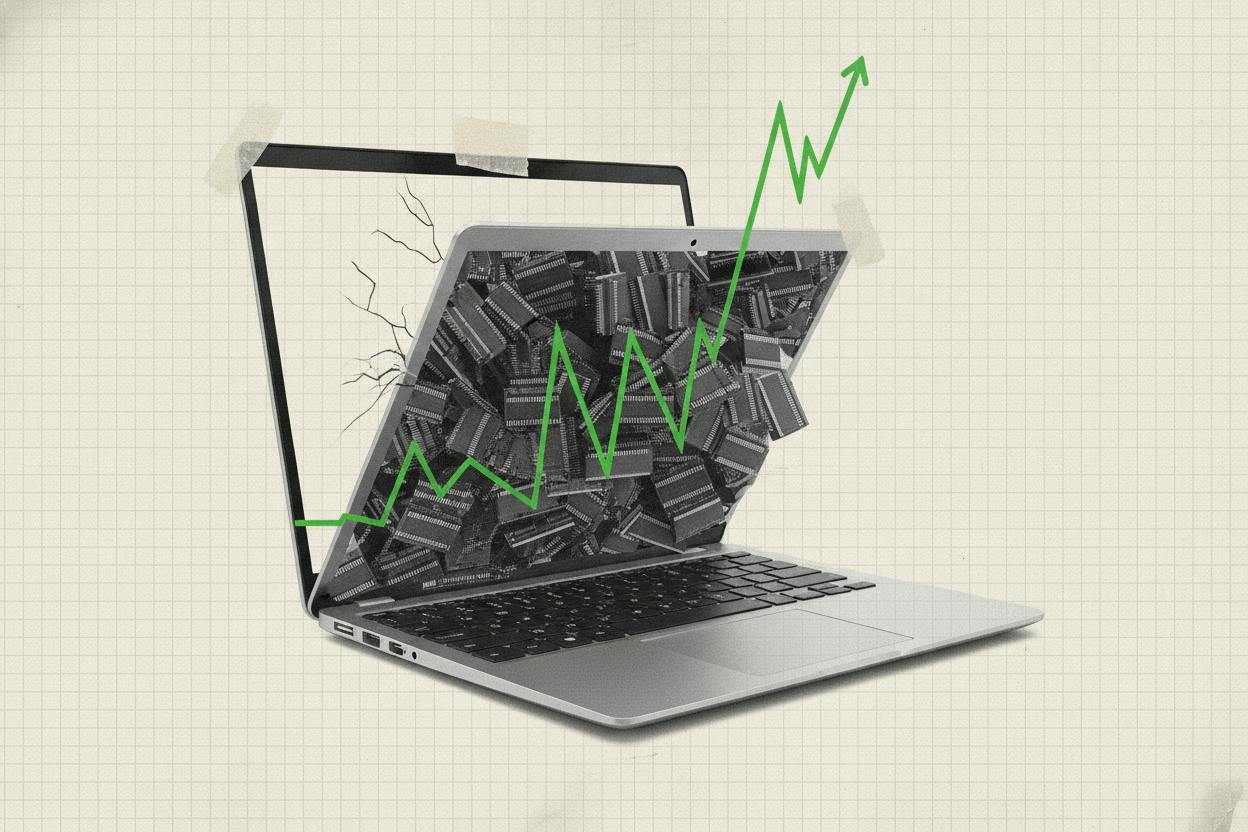
HP is being squeezed from two directions at once. On the supply side, memory chips—the components that store data in computers—have become more expensive as manufacturers have cut back on production and demand for AI data centers has soaked up available supply. That means HP's cost to build a PC is rising, and it may have to decide whether to absorb those costs or pass them on to consumers.
On the demand side, the traditional PC market is weak. In a filing with the U.S. Securities and Exchange Commission in September, HP said it expects industry-wide PC unit volumes to fall by mid-single digits next year. That is a significant slowdown for a product category that many people now see as a replacement purchase rather than an upgrade.
The company is betting that AI PCs—machines with built-in neural processing units that can run AI tasks locally—will give people a reason to buy new computers. But so far, the enthusiasm has been more on the supply side than the demand side. Many consumers and businesses are still waiting to see what these AI features can actually do before they open their wallets.
What it means for investors
For everyday investors, this leadership change is a signal that HP is serious about its AI strategy, but it also highlights the risks. A new CEO often brings a fresh perspective, but Walmsley will need time to learn the PC business and set her own course. Investors should watch for early signs of her priorities—whether she focuses on cutting costs, pushing into new markets, or doubling down on AI.
The memory-chip squeeze is a reminder that even big tech companies are not immune to supply chain shocks. When component prices rise, profit margins can shrink unless a company can raise prices without losing customers. In a weak demand environment, that is easier said than done.
HP's stock has been under pressure as investors weigh these challenges. The company's guidance for lower PC volumes next year suggests that the near-term outlook is cautious. However, if AI PCs do catch on, HP could be well-positioned to benefit, given its strong brand and distribution network.
For now, the key dates to watch are January 4th, when Walmsley officially takes over, and the company's next earnings report, where management will likely provide more detail on how the AI PC push is going and how it plans to handle rising costs.
In the broader tech sector, HP's situation is not unique. Other PC makers are facing similar headwinds, and the memory-chip shortage is affecting everything from smartphones to data centers. Investors who hold tech stocks should keep an eye on how these supply and demand dynamics play out, as they could have ripple effects across the industry.
Walmsley's appointment is a bold move by HP's board, bringing in an outsider with a strong track record in a different industry. Whether she can translate that success to the fast-moving world of consumer electronics remains to be seen, but her experience with large-scale turnarounds and her ties to Microsoft give her a solid foundation to build on.