Investment bank RBC Capital Markets believes HP has a competitive advantage in the emerging market for “hybrid AI” personal computers. In a hybrid AI setup, some artificial intelligence tasks run directly on the device, while heavier workloads are processed in the cloud. According to RBC, this approach could help HP transform AI-ready laptops from simple hardware purchases into a recurring source of software-and-services revenue.
The idea is that as PCs become more capable of handling AI locally, they also become platforms for ongoing services. Instead of a customer buying a laptop once and never hearing from the manufacturer again, the manufacturer could sell subscriptions, cloud storage, or premium AI features that generate income month after month. RBC’s note suggests that this shift could lift the revenue HP earns per unit over time.
What is hybrid AI?
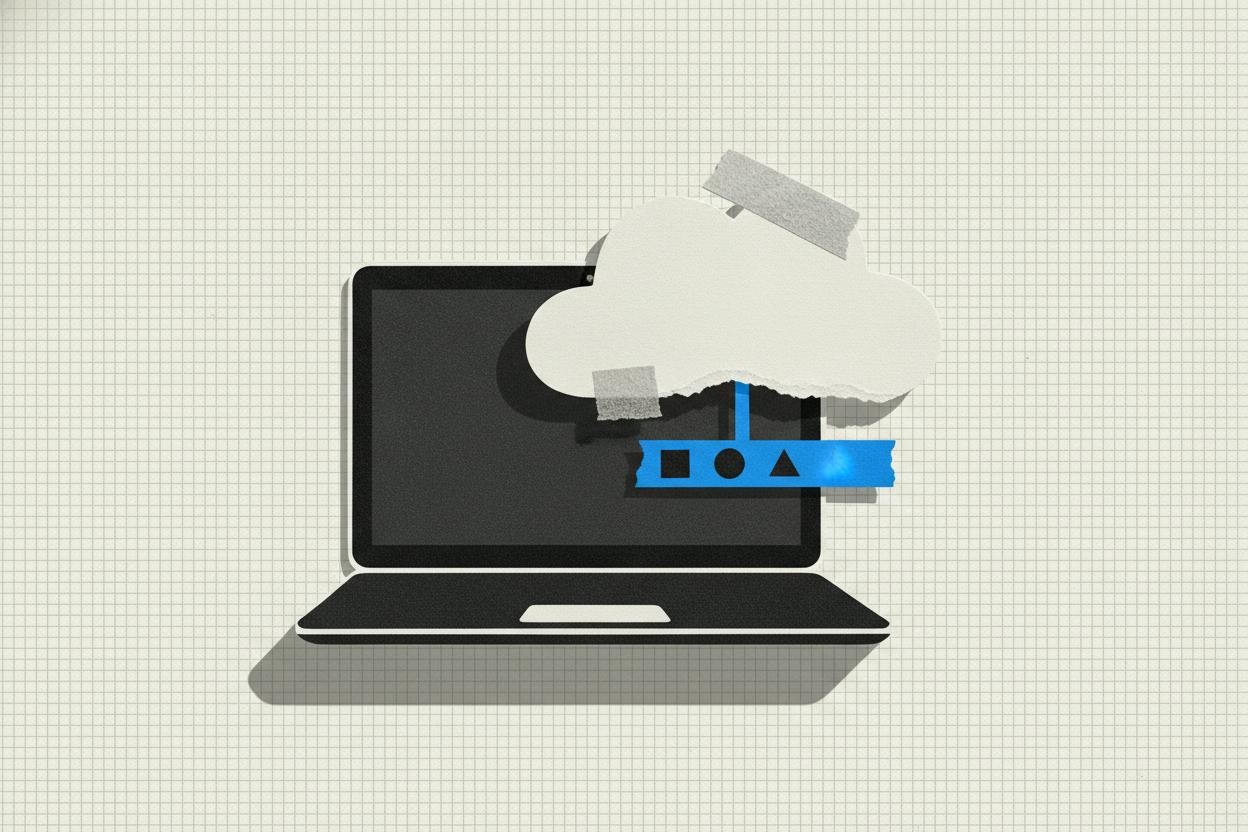
Hybrid AI refers to a computing model where AI workloads are split between the device and the cloud. For example, a laptop might handle simple tasks like voice recognition or photo editing on its own processor, while more complex requests, such as generating a detailed report or running a large language model, are sent to remote servers. This approach balances speed, privacy, and cost: on-device processing is faster and keeps sensitive data local, while cloud processing offers more power for demanding tasks.
For PC makers like HP, hybrid AI is more than a technical feature. It represents a potential business model shift. Historically, PC manufacturers have relied on hardware sales, which are cyclical and often subject to price competition. Software and services, by contrast, tend to be more stable and can grow even when hardware sales slow. If HP can convince customers to pay for AI-related services alongside their laptops, it could smooth out some of the volatility that has long characterized the PC industry.
Why RBC sees an edge for HP
RBC’s view is that HP is well positioned to capitalize on this trend. The company has been investing in AI-capable PCs, and its large installed base of business and consumer devices gives it a ready market for hybrid AI services. The bank’s analysis suggests that HP’s strategy could differentiate it from rivals that are still treating AI as a hardware spec rather than a service opportunity.
This is not just about selling more laptops. It’s about changing the economics of each sale. If HP can attach a subscription or a service plan to an AI PC, the lifetime value of that customer increases. RBC’s note points to this as a key reason HP could maintain its edge in the PC market, even as competition intensifies.
The broader tech landscape supports this thesis. Cloud providers are increasingly pushing AI capabilities, and device makers are racing to integrate AI into their products. Some analysts warn that small AI models could soon spread onto smart devices, which would make on-device processing even more common. That trend aligns with HP’s hybrid approach, where the device handles what it can and the cloud handles the rest.
What it means for investors
For everyday investors, the key takeaway is that HP’s future earnings may depend less on how many PCs it sells and more on how much recurring revenue it can generate from each device. If RBC is right, HP could see its software-and-services revenue per unit rise, which would be a positive for margins and profitability.
However, it’s important to keep expectations in check. The hybrid AI market is still young, and it’s unclear how quickly consumers and businesses will adopt AI services on their PCs. Competition is fierce, with rivals like Dell, Lenovo, and Apple all pushing their own AI strategies. The stock market has been splitting apart, with some tech names soaring while others lag, and HP’s performance will depend on execution.
Investors should also consider the broader economic backdrop. Recent inflation data and retail sales have clouded the Federal Reserve’s rate outlook, which could affect consumer spending on big-ticket items like laptops. If the economy slows, hardware sales could suffer, but recurring software revenue might provide a cushion.
RBC’s note is a single analyst’s view, not a guarantee. But it highlights a shift that could reshape how PC makers are valued. Instead of being seen as cyclical hardware vendors, companies like HP could be viewed as providers of ongoing AI services. That would be a meaningful change for investors who have long treated PC stocks as low-margin, boom-and-bust plays.
For now, the hybrid AI story is one to watch. If HP can execute on its strategy, it could turn the AI PC wave into a durable revenue stream. If not, it risks being left behind in a market that is quickly evolving. Either way, the next few quarters will be telling.