On the surface, the stock market looks calm. The S&P 500 has been drifting without major swings, and headlines are quiet. But beneath that placid exterior, something is shifting: investors are increasingly betting that individual stocks will move in very different directions. That gap between the calm index and the choppy individual stocks is called dispersion, and it's on the rise.
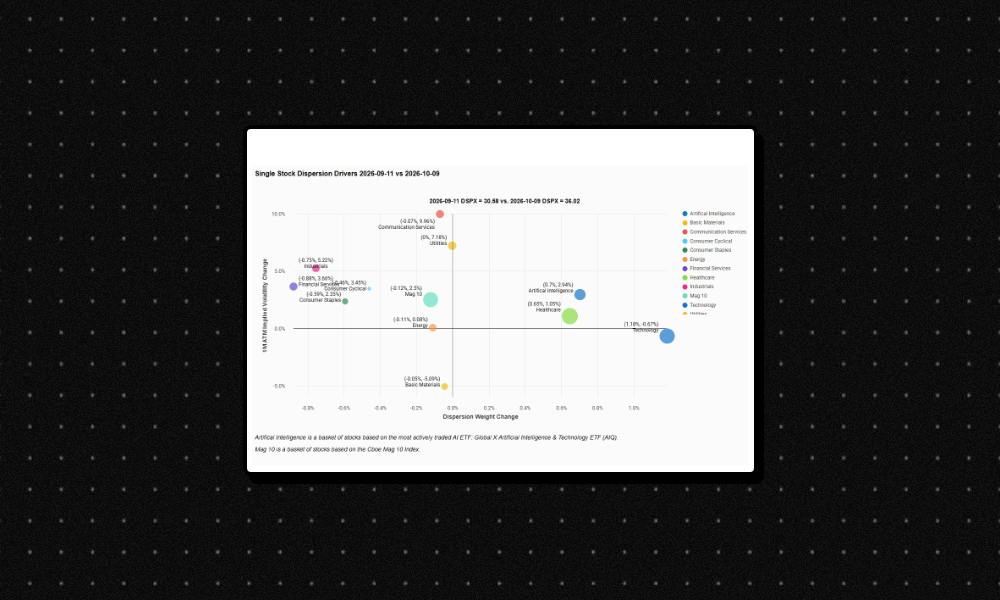
According to the Cboe S&P 500 Dispersion Index (DSPX), which measures how much the options market expects S&P 500 stocks to diverge from one another, expected dispersion climbed from 30.58 on September 11 to 36.02 in early October. That's a notable jump in a short period, and it signals that the market is becoming less of a single trade and more of a collection of distinct winners and losers.
What is dispersion, and why does it matter?
Dispersion is a measure of how spread out the returns of individual stocks are relative to the index. When dispersion is low, most stocks move in tandem—either all rising or all falling together. When dispersion is high, stocks are moving independently, driven by their own company-specific news, sector trends, or investor sentiment.
For everyday investors, dispersion matters because it changes the risk profile of a portfolio. In a low-dispersion environment, an index fund gives you broad exposure with relatively predictable outcomes. In a high-dispersion environment, picking the right stock becomes more important—and more rewarding—but also riskier. A diversified index fund still smooths out some of that volatility, but the underlying swings can be larger.
The recent rise in dispersion is being driven largely by AI and technology stocks. These companies have become the market's biggest movers, and their earnings reports can cause sharp, idiosyncratic reactions. As we head into earnings season, investors are bracing for those moves.
Why AI and tech are the culprits
AI and tech stocks have dominated market returns for much of the past year. But that dominance also means they are now the primary source of divergence. When one AI chipmaker reports a blowout quarter, its stock can soar while a rival with weaker results tumbles. That kind of divergence pushes dispersion higher.
It's not just about earnings, either. Interest rates, inflation data, and global economic news can hit tech stocks differently than, say, utilities or consumer staples. For example, upcoming CPI data and bank earnings are likely to move markets, but they may not move all stocks equally. Tech companies with high valuations are more sensitive to rate expectations, while banks react to credit and loan demand.
The broader backdrop also matters. Global stocks have been steady as investors wait for inflation data, but that calm can quickly break if a few big names disappoint. In Asia, for instance, chip stocks have reversed course, dragging the KOSPI down for six straight days. That kind of sector-specific weakness is a classic sign of rising dispersion.
What it means for investors
For the average investor, rising dispersion is a reminder that not all stocks are created equal. Index funds remain a solid foundation, but they may not capture the full upside of a stock-picker's market. Conversely, they also protect against the downside of picking a loser.
If you're a do-it-yourself investor, this is a time to pay extra attention to your holdings. Are you heavily concentrated in a few AI or tech names? If so, you could be exposed to bigger swings than the index suggests. Diversification across sectors and asset classes becomes more valuable when dispersion is high.
It's also worth remembering that dispersion tends to rise around earnings season, as companies report results that differ from expectations. That's normal. But the current jump is sharper than usual, and it's being driven by the outsized influence of a handful of mega-cap tech stocks.
As companies like SentinelOne raise capital and buy back stock, they're making their own bets on their futures. That's exactly the kind of company-specific action that feeds dispersion.
Looking ahead
Investors will be watching earnings season closely, not just for the numbers but for the reactions. If AI and tech companies continue to deliver strong results, dispersion could stay elevated. If they stumble, the gap between winners and losers could widen even further.
For now, the message is clear: the market is no longer a single bet. It's a collection of individual stories, and those stories are diverging. Understanding that can help you make smarter decisions about how to position your portfolio.