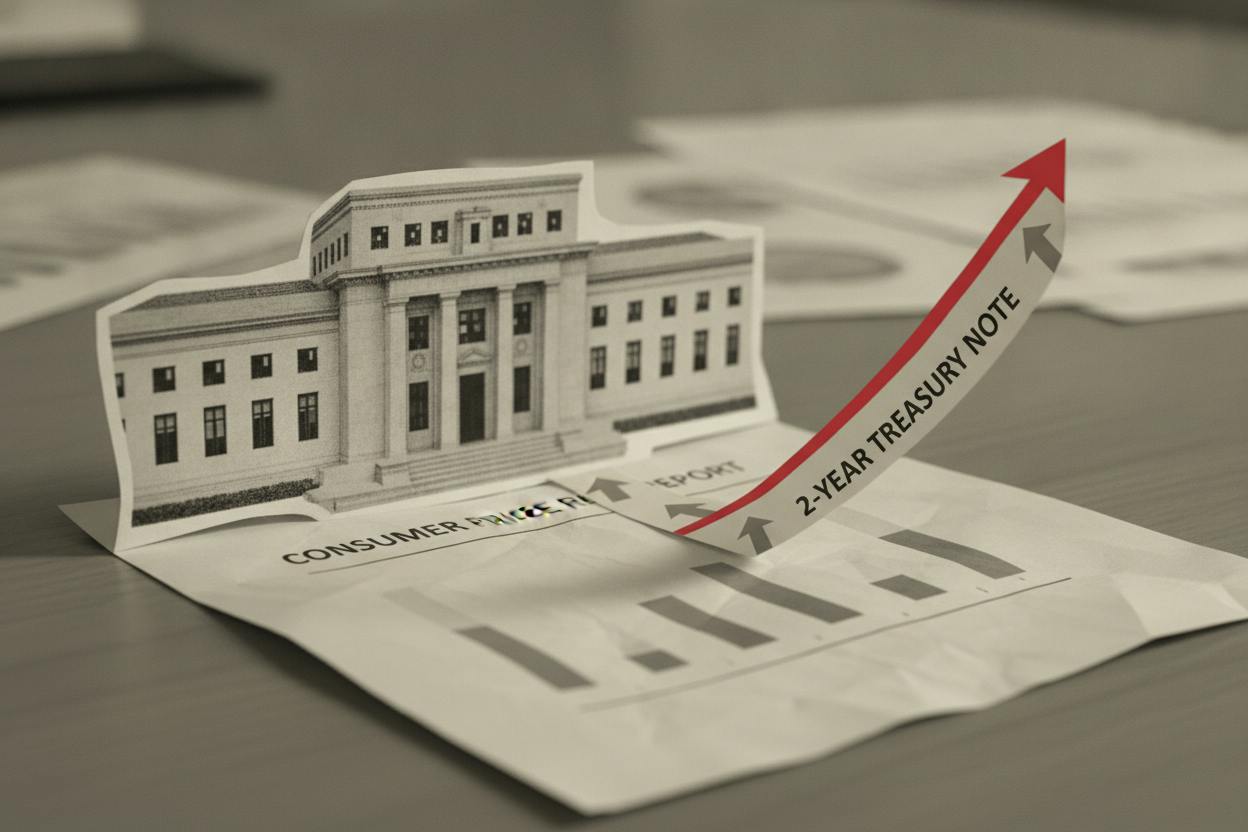
US inflation came in hotter than expected in September, sending a jolt through bond markets and prompting investors to rethink the path of Federal Reserve interest rates. The core consumer price index—which strips out volatile food and energy costs—rose 0.3% from the previous month, a pace that suggests underlying price pressures are not cooling as quickly as many had hoped.
The reaction was immediate: the yield on the 2-year Treasury note, which is highly sensitive to Fed policy expectations, climbed to 4.872%. The US dollar also strengthened as traders adjusted their bets, with some now pricing in a greater chance that the Fed could raise rates again at its next meeting.
What the data shows
The Labor Department's report on Thursday revealed that annual core inflation ran at 2.6% in September, slightly above the 2.5% that economists had forecast. Headline CPI, which includes food and energy, came in at 3.7% year-over-year, also a touch higher than the 3.6% expected.
Core CPI is the metric the Fed watches most closely because it filters out the noise of volatile food and energy prices, giving a clearer view of the underlying inflation trend. A monthly rise of 0.3% is not dramatic by historical standards, but it is enough to challenge the narrative that inflation is on a smooth glide path back to the Fed's 2% target.
For everyday investors, the key takeaway is that the 'higher for longer' interest rate environment may persist. When inflation runs hot, the Fed is less likely to cut rates soon—and may even consider another hike. That has ripple effects across portfolios, from bond prices to stock valuations.
Market reaction and what it means
The bond market's move was telling. Two-year Treasury yields jumped to their highest level in weeks, reflecting a repricing of rate expectations. Higher yields make bonds more attractive relative to stocks, which can pressure equity valuations, especially for growth and technology companies that rely on future earnings.
The dollar's rise is another consequence. A stronger dollar can weigh on multinational companies' overseas earnings and make US exports less competitive. It also tends to put pressure on emerging market currencies and assets, as we've seen in recent months.
This inflation surprise comes at a delicate time. The Fed has already raised rates aggressively over the past year and a half, and officials have signaled they are watching incoming data closely. Earlier this month, Fed Governor Michelle Bowman suggested there was no urgency for more rate hikes after the September move, but today's data may force a rethink.
What investors should watch next
The immediate focus will be on upcoming Fed speeches and the central bank's next policy meeting, scheduled for the end of the month. Traders will parse every word for clues about whether a hike is back on the table. The CME FedWatch tool, which tracks market probabilities, will be closely monitored for shifts in the odds.
Beyond the Fed, investors will also keep an eye on other inflation indicators and economic data. A similar pattern is playing out globally: Spain's inflation accelerated to 5.0% in September, and India's wholesale inflation hit 11.39%, underscoring that price pressures remain a global challenge.
For bond investors, the message is clear: don't assume rate cuts are imminent. The 'peak rate' narrative has been pushed back before, and today's data is a reminder that inflation can be stubborn. For stock investors, the focus should be on companies with pricing power and solid balance sheets that can weather a higher-for-longer rate environment.
As always, it's important to remember that one month's data doesn't set a trend. But when it comes to the Fed, every data point matters, and today's hot core CPI reading has reset the conversation.