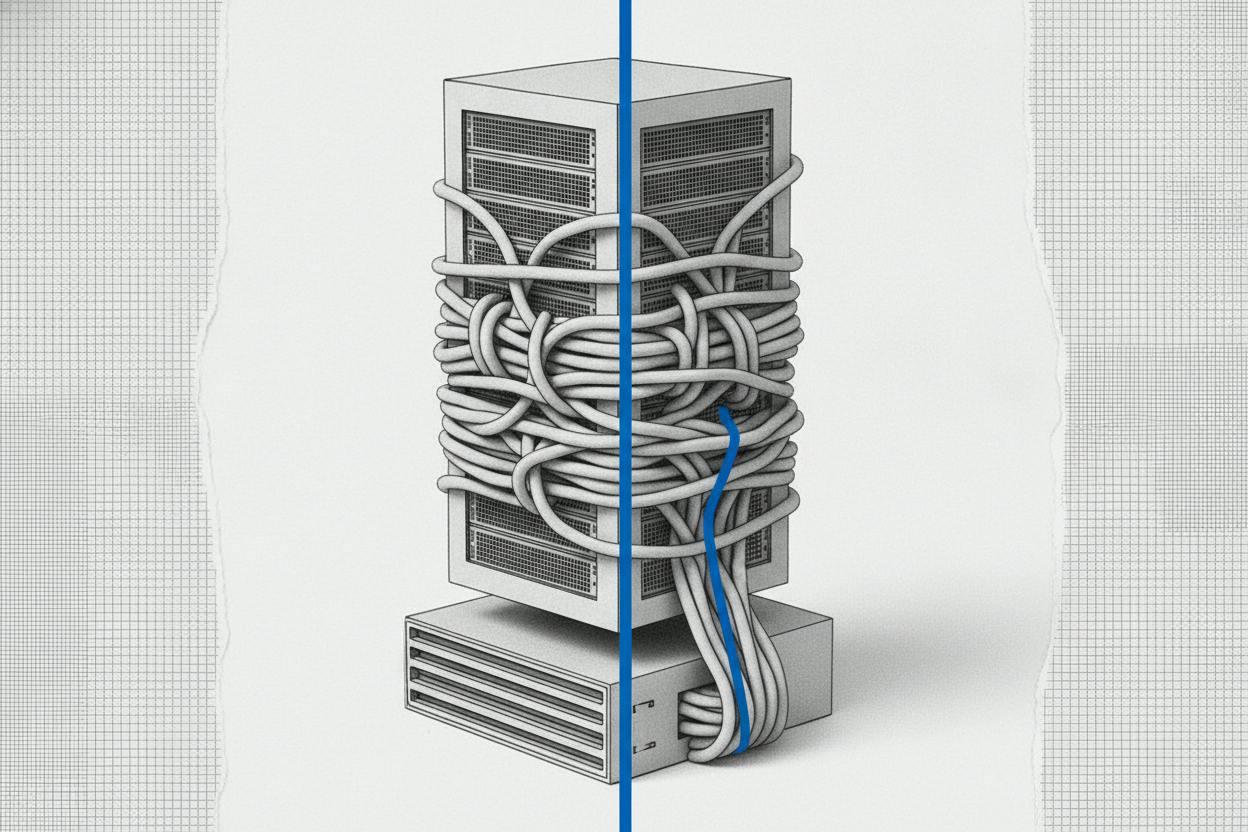
Hewlett Packard Enterprise (HPE) used its networking-focused investor day to deliver a clear message: the company sees networking as the centerpiece of its AI growth story. Alongside a raised long-term outlook, HPE announced a $1.2 billion order to supply its Helios AI racks—powered by AMD chips—to cloud provider Vultr's US data centers.
The deal and the upgraded guidance signal that HPE expects the AI-driven data center boom to keep fueling demand for its networking equipment, not just its servers. For everyday investors, the shift matters because it could change how HPE is valued—less like a cyclical hardware supplier and more like a company with durable, recurring revenue streams.
Networking becomes the growth engine
HPE now expects its networking unit to grow at a compound annual rate in the high teens from fiscal 2026 through fiscal 2029. That is a significant jump from its previous target of mid-single-digit growth. The revised forecast reflects management's confidence that AI data center builds will remain busy for years, and that HPE can capture a larger share of that spending.
The key change is in how customers buy AI infrastructure. Instead of picking servers first and treating networking as an afterthought, many are now looking for a pre-tested "stack" that includes switches and the software that runs the network. This shift plays directly into HPE's strategy: by bundling its own networking gear with its servers, the company can attach higher-margin products to every AI rack it sells.
The Vultr order is a prime example. Those AMD-based Helios racks also pull through HPE switches and software, meaning the deal isn't just about hardware—it's about locking in a broader relationship with the customer.
Juniper integration adds to the profit picture
HPE is also counting on its planned integration of Juniper Networks to boost profitability. The company raised its cost-savings goal to an $800 million annual run rate by the end of fiscal 2028, up from its earlier target. That suggests HPE sees more room to cut costs and improve margins as it folds Juniper's networking portfolio into its own.
For investors, the combination of higher networking growth and bigger cost savings could mean that each additional dollar of networking revenue has a better chance of flowing through to the bottom line. That's a more attractive profile than hardware-only growth, which tends to be lumpy and price-competitive.
What it means for investors
Big server orders can be volatile, but networking is stickier. Once a network design is built into a data center, it's hard to swap out. If HPE can consistently attach its switches and software to AI rack deals, expansions and refresh cycles are more likely to follow the same blueprint, turning one project into repeat business.
That's the kind of shift that can change how investors benchmark HPE. Rather than being judged on the ups and downs of server demand, the company could be valued on the durability of its networking revenue over the next few years. The Vultr deal is a tangible sign that this strategy is gaining traction.
Still, there are risks. The AI infrastructure market is competitive, with rivals like Cisco and Arista also vying for networking dollars. And while HPE's outlook is rosier, it's still a forecast—actual results will depend on whether AI spending holds up and whether HPE can execute on its Juniper integration without hiccups.
For now, HPE's message is clear: it's betting big on networking, and it has a $1.2 billion order to back it up. Investors will be watching to see if that bet pays off in the coming quarters.