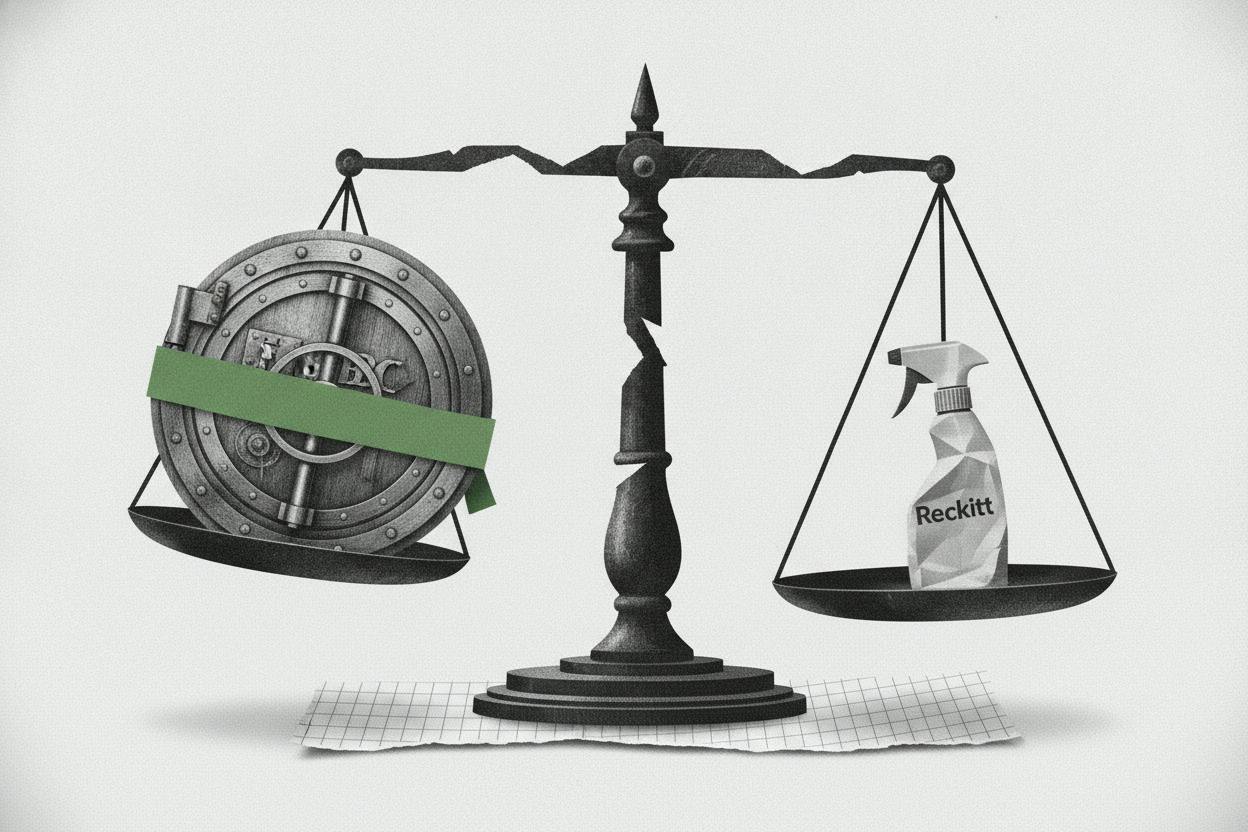
London's blue-chip index slipped on Tuesday as two of its heavyweight constituents, HSBC and Reckitt, delivered quarterly updates that left investors underwhelmed. HSBC, one of the world's largest banks, sank nearly 6% after its results, while consumer goods giant Reckitt fell after reporting weaker-than-expected volumes and cutting its sales growth outlook.
The moves dragged the FTSE 100 lower, underscoring how a handful of large companies can move the entire index. For everyday investors, the day's action is a reminder that even well-known, dividend-paying names can stumble when their numbers miss expectations.
HSBC: profit up, but revenue lines disappoint
HSBC reported higher profit for the quarter, but the market focused on areas that came in lighter than analysts had predicted. Key revenue lines, including net interest income—the difference between what a bank earns on loans and what it pays out on deposits—and wealth-management fees, were softer than hoped. That weighed on the share price despite the bank announcing a 10-cent dividend and a $1 billion share buyback.
Investors also scrutinised HSBC's capital position. Its common equity Tier 1 (CET1) ratio, a core measure of a bank's ability to absorb losses, came in at 13.9%, below the 14% level that many analysts had expected. A lower CET1 ratio can signal less financial cushion, which may limit future payouts or buybacks.
HSBC's performance is closely watched because it is a bellwether for global banking and trade. Its results often reflect the health of economies across Asia, where it generates a large share of its revenue. The bank's shares had been supported by a strong run in recent months, so the drop on Tuesday may also reflect profit-taking after a period of gains.
Reckitt: volume miss and trimmed guidance
Reckitt, the maker of household brands like Lysol, Dettol, and Nurofen, also disappointed. The company reported a volume miss—meaning it sold fewer products than analysts expected—and trimmed its sales growth guidance for the full year. That combination is often seen as a double negative: not only are current sales weaker, but the company is signalling that the rest of the year may not improve much.
Reckitt has faced a number of challenges in recent quarters, including supply chain issues and softer demand in some categories. The company's reliance on consumer staples, which are typically seen as defensive, means investors often expect steady, predictable growth. When that predictability is broken, the shares can be hit hard.
The company's guidance cut is particularly notable because it suggests the issues are not just a one-off blip. For investors, this raises questions about whether Reckitt can regain its growth momentum, especially in a competitive environment where rivals are also vying for shelf space.
What it means for investors
For those with exposure to UK equities, the day's moves highlight the importance of diversification. The FTSE 100 is heavily weighted toward a relatively small number of large companies, so a stumble by one or two can drag the whole index. Investors who own index funds or ETFs that track the FTSE 100 will feel the impact of these declines, even if their own holdings are spread across many sectors.
HSBC's drop is a reminder that even banks with strong profit growth can see their shares fall if the market is focused on other metrics, like revenue quality or capital strength. For income investors, the dividend and buyback are positive signs, but the CET1 ratio below expectations may temper enthusiasm about future capital returns.
Reckitt's guidance cut is a cautionary tale about the risks in consumer staples. While these companies are often seen as safe havens, they are not immune to operational problems or changing consumer habits. Investors should watch whether the company can address its volume issues in the coming quarters.
Looking ahead, market participants will likely keep an eye on how other UK companies report in the coming weeks. The tone of earnings season can influence whether the FTSE 100 can hold its ground or face further pressure. For now, the message from HSBC and Reckitt is that even blue-chip names can deliver surprises—and not always the pleasant kind.