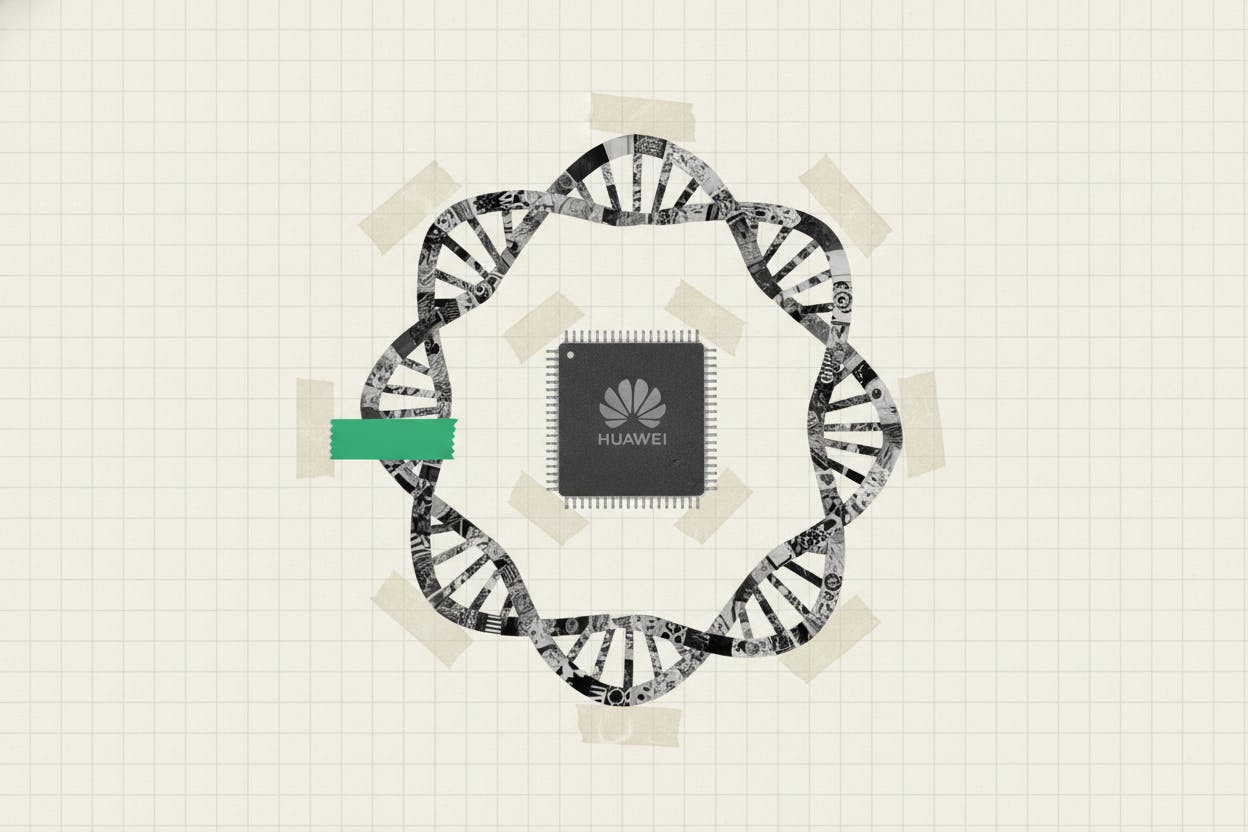
Huawei is making a push to become a bigger player in AI-powered drug discovery, according to a company executive who spoke to Reuters. The Chinese tech giant plans to deepen its artificial intelligence cooperation with domestic pharmaceutical companies, building on existing projects that already run on its Ascend and Kunpeng chips.
The announcement signals Huawei's ambition to supply more than just hardware. The company wants to provide the full stack — chips, software tools, and support — that drugmakers need to screen compounds, model molecular interactions, and speed up the long, expensive process of bringing new medicines to market.
What Huawei is offering
Huawei's pitch is straightforward: it can be the engine under the hood for AI-driven drug research. Its Ascend chips are designed for AI computing, while Kunpeng chips handle general-purpose server workloads. Together, they can power the heavy number-crunching that modern drug discovery relies on.
According to the Reuters report, Huawei's work with drugmakers already extends into hospitals, where some AI tools are being used in real-world settings. The company now wants to expand that cooperation across the entire drug pipeline — from early-stage research to clinical development.
This is part of a broader trend in China, where pharmaceutical companies are investing heavily in automated labs and faster R&D. AI can help researchers analyze vast datasets, predict how drugs will behave, and identify promising candidates more quickly than traditional methods. But doing that requires serious computing power, and that's where Huawei sees an opportunity.
Why this matters for investors
For everyday investors, this news is less about a single stock and more about a strategic shift in two industries at once: technology and healthcare. Huawei is not a publicly traded company, so you can't buy shares directly. But its moves ripple through the market in other ways.
First, it highlights the growing importance of AI in drug discovery. Companies that provide the tools — whether chips, software, or cloud services — stand to benefit as pharma firms spend more on AI. This is a global trend, not just a Chinese one. In the U.S. and Europe, similar partnerships are forming between tech firms and drugmakers.
Second, Huawei's push reflects the broader competition in AI infrastructure. The company is positioning itself as a domestic alternative to Western chipmakers like Nvidia, especially as export controls limit China's access to advanced semiconductors. That has made Huawei's chips more attractive to Chinese companies that want to avoid supply chain risks.
For investors in Chinese pharmaceutical companies, this could mean faster R&D cycles and potentially lower costs — if the AI tools deliver on their promise. But it's still early days. Drug discovery is notoriously difficult, and AI is no magic bullet. Many AI-assisted drug candidates still fail in clinical trials.
What to watch next
Investors should keep an eye on a few things. One is whether Huawei can turn these pilot projects into large-scale commercial deals. Another is how quickly Chinese drugmakers adopt AI tools and whether they see measurable improvements in their pipelines.
Also worth watching is the competitive landscape. Huawei isn't the only company chasing this opportunity. Tech giants and specialized AI startups are all vying for a slice of the drug discovery market. The massive AI spending plans across the industry show how much money is flowing into this space.
Huawei's move also comes as it expands its broader tech footprint. The company recently signed a multi-year Wi-Fi 7 patent cross-license deal with HP, showing it's active in multiple technology areas. And its focus on domestic partnerships fits a pattern of Chinese firms building self-reliant tech ecosystems.
For now, the drug discovery push is a strategic bet. If it pays off, Huawei could become a key supplier to one of China's most important industries. If not, it's still a signal that AI is becoming central to how medicines are developed — a trend that investors in both tech and healthcare should take seriously.
As always, it's important to remember that this is a developing story. The details of Huawei's plans are still vague, and the company hasn't released specific financial targets. But the direction is clear: Huawei wants to be at the center of China's AI-driven drug discovery boom.