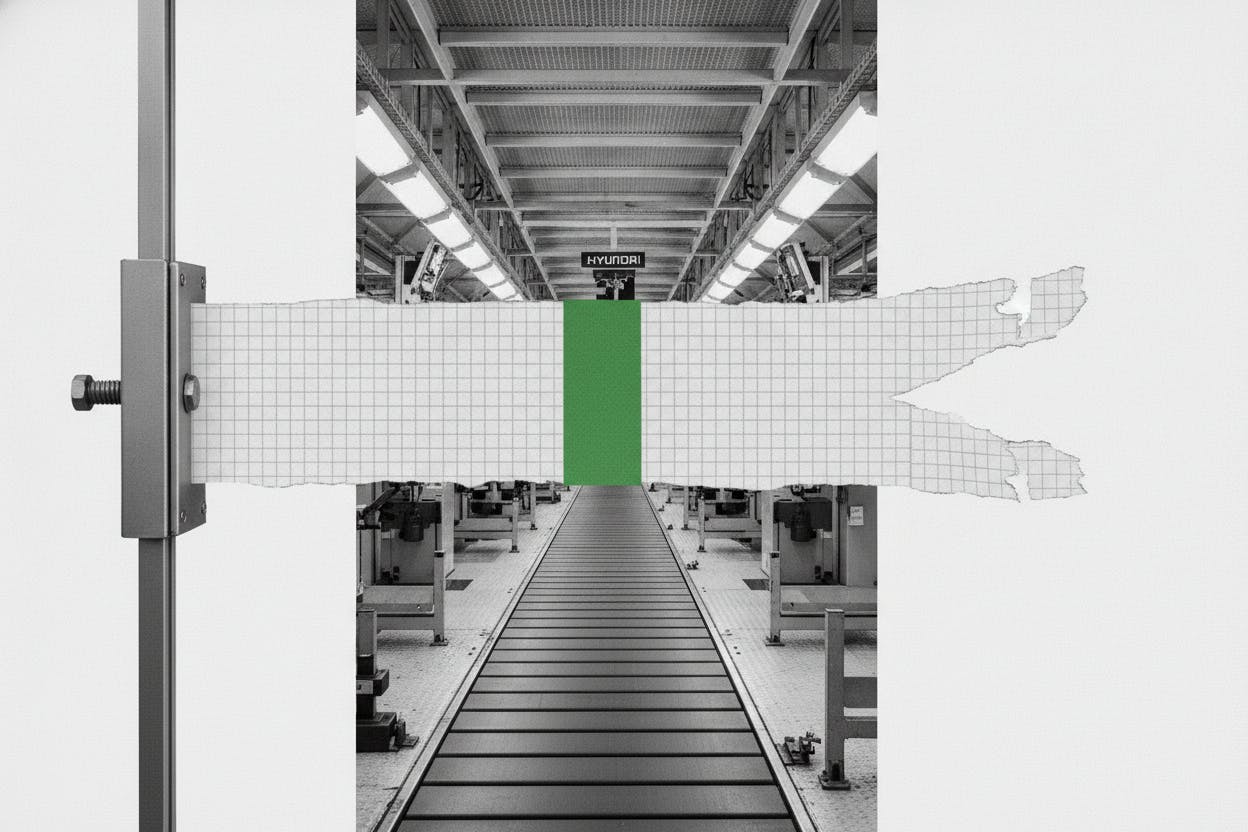
Hyundai Motor is heading into a four-day partial strike after its 40,000-member union failed to reach a wage deal with the South Korean automaker, according to The Korea Times. The industrial action is set to begin with four-hour walkouts on Wednesday and Thursday, followed by six-hour strikes on Friday and Sunday, as the two sides remain at odds over pay and bonuses.
What the union wants
The union's headline demands include a 149,600-won monthly base-pay increase and a bonus tied to 30% of Hyundai's 2025 net profit. That profit-linked bonus is a notable shift from traditional fixed payouts, as it would tie worker compensation directly to the company's financial performance.
Hyundai has countered with an 80,000-won monthly raise, a bonus worth 350% of monthly salary, an extra 10 million won, and 15 shares of company stock. The gap between the two sides suggests the dispute is less about the size of the pay bump and more about the structure of compensation—specifically, how much of it is guaranteed versus tied to future profits.
Context: labor relations at Hyundai
Hyundai Motor has a long history of labor disputes, with strikes occurring in many years, though they have often been resolved without major long-term damage. The company is one of South Korea's largest employers and a key player in the global auto industry, competing with the likes of Toyota, Volkswagen, and Tesla.
The strike comes at a time when the global auto industry is navigating a transition to electric vehicles, rising raw material costs, and supply chain uncertainties. Hyundai has been investing heavily in EV production and battery technology, and any prolonged disruption could affect its ability to meet delivery timelines and maintain margins.
For investors, the immediate concern is the potential impact on production volumes. Partial strikes, especially those lasting only a few hours a day, typically cause less disruption than full walkouts, but they can still lead to lost output and higher costs if they drag on. The union's decision to escalate from four-hour to six-hour strikes suggests it is willing to increase pressure if talks stall.
What it means for investors
For everyday investors, the key takeaway is that labor disputes are a normal part of doing business for large manufacturers, and Hyundai has navigated them before. The company's financial health is generally strong, and it has a track record of reaching agreements that balance worker demands with shareholder interests.
However, the union's push for a profit-linked bonus could set a precedent. If accepted, it would mean that in good years, workers share more of the upside, which could slightly reduce net profit available to shareholders. In bad years, the bonus would shrink, providing some natural cushion. This type of arrangement is not uncommon in other industries, but it would be a notable change for Hyundai.
Investors should also watch how the strike affects Hyundai's production and sales, especially in key markets like the US and Europe, where demand for its vehicles remains strong. Any significant disruption could lead to inventory shortages and potentially affect quarterly earnings.
That said, the strike is only partial, and the company has time to resolve the dispute before it becomes a major financial drag. Historically, Hyundai has managed to settle labor disputes without causing lasting damage to its operations or stock price.
Broader market context
The strike comes amid a mixed backdrop for global markets. While some sectors are seeing strength, others are facing headwinds from inflation, interest rates, and geopolitical tensions. For example, oil prices have dropped recently, which could help reduce input costs for automakers, but Gulf stocks have risen on the same news, showing how interconnected these factors are.
In the auto sector, Chinese EV makers have posted strong sales, highlighting the competitive pressure Hyundai faces in the electric vehicle market. Meanwhile, tech companies like Palo Alto Networks are reporting strong growth, underscoring the divergence between traditional manufacturers and high-growth tech firms.
For Hyundai, the strike is a reminder that labor costs are a significant part of its cost structure, and any increase in wages or bonuses could pressure margins. But investors should keep in mind that Hyundai has a strong balance sheet and a diversified global footprint, which gives it flexibility to absorb short-term disruptions.
What to watch next
The key dates are the strike days themselves, and whether the two sides return to the negotiating table. If the strike expands or extends beyond the planned four days, it could signal a more serious impasse. Conversely, a quick resolution would likely be viewed positively by the market.
Investors should also monitor Hyundai's monthly sales reports and any guidance updates from management. A prolonged strike could lead to downward revisions in production targets, which would be a red flag.
Ultimately, this is a story about labor relations and cost pressures, but it's also a test of Hyundai's ability to manage its workforce while investing in the future. For now, the strike is a manageable risk, but one worth keeping an eye on.