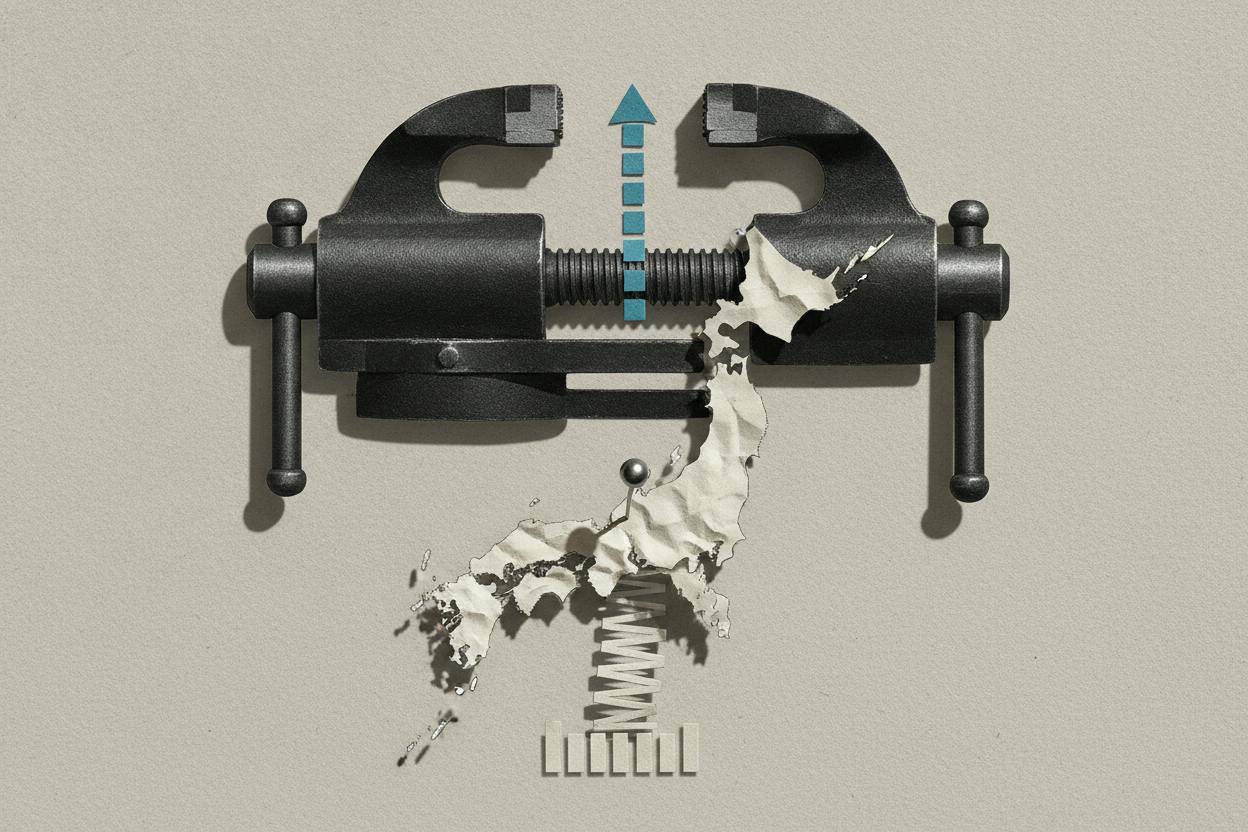
The International Monetary Fund (IMF) released its latest World Economic Outlook, and for Japan, the picture is one of slow growth but continued monetary tightening. The IMF projects Japan's economy will expand by just 0.7% in both 2026 and 2027, a modest pace that reflects an aging population and subdued productivity gains. Despite that sluggish backdrop, the IMF expects the Bank of Japan (BOJ) to keep nudging interest rates higher, moving gradually toward what it calls a “neutral” rate—a level that neither stimulates nor restricts economic activity.
What's driving the BOJ's tightening path?
The BOJ has already lifted its policy rate to 1.25%, the highest in 31 years, in September. That move came after years of ultra-loose monetary policy aimed at fighting deflation. Now, with inflation running above the central bank's 2% target, the BOJ is shifting gears. The IMF's view is that the BOJ will continue this gradual tightening cycle, even as growth slows, because the risk of entrenched inflation outweighs the drag on the economy.
This is a delicate balancing act. On one hand, higher rates could cool an already weak economy. On the other, leaving rates too low for too long could allow inflation to become embedded in wages and prices, which would be harder to reverse. The IMF's assessment suggests it believes the BOJ will prioritize price stability, accepting slower growth as the cost of normalizing policy.
For investors, this means Japanese government bond yields could keep drifting higher, and the yen may find some support from the rate differential with other major economies, though that support could be limited if global growth also slows. The bond market is already split on whether another hike is coming, and the IMF's outlook adds weight to the hawks' case.
Yen volatility and intervention risk
The IMF also flagged that there is room for foreign-exchange intervention if yen swings become “disorderly.” That's a nod to the sharp moves the yen has seen in recent years, driven by the gap between Japan's low rates and higher rates elsewhere, particularly in the US. When the yen weakens too quickly, it pushes up import costs, which feeds inflation and hurts households. When it strengthens sharply, it can undermine exporter profits.
Japan's finance ministry has intervened in the currency market in the past, and the IMF's comment suggests it sees such action as legitimate under certain conditions. For everyday investors, this means the yen could remain volatile, and any intervention could create sudden moves in currency markets, affecting anyone holding Japanese assets or planning travel to Japan.
The broader context is that the IMF's global growth forecast for 2026 was nudged up to 3.1%, but it also flagged risks, including trade tensions and geopolitical shocks. Japan's slow growth is part of a wider pattern of moderate expansion in advanced economies, with France's economy stalling and other nations facing similar headwinds.
What it means for investors
For investors with exposure to Japan, the key takeaway is that the BOJ is likely to keep tightening, which has several implications. First, Japanese government bonds may offer higher yields, making them more attractive relative to other developed-market bonds. Second, the yen could strengthen if the BOJ continues to hike while other central banks, like the Federal Reserve, are cutting or pausing. That would affect returns for foreign investors in Japanese stocks, as a stronger yen can reduce the value of their holdings when converted back to their home currency.
On the equities side, Japanese companies that export heavily could see their competitiveness dented by a stronger yen, while domestic-focused firms might benefit from steadier inflation and wage growth. The IMF's growth projection of 0.7% is not stellar, but it's not a recession either, so corporate earnings could still be supported by a weak yen and solid global demand.
It's also worth noting that the BOJ's path is not set in stone. The IMF's view is just one forecast, and actual policy will depend on incoming data, particularly wage negotiations and inflation readings. Wholesale inflation has cooled, but pressure on the BOJ remains, and any surprise in either direction could alter the trajectory.
For now, the message is clear: Japan is in a slow-growth, gradual-tightening regime. Investors should expect more rate hikes, potential currency intervention, and a bond market that may remain volatile. As always, diversification and a long-term perspective are key, especially when navigating a market that is undergoing a historic policy shift.