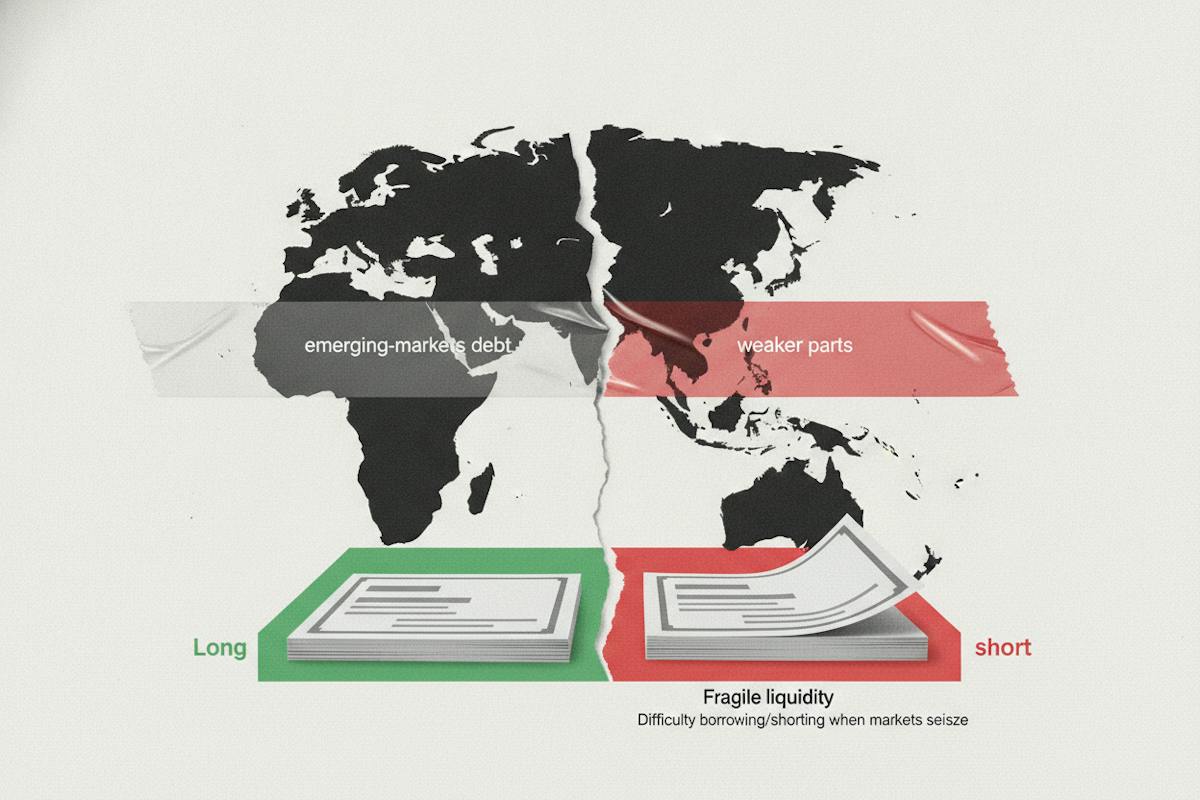
Singapore-based InCred Global Asset Management is making a bold move into emerging-markets debt with the launch of its first dedicated credit fund. The manager aims to build the fund to $1 billion in assets over five years by employing a two-way strategy—taking both long and short positions in bonds and loans from developing economies.
The fund will primarily focus on what the firm calls “performing” debt—securities from borrowers that are still making interest and principal payments on time. Geographically, the strategy will center on Asia-Pacific and the Middle East, regions where InCred sees the most opportunity in today’s market environment.
Why a two-way approach now?
The pitch from InCred is that the current backdrop of higher interest rates and thinner liquidity is creating wider gaps between strong and weak borrowers than investors saw during the era of ultra-cheap money. In the years following the global financial crisis, when central banks kept rates near zero and pumped liquidity into markets, credit spreads—the extra yield investors demand for taking on risk—were compressed. That made it harder to differentiate between companies with solid balance sheets and those with shaky finances.
Now, with rates elevated and liquidity less abundant, that dispersion is returning. For a fund that can both buy (go long) and sell short (bet against) debt, this environment offers more opportunities to profit from both winners and losers. Shorting bonds or loans involves borrowing the security and selling it, hoping to buy it back later at a lower price. It’s a strategy more common in developed-market credit funds but still relatively rare in the emerging-markets space.
InCred’s move comes as Singapore shares have been volatile, reflecting broader uncertainty in global markets. The fund’s focus on Asia-Pacific and the Middle East aligns with the region’s growing importance in the global debt landscape.
What this means for investors
For everyday investors, the launch of such a fund is a reminder that emerging-markets debt is a diverse and often misunderstood asset class. It includes government bonds from developing countries, corporate bonds from companies in those nations, and loans made to those entities. These securities typically offer higher yields than developed-market debt, but they come with added risks: currency fluctuations, political instability, and less transparent financial reporting.
The two-way strategy adds another layer of complexity. While a traditional bond fund only profits when prices rise, a long-short fund can also profit when prices fall—provided the manager’s short bets are correct. That can help reduce overall volatility and provide a hedge against market downturns, but it also introduces the risk of short squeezes and other trading pitfalls.
For most retail investors, gaining exposure to emerging-markets credit usually happens through mutual funds or ETFs that track broad indices. These are typically long-only, meaning they buy and hold a basket of bonds. A fund like InCred’s is more likely to be offered to institutional investors or high-net-worth individuals, given the complexity and higher fees often associated with alternative strategies.
Still, the launch signals that professional money managers see value in a more nuanced approach to emerging markets. It also highlights the growing dispersion between strong and weak borrowers—something that could affect even passive investors. If you hold an emerging-markets bond fund, you may see wider swings in performance as the market differentiates more sharply between creditworthy issuers and those at risk of default.
Broader context
The move comes at a time when emerging-market debt has faced headwinds from high global interest rates, a strong US dollar, and concerns about economic growth in key markets like China. However, some investors argue that these challenges have created attractive entry points, especially for selective buyers.
InCred’s focus on performing debt is a conservative tilt within the asset class. By avoiding distressed or defaulted securities, the fund aims to capture income and capital appreciation from borrowers that are still meeting their obligations. This approach may appeal to investors who want emerging-markets exposure without the extreme risk of high-yield or distressed debt.
The fund’s five-year target of $1 billion is ambitious but not unprecedented. Several asset managers have launched similar strategies in recent years, and the demand for alternative credit has grown as traditional fixed-income yields have risen. However, the success of such funds often depends on the manager’s ability to navigate the complexities of emerging markets, where information is less readily available and legal recourse can be more difficult.
For those watching the space, the key will be how InCred positions itself in the current environment. With risk assets experiencing volatility, and global markets facing tariff and tech concerns, the appetite for emerging-markets debt could be tested. Yet, for a manager willing to take both sides of the trade, that volatility may be exactly the opportunity they are looking for.
As always, investors should consider their own risk tolerance and time horizon before diving into any emerging-markets strategy. While the potential for higher returns exists, so does the potential for significant losses, especially in a two-way fund that can lose money on both its long and short positions if the market moves unexpectedly.